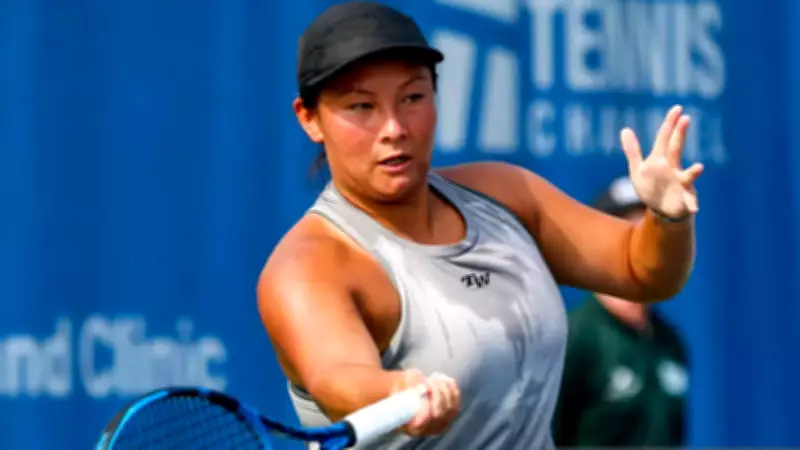
Tara Moore Files $20 Million Lawsuit Against WTA Over Contaminated Meat Ban
Veteran British tennis player Tara Moore is breaking her silence in a dramatic legal move. After years of battling to clear her name, the 31-year-old has initiated a substantial $20 million lawsuit against the Women's Tennis Association. Moore accuses the governing body of women's tennis of negligence, claiming their failures severely derailed her professional career.
The Legal Battle That's Shaking Tennis
This lawsuit has instantly become one of the most discussed stories in tennis news, not merely due to the significant financial claim but because of what it reveals about the sport's anti-doping protocols. Moore's case has captivated fans since 2022 when she received a provisional suspension after testing positive for boldenone and nandrolone. At that time, she ranked among Britain's premier doubles competitors on the WTA Tour.
What ensued was a prolonged and highly public struggle that divided opinions throughout the tennis community. Now, with her four-year ban officially reinstated and her hopes for a comeback shattered once more, Moore is directing her attention toward the organization she holds responsible for her predicament.

The Core Allegations: Contaminated Meat Warnings
According to her legal representatives from King & Spalding and Reeves & Weiss, Moore's lawsuit contends that the WTA neglected to alert players about the dangers of consuming contaminated meat while competing in Bogotá, Colombia. Her positive test occurred in April 2022 during a tournament in that location.
In December 2023, an independent panel determined she was not at fault, accepting evidence that the prohibited substances entered her system through contaminated meat. However, the International Tennis Integrity Agency appealed this decision to the Court of Arbitration for Sport. CAS subsequently supported the ITIA's position and reinstated Moore's original four-year suspension, effective July 2025, with nineteen months credited for time already served.
The lawsuit specifically alleges that the WTA issued similar contamination warnings for other venues but failed to provide equivalent cautions for Bogotá, directly leading to Moore's positive steroid test.
Moore's Emotional Response and Broader Critique
Upon learning her ban would remain in place, Moore turned to social media, expressing her frustration directly to supporters in an Instagram post that rapidly went viral. "To be innocent and to have to prove that is an incredibly grueling process. Firstly, you are trying to figure out what these things are; secondly, you are figuring out how and why these things got into your system," Moore stated.
She continued with a powerful indictment of the current system: "The anti-doping system is broken. I am proof of this. Not for me, as it is too late, but for future players who find themselves in this unfortunate situation. I have so much more to say when the time is right."
This legal action raises critical questions about accountability and whether touring athletes receive adequate warnings and protection. It highlights potential systemic flaws that could affect numerous players worldwide.
The case underscores ongoing debates about fairness and transparency in professional sports governance, with Moore's lawsuit potentially setting a precedent for how similar incidents are handled in the future.