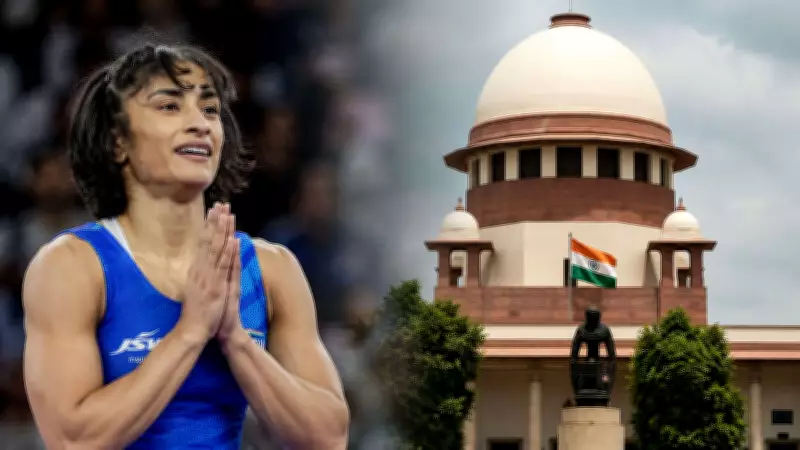
The Supreme Court has permitted Olympian wrestler Vinesh Phogat to take part in the Asian Games selection trials, which are scheduled to commence on May 30. The apex court declined to stay a Delhi High Court order that had granted relief to Phogat. However, the bench also raised concerns regarding her adherence to anti-doping regulations and expressed criticism over certain aspects of the High Court’s judgment.
Court’s Observations and Legal Implications
The Supreme Court bench, while allowing Phogat to participate, questioned her compliance with anti-doping norms. The judges pointed out that the High Court had not adequately addressed these issues in its order. This case has brought to the forefront broader questions concerning motherhood, the rights of athletes, and the application of international sporting regulations within the domestic legal framework.
Background of the Case
Vinesh Phogat, an Olympian and prominent figure in Indian wrestling, had approached the Delhi High Court after facing hurdles in her participation in the Asian Games trials. The High Court had ruled in her favor, prompting the current appeal to the Supreme Court. The Supreme Court’s decision to allow her participation is seen as a significant interim relief, though the legal battle continues.

Broader Questions Raised
The case has ignited discussions on several critical issues:
- Motherhood and Athletic Career: Phogat’s situation highlights the challenges female athletes face in balancing motherhood with their sporting careers, including the lack of supportive policies.
- Anti-Doping Compliance: The court’s scrutiny of her anti-doping record underscores the strict regulations athletes must follow and the need for clear guidelines.
- International Sporting Regulations: The interplay between national court decisions and international sports bodies like the World Anti-Doping Agency (WADA) and the International Olympic Committee (IOC) has come under the spotlight.
Reactions and Next Steps
The wrestling community and Phogat’s supporters have welcomed the Supreme Court’s order, viewing it as a victory for athlete rights. However, the case is likely to proceed further, with the court expected to examine the merits of the High Court’s order and the broader regulatory framework. The final outcome could set a precedent for how Indian courts handle disputes involving athletes and international sports regulations.