Team USA Hockey's Olympic Gold Celebration Overshadowed by Political Controversy
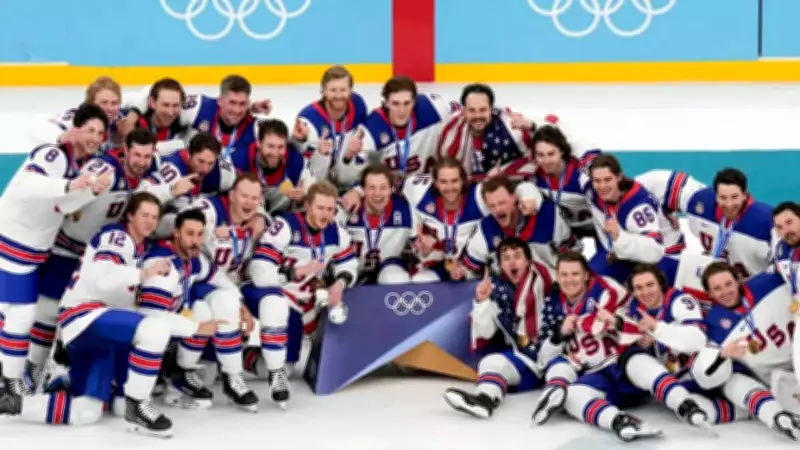
The long-awaited Olympic hockey gold medal for Team USA should have been an unadulterated moment of national pride and pure athletic celebration. Instead, a post-victory locker room phone call from President Donald Trump ignited a political firestorm that rapidly spilled far beyond the confines of the rink, transforming a sporting triumph into a heated cultural debate.
The Viral Clip That Sparked Outrage
Video from the intimate postgame moment captured players laughing following a specific remark from the President about inviting the triumphant women's team to the upcoming State of the Union address. This seemingly innocuous reaction quickly became the focal point of intense scrutiny, triggering widespread accusations of sexism and sparking a fierce, immediate online backlash.
During the call, President Trump joked, "We're going to have to bring the women's team, you do know that. I do believe I probably would be impeached." The laughter that followed in the room was interpreted by countless viewers as dismissive and disrespectful toward a women's team that had just delivered an equally historic, gold-medal performance, extending their legacy of dominance that notably outpaces the men's own Olympic record.

Swift and Unforgiving Social Media Reaction
The controversy intensified rapidly as the clip went viral. Social media reaction was swift, unforgiving, and deeply emotional. Critics argued that the moment reduced the women's monumental achievement to a punchline.
One user directly challenged Team USA, asking, "Do you have anything to say about the scene in your men's team's locker room where the women's team who made history in multiple ways and delivered you a gold medal was insulted and mocked and turned into a misogynistic punch line?" Others expressed their disgust more bluntly, with posts stating the video "made me sick" and that women were framed "as a burden," while another lamented, "women in this country deserve so much f*cking better."
Additional scrutiny was directed at the presence of FBI Director Kash Patel at the locker room celebration, further fueling discussions about the uncomfortable intersection of politics, security, and Olympic sport.
Players Defend the Locker Room Atmosphere
Amid the surging criticism, key players from the men's team moved quickly to defend the locker room's atmosphere and the shared respect between the national programs. Star forward Jack Hughes and defenseman Quinn Hughes emphasized the strong bond built through shared training and mutual admiration.
Quinn Hughes stressed the personal connections, stating, "I'm glad you mentioned the women's team again. We're really happy for them. [There's] a lot going around on social media right now surrounding our team and their team, but in the last couple summers, we did a lot of training with them and got to know a lot of those girls really well."
Jack Hughes echoed this sentiment, focusing on pride and solidarity. "People are so negative about things. I think everyone in that locker room knows how much we support them, how proud we are of them and we know the same way we feel about them, they feel about us," he said. He also addressed the White House invitation directly, noting, "Yeah, we're excited. Everything is so political. We're athletes. We're so proud to represent the US and when you get the chance to go to White House and meet the President, we're proud to be Americans and that's so patriotic."
Aftermath and a Hope for Unity
Ultimately, the U.S. women's hockey team declined the presidential invitation due to prior commitments. However, players and family members from both squads have consistently stressed that unity, not division, defined their collective Olympic experience in Pyeongchang.
In the midst of the swirling celebration and unavoidable controversy, that message of shared American athletic pride remains the one that many inside the Team USA hockey community fervently hope will endure and rise above the political noise. The incident serves as a stark reminder of how quickly modern sporting moments can become amplified cultural flashpoints in an era of instant viral reaction and deep political polarization.