Ukrainian Skeleton Athlete Disqualified from Milan Cortina Games Over Memorial Helmet
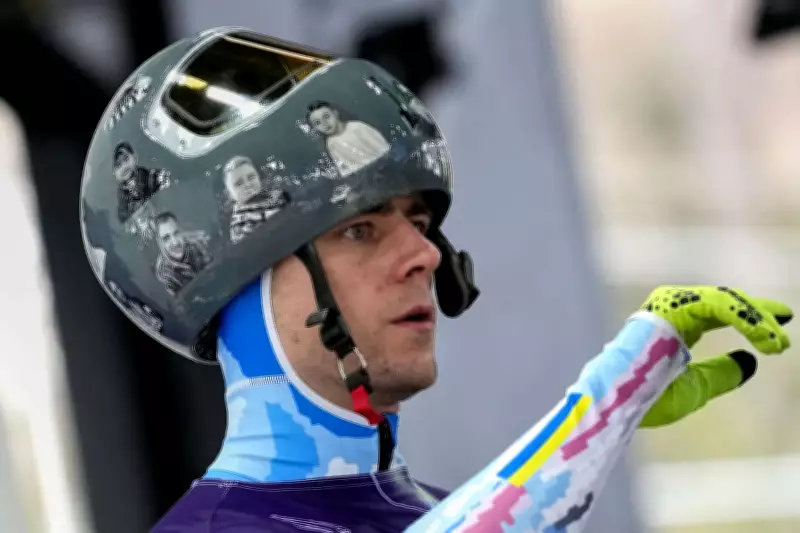
In a dramatic turn of events at the Milan Cortina Games, Ukrainian skeleton athlete Vladyslav Heraskevych was barred from competing after he refused a last-minute demand from the International Olympic Committee (IOC) to change his helmet. The helmet, which honors more than 20 Ukrainian athletes and coaches killed in the war with Russia, became the center of a heated dispute over athlete expression and Olympic rules.
Last-Minute Ultimatum and Emotional Standoff
Approximately 45 minutes before his scheduled race, officials informed Heraskevych that he would not be allowed to compete if he insisted on wearing the memorial helmet. This decision came after three days of uncertainty, during which the IOC had warned him that athletes are prohibited from making statements during competition. Despite this, Heraskevych wore the helmet in training sessions and remained steadfast in his intention to wear it during the race.
"I believe, deeply, the IBSF and IOC understand that I’m not violating any rules," Heraskevych stated. "Also, I would say it's painful that it really looks like discrimination because many athletes already were expressing themselves. They didn't face the same things. So, suddenly, just the Ukrainian athlete in this Olympic Games will be disqualified for the helmet."

IOC President's Intervention and Failed Compromise
IOC President Kirsty Coventry altered her plans to watch Alpine skiing and instead traveled to the sliding center to meet with Heraskevych. She awaited him at the top of the track early in the morning, and the two engaged in a private discussion lasting about 10 minutes. However, the meeting did not yield a resolution.
"We didn't find common ground in this regard," Heraskevych revealed afterward.
Following the encounter, Coventry addressed reporters, becoming emotional at times. She expressed regret over the outcome and clarified the IOC's position in an official statement. "As you’ve all seen over the last few days, we’ve allowed for Vladyslav to use his helmet in training," Coventry explained. "No one, no one — especially me — is disagreeing with the messaging. The messaging is a powerful message. It’s a message of remembrance. It’s a message of memory and no one is disagreeing with that. The challenge that we are facing is that we wanted to ask or come up with a solution for just the field of play."
During their conversation, Coventry and Heraskevych acknowledged that the helmet's images of war victims are difficult to see during a race, as skeleton athletes descend the track at speeds exceeding 120 kph (75 mph). The IOC hoped this could lead to a compromise, suggesting he might consider not wearing the helmet while competing since the faces are not clearly visible. However, Heraskevych remained unwavering.
"Sadly, we’ve not been able to come to that solution," Coventry lamented. "I really wanted to see him race today. It’s been an emotional morning."
Appeal and Broader Implications
Heraskevych announced his intention to appeal to the Court of Arbitration for Sport (CAS), but with the race already underway and medals to be decided on Friday, his opportunity to compete in these Games has effectively vanished. The disqualification has sparked outrage, particularly within the Ukrainian sports community.
Ukrainian skier Kateryna Kotsar voiced her support on Instagram, writing, "Disqualified. I think that’s enough to understand what the modern IOC really is and how it disgraces the idea of the Olympic movement. Vladyslav Heraskevych, for us and for the whole world, you’re a champion. Even without starting."
This incident contrasts with the IOC's previous support for Heraskevych. At the 2022 Beijing Olympics, he displayed a sign reading "No war in Ukraine" after his final run, which the IOC deemed a call for peace and not a rule violation. Heraskevych now argues that the IOC's decisions lack consistency.

Inconsistencies in Athlete Expression
Heraskevych highlighted other examples where athletes were permitted to honor the deceased without penalty. U.S. figure skater Maxim Naumov brought a photo of his late parents, former world champions who died in a plane crash on January 29, 2025, to the kiss-and-cry area after his performance in Milan. Additionally, Israeli skeleton athlete Jared Firestone wore a kippah at the opening ceremony inscribed with the names of 11 Israeli athletes and coaches killed in the 1972 Munich attack.
"A competitor literally placed the memory of the dead on his head to honor them," Heraskevych wrote on Instagram. "I frankly do not understand how these two cases are fundamentally different."
Heraskevych, who placed fourth at last year's world championships and was among the fastest in training leading up to the Olympic races, had a realistic chance at a medal. However, he prioritized the symbolic importance of the helmet over his competitive aspirations.
His coach and father, Mykhailo Heraskevych, expressed deep disappointment, stating, "The International Olympic Committee destroyed our dreams. It’s not fair."
This controversy raises significant questions about the balance between Olympic regulations and athlete expression, particularly in contexts of global conflict and remembrance. As the Milan Cortina Games proceed, the fallout from this decision continues to resonate, highlighting the complexities of modern sports diplomacy.