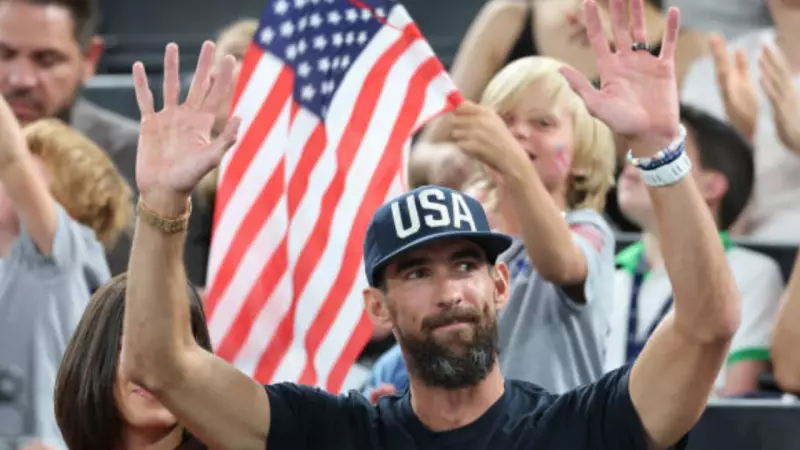
Michael Phelps, the most decorated Olympian of all time, is now being celebrated for a legacy that extends far beyond the swimming pool. Nearly a decade after retiring from competitive swimming, Phelps has forged a powerful second act as one of the world's most influential advocates for mental health. This new chapter of his life has earned him one of sport's highest honours.
From Olympic Glory to Lifesaving Advocacy
Sports Illustrated has announced that Michael Phelps will be the recipient of the prestigious Muhammad Ali Legacy Award. The ceremony is scheduled for January 6, 2026, at the Wynn Las Vegas. This award recognises athletes whose impact profoundly reshapes both their sport and society at large. With this honour, Phelps enters an elite circle of past recipients that includes icons like Billie Jean King and Allyson Felix.
This recognition marks a significant shift in how the world views the champion. He is no longer defined solely by his unprecedented haul of 23 Olympic gold medals. Instead, the award highlights his courageous work in breaking the stigma around mental health, a journey born from his own personal struggles.

A Champion's Battle with Depression and Anxiety
Phelps has been remarkably open about his long and difficult battle with depression and anxiety. His challenges began early, even at the peak of his athletic success. After the 2004 Athens Olympics, where he won six gold and two bronze medals, he experienced what he later identified as post-Olympic depression. Despite the global adulation, he felt a profound emptiness, famously asking himself, "What the hell am I supposed to do?"
These dark feelings persisted for years. Following the 2012 London Games, Phelps revealed he stayed isolated in his room for days. "I didn't want to be in the sport anymore. I didn't want to be alive," he admitted, later confessing he had suicidal thoughts during that period.
The turning point arrived in 2014 after a second DUI arrest. Hitting rock bottom, Phelps locked himself away, consumed by hopelessness. That crisis finally pushed him to seek professional help. He described the initial therapy as "freaky" and "scary," but it was where he first allowed himself to be vulnerable. He learned a crucial lesson: his mental health struggles were a part of him, not something he could simply wish away.
Building a Legacy of Openness and Hope
In 2015, Phelps decided to go public with his struggles. Through the Michael Phelps Foundation and its Open Up campaign, he began encouraging honest conversations about mental wellbeing. His core message is simple yet powerful: "It's OK to not be OK."
His vulnerability has had a ripple effect across the sporting world, inspiring a new generation of athletes—including Simone Biles and Naomi Osaka—to speak openly about their own mental health. Phelps has shown that strength is not just about physical prowess but also about the courage to seek help.
The Muhammad Ali Legacy Award now formally recognises this profound impact. It honours not just the champion who dominated the pool for over a decade, but the man who has used his platform to change and save lives, proving that a legacy of humanity can be even more powerful than a legacy of medals.