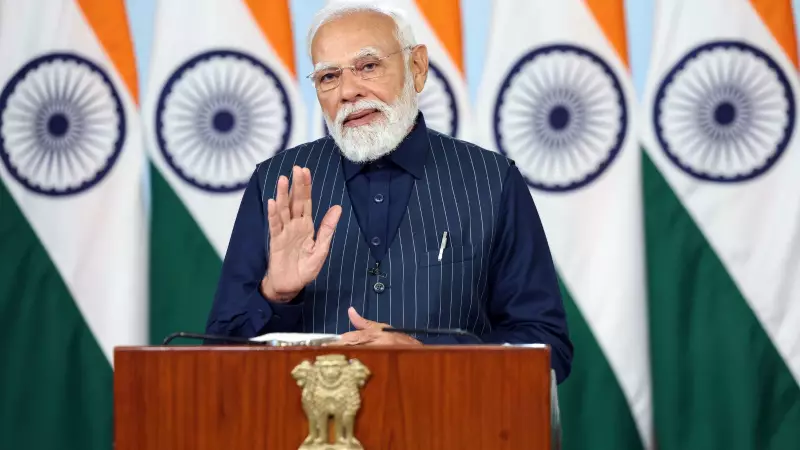
Prime Minister Narendra Modi has declared that India is preparing with full strength to host the Olympic Games in 2036. He also confirmed that the country will host the 2030 Commonwealth Games, marking a significant decade for Indian sports on the global stage.
Reforms and Infrastructure: Building a New Sports Ecosystem
Speaking via videoconference at the inauguration of the 72nd National Volleyball Tournament in Varanasi on Sunday, the Prime Minister outlined a decade of transformative change. He stated that major reforms have reshaped the sports landscape, moving beyond just infrastructure and funding.
"Today, the country is on the reform express," PM Modi said. He emphasized that the sports sector is firmly onboard this journey. Key legislative and policy measures like the National Sports Governance Act and the Khelo India Policy 2025 are designed to nurture the right talent and bring transparency to sports organizations.
The government's focus extends to creating exposure for young athletes. Initiatives like the Target Olympic Podium Scheme (TOPS) are dedicated to training high-performance athletes with the specific goal of winning Olympic medals. Furthermore, the Khelo India campaign is introducing Olympic sports at the school level, with hundreds of youths already rising to national prominence through this platform.
From CWG 2030 to Olympics 2036: A Dual Ambition
PM Modi positioned the upcoming 2030 Commonwealth Games as a stepping stone towards the larger goal of the 2036 Olympics. "The 2030 Commonwealth Games are also going to be held in India. India is also preparing with full strength to host the 2036 Olympics," he announced.
The underlying effort, he explained, is to create maximum competitive opportunities for athletes. He pointed to India's growing experience in hosting major international events, including the FIFA U-17 World Cup, Hockey World Cup, and major chess tournaments over the past ten years, as evidence of the nation's capability.
Highlighting public participation, Modi cited the recently concluded Sansad Khel Mahotsav, where nearly one crore (10 million) young people showcased their talent. From his constituency of Varanasi (Kashi) alone, approximately 300,000 youths participated.
An 'India First' Spirit Fuelling Progress
Drawing an analogy with volleyball, the Prime Minister said the sport teaches that victory depends on coordination, trust, and teamwork. He linked this to India's collective development journey. "Our country is also progressing in the same way," he noted, attributing success in fields from digital payments to cleanliness drives to every citizen working with a collective consciousness and the spirit of "India First."
This national progress, he argued, is reflected in sports. Modi recalled that before 2014, both the government and society were largely indifferent to sports, leading few to consider it a career. "The situation had changed in the last decade," he asserted, with a significantly increased sports budget and an athlete-centric model.
"Talent identification, scientific training, attention to their nutrition, and transparent selection—the interests of the players are now paramount at every level," the Prime Minister stated. He expressed immense pride in seeing Gen Z athletes hoist the tricolor on international podiums, a testament to India's consistently improving sporting performance.