As India gears up for the Commonwealth Games 2030 and sets its sights on the 2036 Olympics, the country's sports administrators have raised critical systemic challenges that need immediate redressal. These issues, ranging from a vanishing sports culture in schools to financial burdens on athletes, were flagged directly to Union Minister for Youth Affairs and Sports, Mansukh Mandaviya, at the Sports Governance Conclave in Ahmedabad.
Grassroots Crisis and the Call for Systemic Reform
The conclave, organised by the Centre in association with the Gujarat government and the Indian Olympic Association (IOA), saw participation from heads of National Sports Federations (NSFs), State Olympic Associations, and IOA Executive Council members. A central theme was the alarming decline of sports at the school level. Anandeshwar Pandey, Secretary of the Uttar Pradesh Olympic Association, pointed out that sports infrastructure in schools is "vanishing" and the basics are "zero." He strongly advocated for making physical education compulsory in primary, middle, and rural schools to rebuild the nation's sports culture from the ground up.
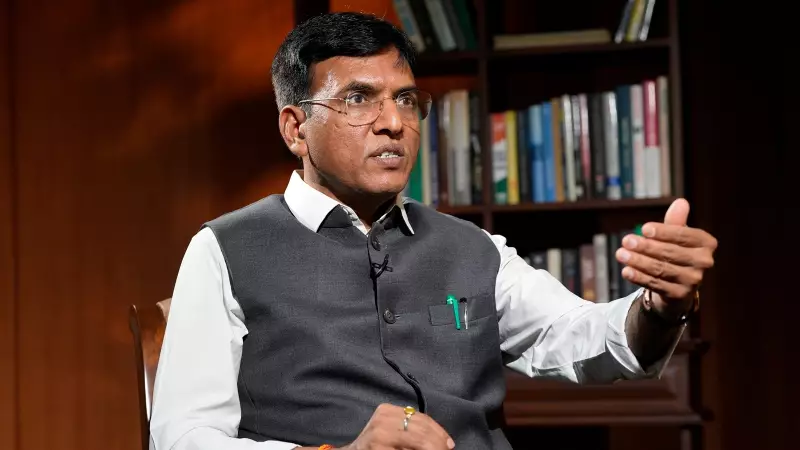
In response, Minister Mandaviya highlighted government initiatives like the Khelo India School and University Games for talent identification. He cited the 'Gujarat model' of district-level sports schools—whether private or government—with good infrastructure, where identified talent can be nurtured with sports science, quality coaching, and exposure. "There is no dearth of brain power and manpower, but a dearth of a system. If this system is set then there is no stopping (us)," Mandaviya asserted.

Echoing the need to integrate sports into education, Hari Ranjan Rao, Secretary (Sports), Government of India, revealed that the recent National Chief Secretary Conference dedicated a day to discussing education and sports from the anganwadi level upwards, with Prime Minister Narendra Modi in attendance. He confirmed that the Sports and School Education Ministries are collaborating to formulate a strategy for embedding sports culture into the curriculum.
Demand for Certified Coaches and Financial Relief
A significant technical gap highlighted was the lack of standardized training for coaches. Aaesha Munawar, Joint Secretary of the Judo Federation of India, stressed the urgent need for a compulsory, graded coach certification exam (Level One, Two, Three, etc.). A former player herself, Munawar argued that coaching is a "mind game" and coaches must be educated first to understand the diverse motivations of athletes—from those who "have to" go to the Olympics to those who "want to" or are simply there on their parents' insistence. She emphasized that grassroots-level coaches are as crucial as elite coaches.
On the financial front, Prashant Kushwaha, President of the Indian Kayaking and Canoeing Association, called for a GST exemption on sports equipment, especially for Olympic sports. He lamented that high GST and import duties mean that for every Rs 100 received, Rs 50 goes back to the government. Kushwaha, the first Indian to be elected President of the Asian Canoe Confederation, also suggested creating a dedicated admission quota for sportspersons in higher education, similar to engineering and medical streams, to secure their future.
Policy Frameworks and an "Athletes First" Pledge
Other key suggestions included framing a robust player retention policy and model bylaws for sports bodies from the club to the national level, as raised by Ajay Kumar, president of the Bihar Olympics Association. Sudhanshu Mittal, President of the Kho-Kho International Federation, proposed mapping existing grassroots infrastructure and utilising human resources from the army and paramilitary forces to train students at the taluka level.

Minister Mandaviya assured the gathering that all these issues are being actively worked on. He reiterated the government's "non-negotiable" goal of a top-10 finish in the Olympic medal tally, demanding consistent improvement from the 2026 Asian Games onwards. He announced upcoming policy initiatives like transparent selection trials, the "One Corporate, One Sport" model, and enhanced athlete welfare packages, while warning federations to end internal politics, corruption, and governance disputes.
Concurrently, following the IOA's Annual General Meeting in Ahmedabad, IOA President P.T. Usha announced a decisive "athletes first" approach. For the first time, the IOA will host an Athletes' Commission meeting, a forum run by and for athletes, to address career transition, safe sports, mental wellness, anti-doping, and media handling. This move, alongside governance reforms discussed at the AGM, aims to place athlete welfare at the heart of India's Olympic movement as the country builds towards 2030 and beyond.