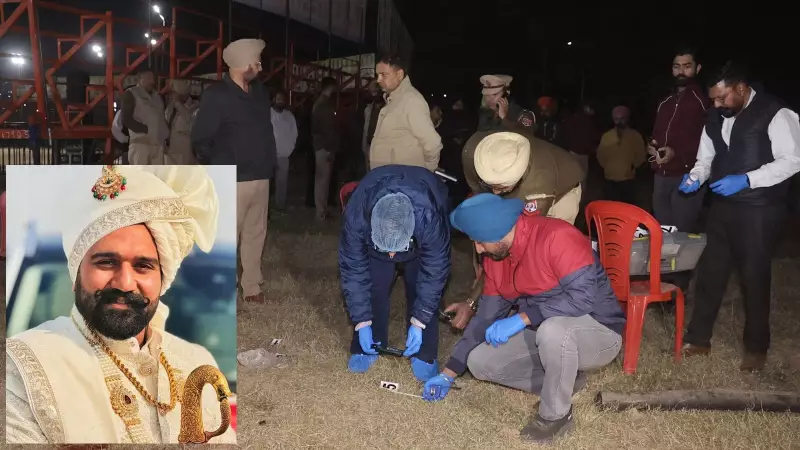
The fatal shooting of kabaddi promoter Kanwar Digvijay Singh, popularly known as 'Rana Balachauria', at a crowded tournament in Mohali's Sohana on December 15, has brutally exposed the dark underbelly of Punjab's beloved rural sport. The incident shattered the nostalgic myth of kabaddi as a simple game rooted in village soil, revealing instead a high-stakes, Rs 100-crore industry entangled with organized crime, betting syndicates, and gang rivalries.
From Village Fields to a Global Money Circuit
The transformation of kabaddi is starkly visible in its financial scale. Sarwan Singh, a veteran chronicler of the sport, highlights the massive budgets: tournaments in Punjab now offer prize money ranging from Rs 1 lakh to a staggering Rs 40 lakh. The scale multiplies overseas, with events in England costing around £100,000 and in Toronto reaching $400,000 to $500,000. This cash influx is mirrored in the professional arena; the Pro Kabaddi League's June 2025 auction saw franchises spend nearly Rs 38 crore for 121 players, with Iranian defender Mohammadreza Shadloui fetching a record Rs 2.23 crore.
According to DIG (Anti-Gangster Task Force) Gurmeet Chauhan, the game's metamorphosis was significantly driven by the diaspora, particularly from the Doaba region, who injected large sums of money starting in the early 2000s. While the Jagdish Bhola drug racket—which implicated several NRI promoters—briefly cast a shadow, the financial flow quickly found "murkier routes." The internet further globalized its reach, with YouTube channels like Kabaddi365, boasting over 2.3 million subscribers, streaming rural matches to millions worldwide, generating lakhs from streaming rights and advertisements.

Blood on the Court: A Trail of Violence
The past three years have witnessed a disturbing spike in kabaddi-linked violence, directly correlated with the rising monetary stakes. The killing of Balachauria is not an isolated event. In March 2022, international player Sandeep Nangal Ambian was gunned down during a tournament in Jalandhar. January 2025 saw the arrest of six members of the Kaushal Chaudhary gang for their alleged involvement in the Ambian case and another killing. Later in 2025, player Tejpal Singh was shot in Jagraon, and Gurvinder Singh was killed in Samrala, with the Lawrence Bishnoi gang claiming responsibility.
In the Balachauria case, police arrested alleged mastermind Aishdeep Singh and killed accused Harpinder Singh Middu in an encounter, though key shooters remain at large. Investigators state these violent acts often stem from feuds over tournament hosting rights and control of lucrative circuits. "It's about turf, not tradition," explained a police officer probing the case, noting that gangs like Bambiha and Lawrence Bishnoi's network are vying for dominance where money, betting, and influence freely circulate.
Betting, Fixing, and Gangster Patronage
At the heart of this turmoil lies a flourishing underground economy of betting and match-fixing, spanning from the Pro Kabaddi League to local circle-style matches. Police sources reveal that players face pressure to throw matches or fix raids, with threats emanating from bookies linked to criminal gangs. Wagers and payments are managed through encrypted apps, making the racket notoriously difficult to crack.
Gangsters have deeply embedded themselves in the sport's ecosystem. They act as proxies for big players, invest in teams, and use match outcomes to settle scores or debts. "They dictate everything, from sponsorships to celebrity appearances," an investigator said, adding that they control both the official prize money and the substantial off-the-book transactions. DIG Chauhan pointed out that kabaddi tournaments, which attract sponsors targeting the rural market, are also used as fronts for money laundering. Even local events see crores in informal sponsorship.
This involvement serves a dual purpose: financial gain and image-building. "They want rural youth to see them as patrons of sport, not just criminals," a police officer noted.

Migration Pipeline and Calls for Regulation
Kabaddi's international footprint has also turned it into an immigration pipeline. Sarwan Singh noted that in 2011 alone, over a thousand individuals claiming to be kabaddi players travelled west on sports visas, with many never returning. He estimates 60-70 academies in Punjab now primarily train players hoping to reach Canada or the UK through kabaddi, with some clubs acting as fronts for illegal immigration or 'kabootarbaazi'.
Veterans of the sport warn of an impending collapse without strict regulation. Coach Harpreet Singh Baba lamented the loss of oversight, with hundreds of unregistered private clubs hosting matches late into the night. While kabaddi federations abroad have called for a one-year tournament freeze to restore discipline, experts believe it is futile without state intervention. Sarwan Singh advocates for mandatory dope tests, day-time matches, and robust government oversight to reclaim the sport from the clutches of big money and muscle power. The bullets fired in Sohana were a grim reminder that the soul of Punjab's kabaddi is now caught in a dangerous crossfire between crores and crime.