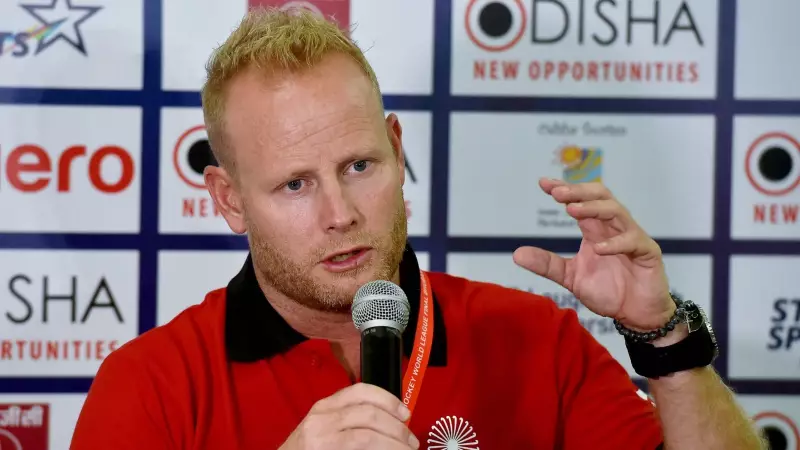
In a dramatic return, Sjoerd Marijne has once again taken charge of the Indian women's hockey team, stepping into a role fraught with immediate challenges and internal discord. The Dutchman, who masterminded the team's historic fourth-place finish at the Tokyo Olympics, was officially re-appointed as chief coach on Friday. He replaces Harendra Singh, who resigned last month amid a cloud of controversy and poor results.
A Familiar Saviour in a Time of Crisis
This marks Marijne's third stint with the team, having first taken over in 2017 when the squad was at its lowest ebb after a bottom-place finish at the Rio Olympics. His previous tenure, which lasted until 2021, is widely credited with transforming the team into a competitive global unit. Hockey India officials revealed that senior players themselves recommended Marijne's name, hoping he can replicate his past success and pull the team out of its current mess.
The 51-year-old coach returns with a clear yet daunting mission. The team is set to compete in a do-or-die World Cup qualifier in Hyderabad from March 8 to 14, giving him just over a month to prepare. Since his departure after the Tokyo Games, the team has regressed under two different coaches—failing to qualify for the Paris Olympics and suffering relegation from the elite FIH Pro League.

On-Field Struggles and Off-Field Rifts
Marijne is acutely aware of the scale of the task. In an interview last August, he pointed out that the team's world ranking of 9 (now 10) indicated underlying problems. He cited observations from a Pro League match where the Indian team struggled with speed and ball possession, relying on individual brilliance rather than cohesive team play.
The challenges, however, extend far beyond tactics and fitness. The team is embroiled in significant internal strife. Harendra Singh's resignation, officially for 'personal reasons', was preceded by a damning letter from a group of players to Hockey India and the sports ministry. The letter alleged favouritism, poor behaviour, and a string of disappointing results.
It also questioned the leadership, accusing captain Salima Tete of 'misusing her position' and highlighting a non-functional relationship between the captain and vice-captain. This signals a deep rift that Marijne must urgently mend.
The Support Staff and the Road Ahead
Marijne will not be working alone. He is rejoined by a power-packed support staff, a key factor in his previous success. Former Argentine international Matias Vila will serve as the analytical coach, bringing his experience from two Olympic Games.
Perhaps most crucially, scientific advisor Wayne Lombard also returns. The South African performance expert, who worked wonders with the team's fitness before Tokyo and has also trained stars like Tejaswin Shankar and Vinesh Phogat, will be vital in quickly restoring the squad's physical conditioning.
Marijne's past success was built on democratising the team environment and fostering open communication, a style praised by former captains like Rani Rampal and Savita Punia. Re-establishing that trust and unity will be his first and most critical test as he begins the camp on January 14.
With the World Cup qualifiers looming, Marijne's third chapter with Indian women's hockey begins under immense pressure. The next month will reveal if the architect of their greatest modern achievement can once again turn turmoil into triumph.