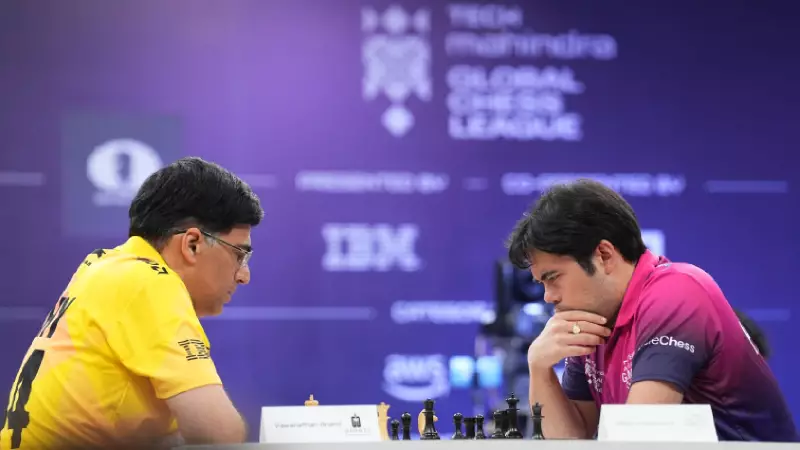
In a candid interview during his stint at the Global Chess League in India, American Grandmaster Hikaru Nakamura has challenged one of the game's oldest mantras: the need for gruelling, all-day study sessions. The world-renowned player, who is set to be a contender at the prestigious Candidates tournament in Cyprus next year, argues that the approach to elite chess preparation has fundamentally changed.
Redefining Preparation for the Candidates
While his rivals for the Candidates crown are likely filling their calendars with events, Nakamura has only one major tournament circled before the 2025 showdown: the Speed Chess Championship in London in early February. The recent arrival of his first child and the demands of his massively popular YouTube channel are his other primary focuses. When asked about balancing these roles—parent, content creator, and elite competitor—Nakamura was clear that his strategy remains consistent with his previous Candidates appearances in 2022 and 2024, with the notable and joyful addition of fatherhood.
"It's about being very focused and using my time in a manner that makes the most sense," Nakamura explained to The Indian Express. He directly critiqued the traditional path, stating, "If you look at a lot of the top players, they spend, let's just say, 8 to 10 hours a day studying chess. I would argue that this is very much an old-world mentality."

The 'Work Smarter, Not Harder' Chess Philosophy
Nakamura's core philosophy is a modern twist on a classic adage. He believes intense focus on the right material for four hours can be far more efficient than a meandering ten-hour grind. "I think there are ways of using your time and being smarter than just studying for that long," he said. "It comes back to the classic saying, 'work smarter, not harder'. I don't study as much as some of the other players, but I think I'm much better at studying the things that matter."
He extended this critique to other established notions. While acknowledging its importance, he suggested that the intense focus on opening preparation is somewhat "outdated" in an era of supremely powerful chess engines. He pointed to World Champion Magnus Carlsen's unparalleled endgame skill as a more critical differentiator. Nakamura also highlighted how the digital age has transformed learning, noting that the blitz games once frowned upon by trainers are now a "gold standard" for young talents.
Content Creator First, Chess Player Second
In a revealing shift of identity, Nakamura stated he now considers himself "a content creator first." He explained that creating daily YouTube videos is his consistent routine, while streaming and tournament chess fit around it. The financial reality is a key driver: "My income or my living is derived from content creation. It pays much better than professional chess."
Far from seeing this as a distraction, Nakamura believes this diversification is a psychological strength. "Having other things that you care about or focus on as well has huge benefits," he asserted, calling the idea that one must spend their entire life on chess an "outdated" concept. For him, the freedom of a successful parallel career removes financial pressure and allows him to simply enjoy competing at the highest level, which in turn improves his performance.
As the chess world gears up for the 2025 Candidates, Nakamura's approach represents a clear generational shift. He is redefining what it means to be a top grandmaster in the 21st century, proving that elite success can be built not just on endless study, but on strategic focus, modern content savvy, and a balanced life.