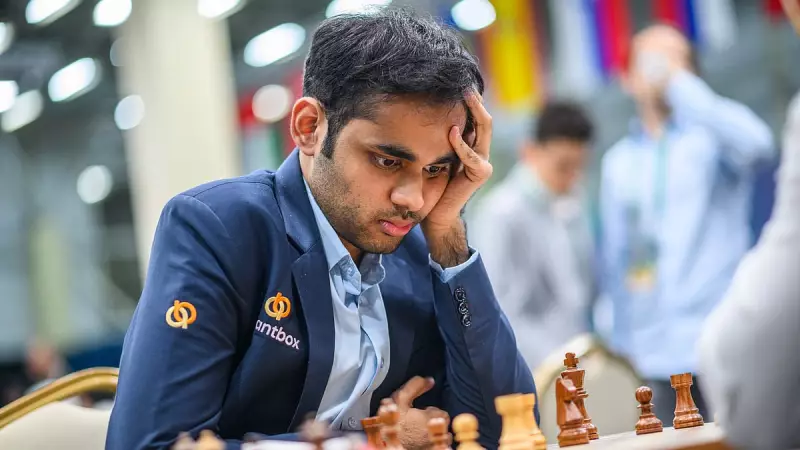
Indian chess sensation Arjun Erigaisi faced a challenging battle in the second round of the FIDE World Cup, ultimately settling for a hard-fought draw against Russian Grandmaster Evgeny Shtembuliak. The intense match concluded with a 1-1 score, pushing the competition into tie-breakers that will determine who advances in this prestigious tournament.
Tense Opening Game Sets the Stage
The first classical game of the second round saw both players demonstrating exceptional skill and strategic thinking. Arjun Erigaisi, playing with white pieces, initiated the game with confidence, but Shtembuliak responded with equal determination. The position remained balanced throughout the match, with neither player able to secure a decisive advantage.
After several hours of intense play and careful maneuvering, the game concluded in a draw. This result set the stage for a crucial second game where Erigaisi would need to play with black pieces against his Russian opponent. The pressure mounted as both players understood the significance of this encounter in the knockout format of the tournament.

Second Game Drama and Final Outcome
In the return game, Evgeny Shtembuliak took advantage of playing with white pieces and applied early pressure on the Indian Grandmaster. Erigaisi demonstrated remarkable defensive skills and resilience, managing to neutralize his opponent's initiatives and maintain equilibrium on the board.
The game progressed through multiple phases, with both players exploring various tactical possibilities and strategic plans. Despite several tense moments and complex positions, neither competitor could break through the other's defenses. After extensive calculations and careful play, the players agreed to a draw, resulting in an overall 1-1 score in the classical portion of their match.
The drawn result means the match will now be decided through rapid tie-breakers, adding another layer of excitement to this already dramatic encounter. The tie-breaker format typically involves shorter time controls, testing players' speed, accuracy, and nerves under increased pressure.
Tournament Context and Indian Representation
The FIDE World Cup represents one of the most significant events in the chess calendar, attracting top Grandmasters from around the world. For Indian chess enthusiasts, Arjun Erigaisi's performance is being closely watched as he represents the growing strength of Indian chess on the global stage.
Several other Indian players are also competing in the tournament, contributing to what many are calling a golden era for Indian chess. The performance of Indian Grandmasters in international competitions has been steadily improving, with multiple players achieving remarkable successes against established world-class opponents.
The tournament format is particularly challenging due to its knockout nature, where a single loss can eliminate a player from contention. This adds tremendous pressure to every game and requires consistent performance throughout the event.
As the competition progresses, all eyes will be on the tie-breaker matches to see if Arjun Erigaisi can overcome his Russian opponent and advance to the next round. The outcome will not only affect his personal tournament journey but also contribute to India's growing reputation as a chess powerhouse.
Chess fans across India and the world are eagerly awaiting the results of the tie-breakers, which promise to deliver exciting, fast-paced action as these elite players battle for advancement in one of chess's most prestigious tournaments.