Uruguay Eliminated from World Cup 2026 Group Stage
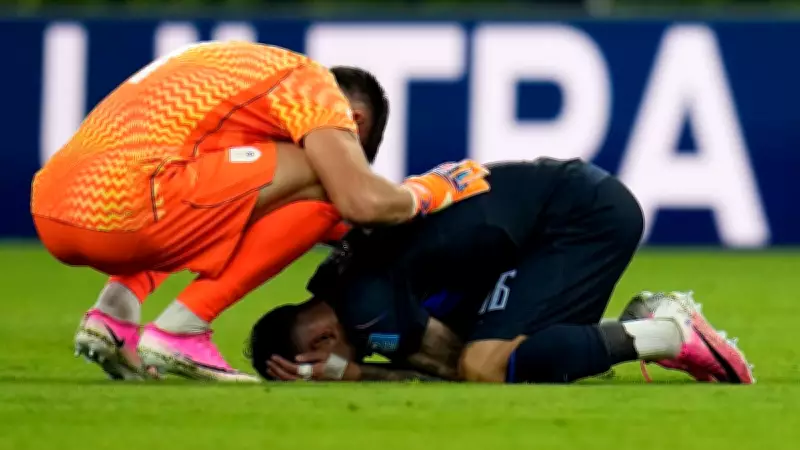
Uruguay's journey in the FIFA World Cup 2026 came to a disappointing end as they failed to advance beyond the group stage for the first time since 2002. The two-time world champions managed only one win in three matches, finishing third in Group H behind Portugal and South Korea. Analysts have pointed to three key factors behind their downfall.
Defensive Vulnerabilities Exposed
Uruguay conceded five goals in three group matches, a stark contrast to their traditionally solid defense. Against Portugal, they allowed two goals from set pieces, highlighting a lack of organization. Coach Marcelo Bielsa's high-pressing system left gaps at the back, exploited by faster opponents. The absence of injured center-back Jose Maria Gimenez was keenly felt, as his replacement, Sebastian Caceres, struggled with positioning.
Midfield Creativity Drought
Uruguay's midfield failed to create clear chances, managing only three shots on target per game on average. The aging duo of Federico Valverde and Rodrigo Bentancur lacked dynamism, while younger players like Manuel Ugarte were ineffective in linking defense to attack. According to football analyst Tim Vickery, "Uruguay's midfield lacked the ingenuity to break down compact defenses, making them predictable."

Over-Reliance on Aging Stars
Luis Suarez, now 39, and Edinson Cavani, 38, started all three matches but managed only one goal combined. Their lack of pace reduced Uruguay's counter-attacking threat. Despite Darwin Nunez's efforts, the team's attack became stagnant. Bielsa admitted post-match, "We depended too much on our experienced players, but they couldn't sustain the intensity."
Impact and Way Forward
This early exit raises questions about Uruguay's future. With key players nearing retirement, the federation must invest in youth development. The 2026 World Cup marks a low point for a nation with a rich footballing history, but it also offers an opportunity to rebuild.