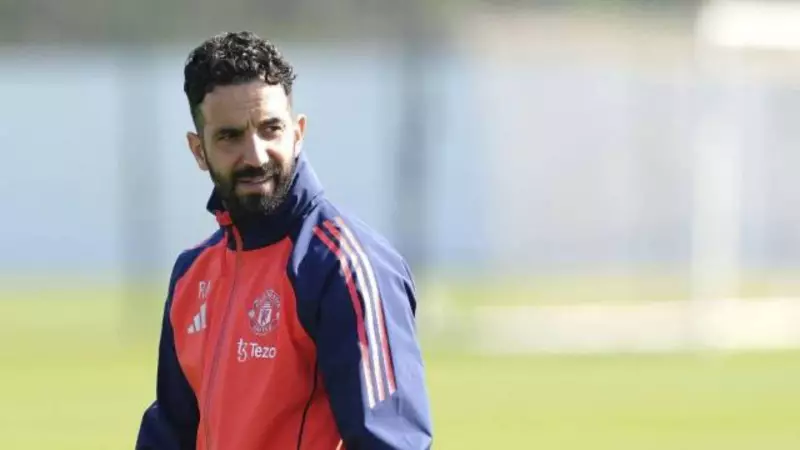
Manchester United's head coach, Ruben Amorim, has opened up about his deliberate decision to delay changing the team's formation, stating he did not want his players to think he was yielding to external pressure. The Portuguese manager finally switched to a back four during the Boxing Day Premier League clash against Newcastle United, a move that resulted in a crucial 1-0 victory and a first clean sheet in ten games.
Resisting the Pressure: Amorim's Philosophical Stand
Since taking over from Erik ten Hag, Amorim has consistently employed a three-defender system, even amidst a string of disappointing results. He has now clarified that this stubbornness was a calculated part of building a long-term identity for the club. Amorim pointedly stated that changing the system earlier, as constantly suggested by journalists, would have sent the wrong message to his squad.
"When you (journalists) talk about changing the system all the time, I cannot change because the players will understand that I am changing because of you," Amorim told Sky Sports. He emphasised that such a perception would signal "the end for the manager," undermining his authority and philosophy.

A Strategic Shift at the Right Time
The manager explained that the timing of the change, coming in the match against Newcastle United, was strategic. He believes his squad has now reached a point where they comprehend his core principles, making them ready to adapt. "Today is a different moment," Amorim said ahead of United's Tuesday fixture against Wolves.
He cited a combination of factors, including a lack of available players, which necessitated adaptation. However, he stressed that the shift was born from internal development, not external noise. "It is not because of the pressure of you guys [journalists] or the fans. It is because now we understand the way we want to play and the principles are the same," he asserted.
Building for the Future with Flexibility
Amorim views this new tactical flexibility as a sign of progress. He indicated that the team will not be permanently wedded to a back three, especially when the full squad is available. This adaptability, he argues, will make Manchester United a more robust and unpredictable side.
"I think we are going to become a better team because when all the players return we are not going to play all the time with three defenders. We are going to improve," Amorim stated. The victory over Newcastle, secured with a more conventional defensive line, has provided tangible proof of concept for his measured approach.
The manager's comments reveal a leader prioritising process over panic, aiming to instil a clear footballing identity at Old Trafford before introducing tactical variations. The win offers a much-needed boost, but Amorim's broader project remains firmly focused on the long-term vision he is trying to implement.