ISL's Home Fixture Imbalance Sparks Fairness Debate Amid Relegation Pressure
The ongoing Indian Super League (ISL) season has reached its ninth matchday, with Mohun Bagan Super Giant currently leading the standings. However, their position is being closely contested by Mumbai City FC, FC Goa, East Bengal FC, Bengaluru FC, and Jamshedpur FC. At the opposite end of the table, Mohammedan Sporting finds itself in a precarious position, facing the strong possibility of relegation.
The Stark Reality of Home Advantage Disparity
While the league table provides a snapshot of team performance, it fails to reveal the significant inequality in home fixtures that has characterized this season. Mohammedan Sporting has played eight matches so far, managing to secure just one point from a draw against Odisha FC on April 17. Crucially, only two of those eight games have been home fixtures—a 0-2 loss to FC Goa on February 20 and a 1-2 defeat to Bengaluru FC on March 7.
Based on the current schedule, Mohammedan Sporting will have played only three home games by the season's conclusion. This stands in stark contrast to other teams that have benefited from more favorable home schedules.

Contrasting Fortunes of Bengal Clubs
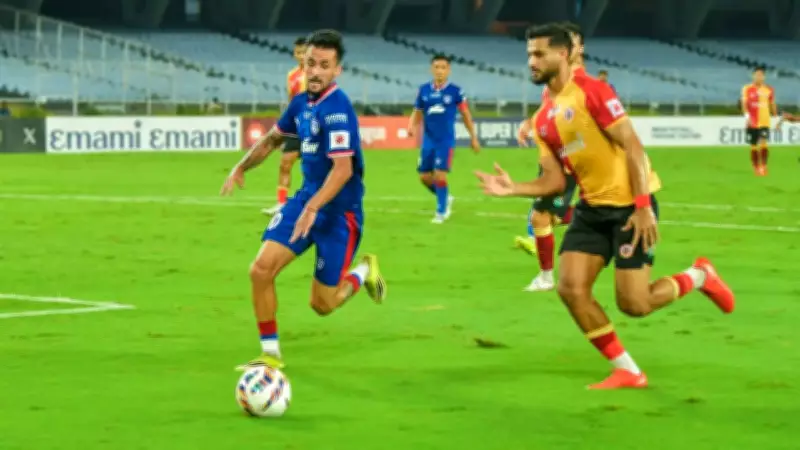
The importance of home advantage becomes evident when examining the records of other Bengal-based clubs. Mohun Bagan Super Giant has played five of their nine matches at home, earning 12 of their 20 total points from these fixtures. East Bengal has enjoyed an even more advantageous schedule, playing seven home games out of eight overall and collecting 12 of their 15 points from these matches.
East Bengal's upcoming 'home' fixture against Odisha FC will be played in Goa due to elections in West Bengal, but they will return to their home base to face Punjab FC on May 11. Overall, nine of East Bengal's twelve scheduled matches will have been played at home.
Broader Pattern Across Indian Football
This inequality extends beyond the ISL to affect other tiers of Indian football. Rajasthan United, who finished third in Stage 1 of the Indian Football League and boasted the best home record, will be unable to carry that momentum into the Championship Stage. Following an AIFF directive mandating floodlights, RUFC will play their home matches over 500 kilometers away at Namdhari's facilities in Ludhiana.
Other ISL clubs have also faced venue disruptions. Odisha FC will play their upcoming 'home' matches against Bengaluru FC on May 4 and Punjab FC on May 16 in Goa. Varanasi-based Inter Kashi has played three 'home' games in Kolkata while their stadium is under construction, with this number set to increase to four by season's end. Mohali-based Punjab FC has conducted its home fixtures in New Delhi.
High Stakes of Promotion and Relegation
Amid these scheduling inequalities, the consequences of a poor or successful season carry significant weight. Teams relegated from the ISL to the IFL face substantial impacts including reduced revenue, diminished business opportunities, and decreased broadcast coverage. Conversely, the championship-winning team stands to gain higher prize money, qualification for continental football, and enhanced appeal to top talent.
The current AIFF Constitution, ratified by the Supreme Court, mandates promotion and relegation in India's top division, bringing the ISL into compliance with Asian Football Confederation statutes. In 2019, the AIFF, clubs, and then-commercial partner Football Sports Development Limited accepted the AFC's proposal to implement relegation starting from the 2024-25 season—a commitment that will be honored beginning this season.
Clubs' Appeal and Regulatory Challenges
In January, all fourteen ISL clubs wrote to the Sports Ministry requesting that relegation be suspended for this season and for three to five subsequent seasons. They proposed designating the 2025-26 season as a "virtual force majeure" circumstance. However, no progress has been made on this matter since.

Past rulings from FIFA and the Court of Arbitration for Sport on similar cases suggest that ISL clubs may not escape their contractual obligations, including salary payments. Nevertheless, the fundamental inequity of this season's fixture distribution cannot be overlooked. As AIFF chief Kalyan Chaubey himself described the situation as a "crisis," the implementation of promotion and relegation across India's top two divisions raises serious questions about competitive fairness.