Iran's World Cup Future Hangs in Balance Amid Geopolitical Tensions
The participation of Iran's men's national football team in the upcoming 2026 FIFA World Cup has been cast into serious doubt following stark warnings from both U.S. President Donald Trump and Iranian officials. The tournament, scheduled to commence on June 11 across the United States, Canada, and Mexico, is now overshadowed by escalating political friction between the United States and Iran, raising critical questions about the safety and feasibility of the Iranian squad's involvement.
Qualification Success Meets Political Turmoil
Iran had previously secured its spot in the competition by finishing at the top of its Asian qualifying group, earning a place in Group G alongside Belgium, Egypt, and New Zealand. Their opening match was set for June 15 against New Zealand in the United States. However, the celebratory mood has been abruptly dampened by the volatile geopolitical landscape, with recent developments injecting significant uncertainty into the team's plans.
Trump's Warning Adds to Safety Concerns
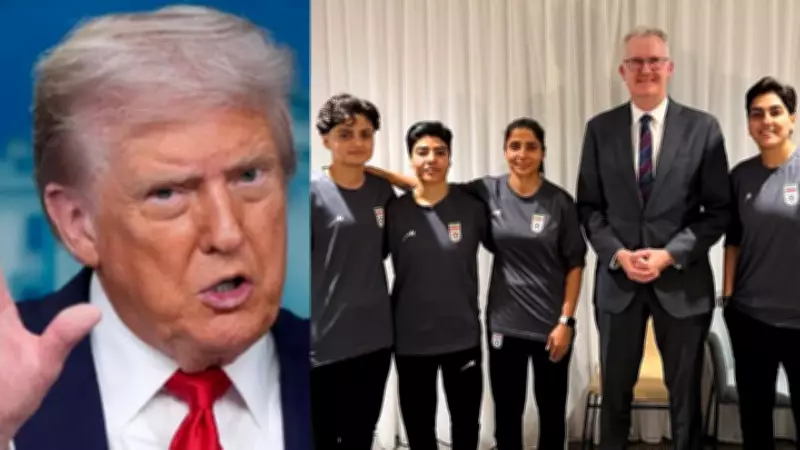
In a message posted on Truth Social, former U.S. President Donald Trump issued a pointed statement regarding the Iranian team's potential attendance. While technically welcoming them to the World Cup, Trump expressed grave reservations about their safety, stating, "The Iran National Soccer Team is welcome to The World Cup, but I really don't believe it is appropriate that they be there, for their own life and safety. Thank you for your attention to this matter!" This warning has amplified existing anxieties, adding a layer of diplomatic complexity to an already tense situation surrounding the tournament.

Iranian Minister Cites Conflict as Barrier
Further complicating matters, Iran's Sports and Youth Minister, Ahmad Donyamali, suggested in an interview on Iranian state television that the team might not travel to the World Cup at all. He attributed this possibility to the ongoing conflicts and adverse conditions within the country. Donyamali emphasized, "Given that this corrupt government has assassinated our leader, under no circumstances do we have the appropriate conditions to participate in the World Cup. Our boys are not safe, and conditions for participation do not exist." He elaborated on the toll of recent months, noting, "Over the past eight or nine months, two wars have been imposed on us and several thousand of our people have been killed and martyred. Therefore, we definitely do not have the possibility for participation."
Tournament Implications and FIFA's Stance
The 2026 FIFA World Cup, running from June 11 to July 19, is poised to be the largest in history with 48 teams competing. Iran's scheduled matches in the group stage against Belgium, Egypt, and New Zealand now hang in the balance. Should Iran officially withdraw, tournament organizers and FIFA would face the challenging task of selecting a replacement team. As of now, no definitive decision has been announced by FIFA, leaving the situation fluid and unresolved as the event approaches. The uncertainty underscores the profound impact of international politics on global sports, with fans and stakeholders awaiting clarity on Iran's fate in the competition.