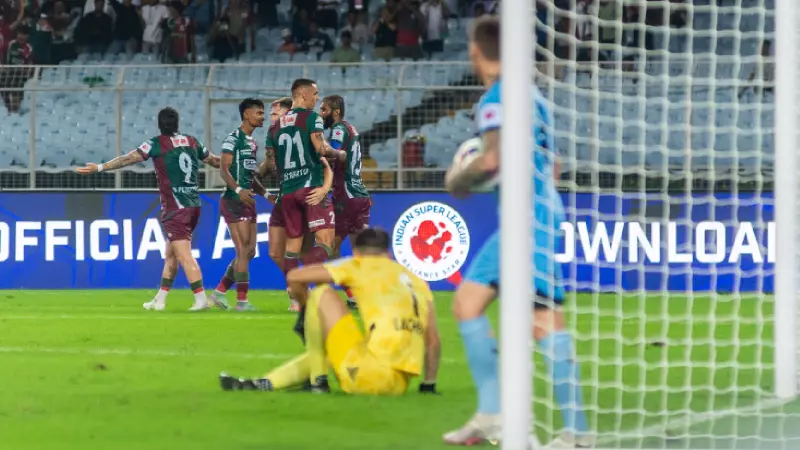
The All India Football Federation (AIFF) has laid out an ambitious two-decade roadmap for the future of the Indian Super League, aiming to take direct ownership and operational control of the country's premier football competition. This proposal was presented to ISL club officials during a crucial meeting held on Friday, marking a significant shift in the league's governance model.
The Core Proposal: AIFF Takes the Helm
Under the new plan, the AIFF would own and operate the top-division league, which is proposed to transition to a June to May annual cycle, aligning with the international football calendar. A key financial aspect involves the federation sharing half of the central revenue equally among all participating teams. The AIFF plans to retain 10% of the total revenue share for itself, a reduction from the 14% proposed earlier by the Football Sports Development Limited (FSDL).
For the inaugural season under this new structure, the AIFF has outlined an operational budget of Rs 70 crore. Each club would be required to pay a standard participation fee of Rs 1 crore every year. However, the federation has clarified that this fee would be reimbursed to the clubs from the central revenue pool. The league's governance would be managed by a board with limited autonomy, while the AIFF retains final financial control.

Clubs Weigh the Proposal Amid Key Concerns
The clubs have received the blueprint and are set to discuss it internally before providing their feedback to the AIFF. Mandar Tamhane, the CEO of NorthEast United FC, acknowledged that the proposal establishes a solid foundation for further negotiations. The stakeholders are scheduled to meet again in New Delhi on Monday, December 29, to fine-tune the details.
Despite the forward-looking plan, several concerns linger among the club officials. Primary apprehensions revolve around the overall costs, player salary caps, and investment security for franchise owners. Furthermore, there is continued uncertainty regarding the start date for the 2025-26 ISL season. The absence of a broadcast partner, following the expiry of the deal with Star Sports (a co-owner under the previous arrangement), also raises questions about broadcast quality and revenue.
Sporting Integrity and the Road Ahead
A pivotal element of the AIFF's plan is the preservation of promotion and relegation, a mechanism designed to protect sporting merit and create a dynamic football ecosystem. This comes after the AIFF recently rejected a blueprint from the clubs where they recommended owning the league themselves.
The proposal arrives at a critical juncture, as the previous agreement between the AIFF and FSDL, the Reliance Industries subsidiary that has owned and operated the ISL since its inception in 2014, expired on December 8. FSDL did not submit an official bid when the AIFF floated a tender for a new commercial partner, paving the way for the federation's direct involvement.
The coming days will be decisive as clubs deliberate on the financial and structural implications of this 20-year vision. The outcome will shape the trajectory of professional football in India for a generation.