New Four-Year Agreement Reached Between AIFF and ISL Club Committee
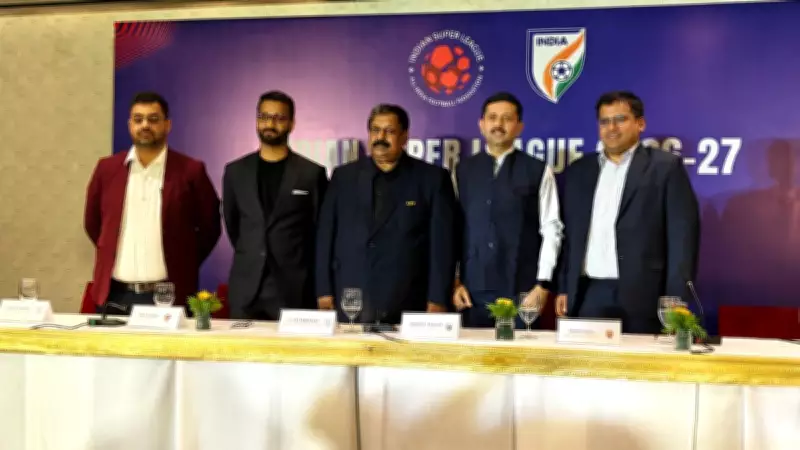
The All India Football Federation (AIFF) and the Indian Super League (ISL) Club Committee have jointly announced a landmark four-year deal that will govern the operational framework of the league through the 2029-30 season. This agreement, finalized after months of negotiations, aims to provide stability and long-term planning for Indian football.
According to the official statement, the deal includes a revenue-sharing model that allocates 30% of the league's central sponsorship and broadcasting income to the clubs, ensuring financial sustainability. The agreement also outlines a clear pathway for the development of grassroots football, with clubs required to invest at least 5% of their annual budget into youth academies.
OCI Player Regulations Updated
A key highlight of the new deal is the revision of regulations concerning Overseas Citizens of India (OCI) players. Under the new rules, OCI players will no longer be counted as foreign players in the ISL, allowing clubs to field more Indian talent. This change is expected to boost the participation of players of Indian origin who hold foreign passports.

AIFF President Kalyan Chaubey stated, "This agreement marks a new chapter for Indian football. By treating OCI players as domestic, we are opening doors for talented individuals who have a connection to India, while also maintaining the competitive balance of the league." The move is anticipated to increase the pool of available players and enhance the quality of the league.
Financial Implications and Club Commitments
The new deal also introduces a salary cap for clubs, set at ₹30 crore per season, to ensure financial prudence. Clubs exceeding this cap will face penalties, including a fine of 10% of the excess amount. Additionally, the agreement mandates that each club must have at least one Indian head coach or technical director by the 2027-28 season, promoting local expertise.
ISL Club Committee Chairman Nilesh Patel commented, "This is a win-win for all stakeholders. The clubs have agreed to long-term commitments that will professionalize the league, and in return, they get a fair share of revenues and regulatory clarity." The deal also includes provisions for increased investment in infrastructure, with a target of having at least 10 ISL clubs with dedicated training facilities by 2028.
Impact on Indian Football Ecosystem
The agreement is expected to have a ripple effect on the entire Indian football ecosystem. The AIFF has committed to using 10% of its share of league revenue for grassroots development, including the establishment of 50 new football academies across the country over the next four years. The deal also includes a roadmap for the promotion and relegation system, with the I-League and ISL set to be integrated by 2029.
Former India captain Sunil Chhetri welcomed the development, saying, "This is a positive step for Indian football. The focus on youth development and the clarity on OCI players will help us compete at higher levels." The AIFF and ISL Club Committee have agreed to review the deal annually to ensure it meets evolving needs.
The new four-year deal is seen as a crucial milestone in the professionalization of Indian football, providing a stable framework for clubs to plan long-term strategies. With the OCI player regulation change, the league is expected to become more competitive and inclusive, potentially attracting more talent from the Indian diaspora.