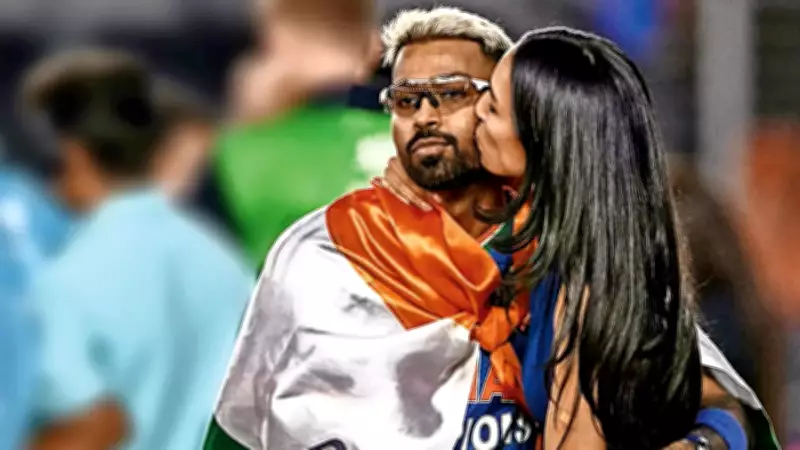
World Cup Victory Overshadowed by Debate Over Hardik Pandya's On-Field Kiss
The night India clinched the T20 World Cup championship should have been remembered for sporting glory and national pride. Instead, the celebration has become mired in controversy as attention has shifted from the trophy to a brief moment of affection between star all-rounder Hardik Pandya and his girlfriend Mahieka.
The Celebration That Divided the Nation
As fireworks illuminated the sky and anthems blared across the stadium, the traditional post-victory scene unfolded with players' families joining the champions on the field. Wives, girlfriends, parents, and even young children created a heartwarming tableau of celebration following India's hard-fought victory.
Amid this celebratory chaos, Hardik Pandya stood out with his particularly exuberant display of joy. The cricketer engaged in spontaneous garba dancing on the turf, skipped energetically across the field, and shared what appeared to be a passionate kiss with his partner Mahieka. This moment of public affection, captured by cameras and broadcast to millions, would become the unexpected focal point of post-match discussion.

The Social Media Storm That Followed
Within minutes of the celebration, social media platforms erupted into what can only be described as a digital battleground. The brief display of affection between Pandya and Mahieka sparked immediate and intense debate across Twitter, Instagram, and Facebook, with users dividing into clearly defined camps.
Traditionalists argued that such public displays of affection were inappropriate for a national sporting celebration, suggesting they detracted from the team's achievement and set a poor example for younger fans. "This is about cricket, not personal relationships," wrote one prominent commentator, capturing the sentiment of this group.
Progressives countered that athletes have every right to celebrate personal milestones alongside professional achievements, and that criticizing natural expressions of affection reflected outdated social norms. "Let athletes be human beings first," argued a popular sports journalist in a widely shared post.
The Meme Culture Response
As with any modern controversy, the debate quickly spawned an avalanche of memes and viral content. Internet creators produced:
- Countdown timers measuring the exact duration of the kiss
- Comparisons to other famous sports celebrations worldwide
- Humorous edits placing the moment in various fictional contexts
- Side-by-side comparisons with other PDA incidents in cricket history
This meme culture both amplified and trivialized the debate, creating a strange dichotomy where a serious discussion about social norms coexisted with lighthearted internet humor.
Broader Implications for Sports Culture
The controversy raises important questions about the evolving nature of sports celebrations in India. As the country continues to modernize and globalize, traditional expectations are increasingly colliding with more contemporary attitudes toward personal expression.
Sports psychologists have noted that such debates often reflect deeper societal tensions about:
- The appropriate boundaries between public and private life for celebrities
- Changing gender norms and relationship expectations
- The role of athletes as cultural ambassadors and role models
- Generational divides in attitudes toward public affection
What began as a spontaneous moment of celebration has thus become a microcosm of larger cultural conversations happening across Indian society.
The T20 World Cup victory will undoubtedly be remembered as a significant achievement in Indian cricket history. However, the unexpected controversy surrounding Hardik Pandya's celebration ensures that discussions about this match will extend far beyond batting averages and bowling figures, touching instead on fundamental questions about personal expression, public expectations, and the evolving nature of sports culture in modern India.