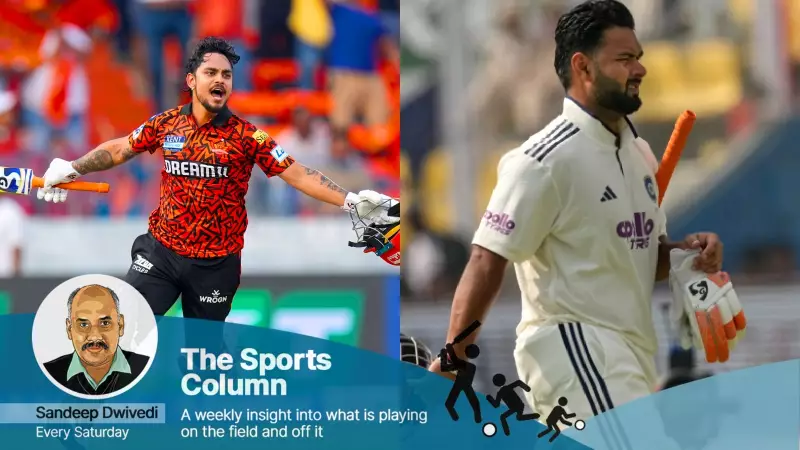
The dramatic swings in fortune for India's wicket-keepers have reached a pivotal point in early 2026. Rishabh Pant, the mercurial talent known for his breathtaking audacity, finds himself out of the squad for the upcoming T20 World Cup at home. His place has been taken by Ishan Kishan, a player cut from a similar cloth but currently riding a wave of domestic form. This selection saga offers a crucial lesson on the high-wire act of modern aggressive batting.
The Cult of Speed: Pant's High-Risk, High-Reward Gamble
Rishabh Pant is, by nature, a compulsive risk-taker. His career is a perpetual rollercoaster, toggling between moments labelled "stupid" and "superb" with alarming frequency. This unique talent has often left coaches and selectors in a state of frustration. His approach is likened to the early test pilots who were determined to break the sound barrier, preferring to crash rather than slow down or eject.
This philosophy came to a head during the recent Test series in South Africa, which India lost. As stand-in captain and wicket-keeper, Pant played a stroke that was widely seen as a clear "brain-fade," leading to significant repercussions. The collateral damage from his Test misadventures was his exclusion from the T20 World Cup squad, with his One-Day International (ODI) future also now in doubt.

Pant's story is one of incredible highs and sudden lows. Just six months prior, during the England tour, he was hailed as a warrior for batting with a fractured toe. He had scored two centuries and three fifties, showing a rare consistency while maintaining his ultra-aggressive style. However, against South Africa, his luck ran out. The recency bias of that failure ultimately cost him a World Cup spot, despite playing a match-winning 42 off 31 balls against Pakistan in the previous T20 World Cup that India won.
Ishan Kishan's Purple Patch and the Swing of the Scales
Enter Ishan Kishan. The left-hander is not fundamentally different from Pant. They share a similar skill-set, a matching temperament, and both are in their late twenties with a love for courting danger. The crucial difference in January 2026 is timing.
Towards the end of 2025, Ishan Kishan hit a purple patch in domestic cricket, perfectly coinciding with Pant's bouts of inconsistency. Fate orchestrated their dramatically fluctuating fortunes, with Kishan's stock rising just as Pant's was dipping. While both have been periodically written off only to bounce back, the weighing scale in the selection meeting swung towards Kishan due to this powerful recency bias. The trend could change again in a few months, but for now, Kishan holds the advantage.
The Eternal Lesson: Carrying the Sword and the Shield
Pant's current predicament serves as a stark lesson for the new generation of batting buccaneers. This growing tribe, which includes England's Harry Brook and Jamie Smith, and India's own teenage sensation Vaibhav Suryavanshi, prioritises an ultra-aggressive creed over traditional batting ethos.
The key to longevity, however, lies in balance. Batting greats with long careers master the risk-reward conundrum; they don't get consumed by it. Ishan Kishan now stands at a crossroads. Will he follow the turbulent path of Rishabh Pant, or will he model his game on someone like Adam Gilchrist—a devastating hitter who also possessed situational wisdom?
Closer to home, the example of Virender Sehwag is instructive. Sehwag was the epitome of a carefree batsman, but when he went to battle, he carried both a sword and a shield. He knew when to attack and when to consolidate. This is the delicate equilibrium Ishan Kishan must now seek. He must carry the sword of aggression that defines his game, but never forget the shield of pragmatism that protects a career. The challenge for Kishan is to embrace the fearless style that got him selected, while learning from the pitfalls that recently ensnared his predecessor.