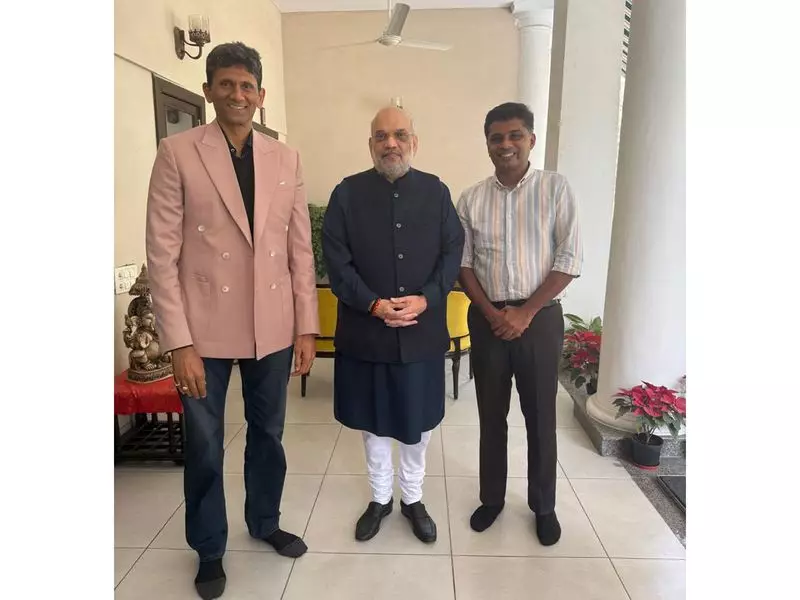
In a significant development for Indian cricket administration, former Indian pacer and current president of the Karnataka State Cricket Association (KSCA), Venkatesh Prasad, held a high-profile meeting in the national capital. The meeting saw Prasad engage with two of the most influential figures in Indian politics and sports governance: Union Home Minister Amit Shah and Honorary Secretary of the Board of Control for Cricket in India (BCCI), Jay Shah.
A High-Profile Convergence in New Delhi
The meeting took place in New Delhi, bringing together key stakeholders from the political and cricketing spheres. While the precise agenda of the discussions was not officially detailed in the initial reports, the convergence of these personalities naturally points towards matters concerning cricket administration and development. Venkatesh Prasad, a respected figure in Indian cricket, leads one of the nation's most prominent and active state cricket associations.
The presence of Amit Shah, a senior Union Minister and a known cricket enthusiast, alongside Jay Shah, the powerful BCCI secretary, underscores the importance of the dialogue. Such interactions often signal strategic discussions on the future trajectory of the sport in the country, infrastructure projects, or broader policy support.

Venkatesh Prasad's Dual Role in Cricket
Venkatesh Prasad is not just a former international cricketer with a distinguished career; he has also transitioned seamlessly into a leadership role within cricket's administrative framework. His election as the president of the KSCA placed him at the helm of cricket affairs in Karnataka, a state with a rich cricketing legacy and home to the M. Chinnaswamy Stadium in Bengaluru.
His involvement means the discussions likely encompassed topics vital to the growth of the game at the state and national levels. The KSCA, under his presidency, has been instrumental in nurturing talent and organizing major domestic and international fixtures.
Potential Implications for Indian Cricket
Meetings of this stature are rarely casual. They typically revolve around strategic planning, governance, and the synergy between state associations and the national board. The involvement of a political heavyweight like Amit Shah could also hint at discussions related to security arrangements for major tournaments, government support for cricketing infrastructure, or the sport's role in national morale and unity.
For Jay Shah, as BCCI secretary, engaging with the head of a major state association is part of crucial stakeholder management. It ensures alignment between the central board's vision and the execution capabilities of state units. Topics such as hosting rights for future events, revenue sharing, player development programs, and the domestic cricket calendar could have been part of the conversation.
This meeting highlights the ongoing professionalization and political interconnectedness of cricket administration in India. As the sport continues to be a major cultural and economic force, such dialogues between administrators, former players, and political leaders are becoming increasingly common to steer its future course.
While the exact outcomes remain to be formally announced, the meeting between Venkatesh Prasad, Amit Shah, and Jay Shah marks a notable moment where the corridors of political power and sporting governance intersect, potentially shaping decisions that will impact millions of cricket fans and stakeholders across India.