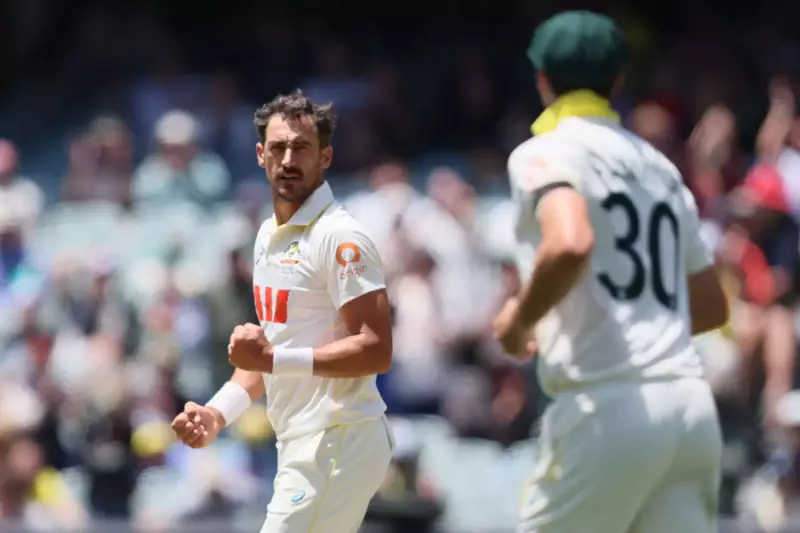
Australian fast bowling spearhead Mitchell Starc has launched a strong appeal to the International Cricket Council (ICC), demanding it seize control and standardise the umpiring technology used in international matches. This call comes after confidence in the Decision Review System (DRS) was severely shaken by a series of contentious incidents during the recent Adelaide Test in the Ashes series.
Adelaide Test Marred by Technology Failures
Controversy first erupted on the opening day of the Test match when England were controversially denied the wicket of Australian batter Alex Carey. The dismissal was overturned due to an error traced back to a miscalibrated Real Time Snicko (RTS) system. The blunder prompted England's head coach, Brendon McCullum, to lodge an official complaint with the match officials.
The problem did not end there. On the second day, England's Jamie Smith found himself at the centre of two more dubious DRS decisions, further fuelling frustration. The accumulating errors led Starc, who was heard on the stump microphone bluntly suggesting Snicko should be "sacked," to voice his concerns publicly after the match concluded.

Starc's Blunt Critique and Central Funding Demand
Expanding on his heated on-field remarks, the left-arm pacer questioned the very structure of how DRS technology is managed. Starc pointedly asked why the global governing body, the ICC, does not centrally fund and mandate a single, uniform technology package for all international series.
"I'm sure it's frustrating for everyone — viewers, officials, broadcasters," Starc stated. "The officials use it, right, so why doesn't the ICC pay for it? And why is it not just one across the board? Why don't we use the same technology in all different series? That's going to perhaps create less confusion or less frustration."
The Root of the Problem: Broadcasters and Cost
Currently, the DRS technology suite is provided and operated by the host broadcaster of each series, leading to a lack of uniformity. The ongoing Ashes series utilises BBG's audio-based edge detection system, while other series like those in India employ the different UltraEdge system. Following the Carey incident, BBG admitted to an operator error and apologised, but the damage to the system's credibility was already done.
Furthermore, more advanced and reliable tools like Hot Spot, which uses infrared cameras to visually detect bat-ball contact, are absent from the Ashes. Broadcasters reportedly opted against bearing its high cost, estimated at around $10,000 per day.
With cricket boards like Cricket Australia and the England and Wales Cricket Board (ECB) poised to lobby the ICC on this issue, Starc's forceful comments have significantly amplified the calls for a single, ICC-funded and controlled DRS system to ensure consistency and restore faith in the umpiring process worldwide.