Ravi Bishnoi's Remarkable Comeback Performance in Guwahati T20I
In a surprising yet strategic move, the Indian cricket team management drafted Ravi Bishnoi into the playing eleven for the crucial third T20 International against New Zealand in Guwahati. This decision came as Washington Sundar's replacement for the series, marking Bishnoi's return to international cricket after nearly a year away from the national side.
Overcoming Nerves in High-Pressure Comeback
The Rajasthan-born legspinner admitted to experiencing significant nervous energy before his comeback match. "For the opportunity I got today, I was a little nervous," Bishnoi revealed during the post-match press conference. "I was also excited because I got the opportunity after a long time. But at the same time, there was nervousness as well. You get one opportunity and you have to perform in that."
Despite these butterflies, Bishnoi delivered an exceptional performance that justified his selection over Varun Chakravarthy. His last appearance for India had been during the five-match T20I series against England in February 2025, making this comeback particularly significant given India's well-stocked spin department in limited-overs cricket.

Strategic Bowling Masterclass
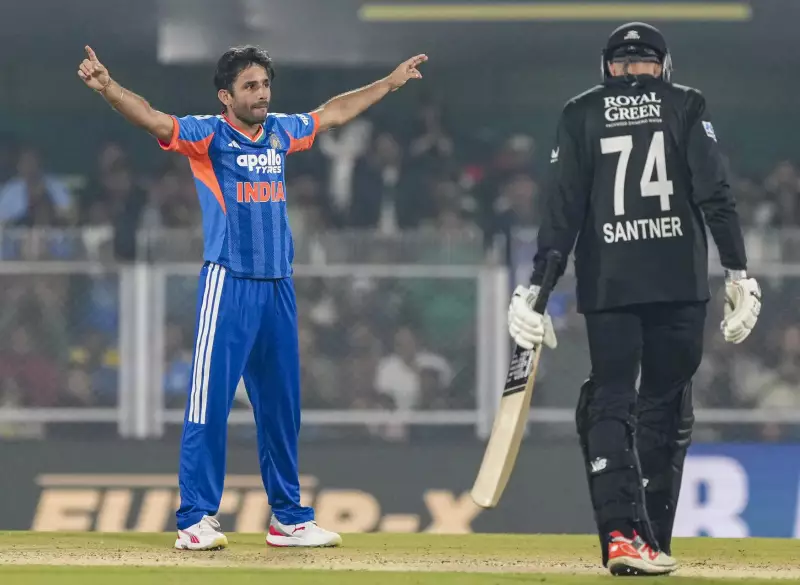
Bishnoi's bowling figures of 4-0-18-2 proved instrumental in choking New Zealand's middle-order batting. The legspinner came on as first change bowler in the fifth over and bowled his four overs in four separate spells, demonstrating remarkable control and tactical awareness.
"I tried my best to bowl in the five-six metres length on the stumps, as it is difficult to hit from those lengths," Bishnoi explained about his bowling strategy. "So, I tried my best to bowl at a good length. If the ball falls at that length at that speed, it is very difficult to hit."
The young spinner dismissed the dangerous Mark Chapman (32) and Glenn Phillips (48) at crucial junctures, effectively derailing New Zealand's chase momentum. His pace and accuracy stood out throughout his spell, showcasing the technical improvements he has made during his time away from international cricket.
Technical Refinement During Absence
Bishnoi acknowledged that his IPL 2025 season with Lucknow Super Giants had been challenging, managing only nine wickets in eleven games. This performance led to his release from the franchise, but provided him with valuable learning opportunities.
"The work I have done in the last one year was on my lengths because I didn't do so well in the IPL last season," Bishnoi confessed. "I didn't have much control over my lengths and my lines in the last season. That's why it was tough for me."
The legspinner emphasized that his time away from the national team proved beneficial for his development. "Yes, it is difficult when you are away from the side. This Indian team is very strong and there are very few spots available, so limited opportunities," he noted. "It was good because I had time to work on myself, I did a lot of work on myself."
Domestic Success Paves Way for International Return
Bishnoi's domestic performances provided the foundation for his international comeback. In the 2025–26 Syed Mushtaq Ali Trophy, he claimed nine wickets in seven matches, demonstrating consistent form and improved control.
The Rajasthan Royals recognized his potential and acquired him at the 2026 IPL auction, providing Bishnoi with a fresh platform to showcase his refined skills. This franchise change appears to have rejuvenated his career trajectory.
Bishnoi's bowling philosophy emphasizes natural rhythm over forced pace variations. "I bowl according to the rhythm of my body," he explained. "It's not that I have to bowl more than 100 kmph or less than 100 kmph every time. I bowl the way I feel on a given day."
This performance against New Zealand serves as a strong statement from the young legspinner, who has successfully navigated the challenges of limited opportunities in India's competitive spin department. His comeback story highlights the importance of technical refinement during periods away from the national team and the value of domestic cricket in preparing players for international challenges.