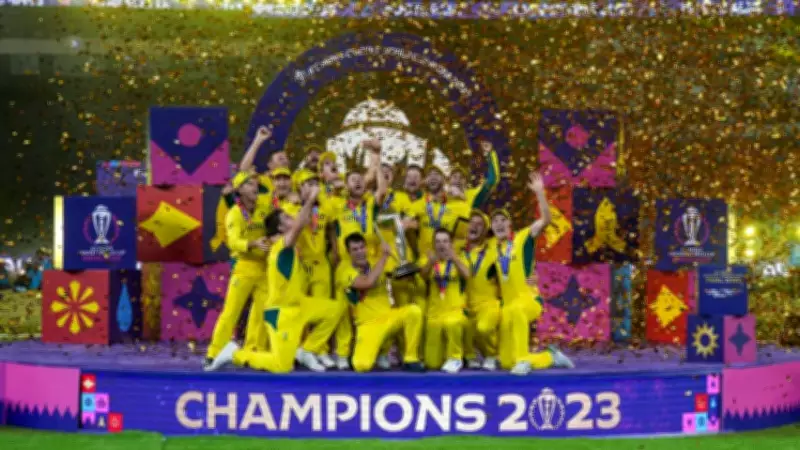
Former Indian cricketer and commentator Sanjay Manjrekar has sparked a significant debate in the cricketing world by declaring that the 50-over One Day International (ODI) World Cup should always be considered the true Cricket World Cup. He has argued that the T20 version of the tournament, which occurs every two years, must not be granted the same prestigious status as the ODI event that takes place once every four years.
Manjrekar's Firm Stance on Cricket World Cup Hierarchy
In a recent post on his social media account, Manjrekar expressed his unwavering opinion on the matter. "For me, the 'Cricket World Cup' will always be the 50 overs World Cup," he stated emphatically. "The T20 version held every two years must not be given the same status of a World Cup that comes once in 4 years. I prefer the original name for it – The WorldT20."
This clear distinction highlights a growing concern among traditionalists about the dilution of cricket's premier tournament. Manjrekar's perspective underscores the historical significance and the extended format of the ODI World Cup, which has been a cornerstone of international cricket since its inception in 1975.

ODI Cricket's Declining Relevance: A Broader Concern
Manjrekar's comments emerge at a critical juncture for ODI cricket, which many observers believe is slowly losing its relevance in the modern era. Sandwiched between the timeless appeal of Test cricket and the fast-paced excitement of T20 Internationals, the 50-over format faces an uncertain future.
This sentiment is echoed by other prominent figures in Indian cricket. Former India spinner Ravichandran Ashwin recently voiced his apprehensions about the format's longevity. "I am not sure about the future of ODI after the 2027 World Cup. I am a little worried about it," Ashwin admitted on his YouTube channel, 'Ash Ki Baat'.
Ashwin, who is India's second-highest Test wicket-taker with 537 scalps and has taken 156 wickets in 116 ODIs, pointed out the challenges in maintaining fan interest. "I feel Test cricket still has space, but ODI cricket, I truly feel it doesn't have the space," he remarked, emphasizing the need to understand audience preferences.
The Role of Star Players in Sustaining ODI Cricket
Ashwin also highlighted the crucial role that star players like Virat Kohli and Rohit Sharma play in keeping the ODI format relevant. The 2027 World Cup is anticipated to potentially be the last for these stalwarts, adding to the concerns about the format's appeal post their retirement.
"Look, Rohit and Virat came back to Vijay Hazare Trophy and people started watching it," Ashwin observed. "We have known that sport is always bigger than individuals, but at times these players need to come back to make the game relevant."
This insight underscores a broader issue: while the sport itself is paramount, the charisma and following of top cricketers significantly influence viewership and engagement, especially in domestic tournaments like the Vijay Hazare Trophy.
Implications for the Future of Cricket Formats
The debate initiated by Manjrekar and supported by Ashwin raises important questions about the evolution of cricket formats and their place in the global sports landscape. Key points to consider include:

- Historical Significance: The ODI World Cup has a rich legacy, with iconic moments that have defined cricket history, making it a cherished event for purists.
- Frequency and Prestige: The four-year cycle of the ODI World Cup builds anticipation and prestige, whereas the biennial T20 World Cup might risk oversaturation.
- Audience Engagement: With changing viewer habits and the rise of shorter formats, cricket boards must balance tradition with innovation to retain fan interest.
- Player Workload: The crowded international calendar, featuring multiple formats, poses challenges for player fitness and performance sustainability.
As the cricketing community grapples with these issues, the upcoming T20 World Cup, where India will begin their campaign against the USA next week, serves as a reminder of the format's growing prominence. However, Manjrekar's stance urges a reflection on whether this should come at the expense of the ODI World Cup's esteemed status.
Ultimately, the discussion sparked by Sanjay Manjrekar is not just about nomenclature but about preserving the essence and heritage of cricket. It calls for a careful consideration of how the sport honors its past while embracing the future, ensuring that each format retains its unique value and appeal in the hearts of fans worldwide.