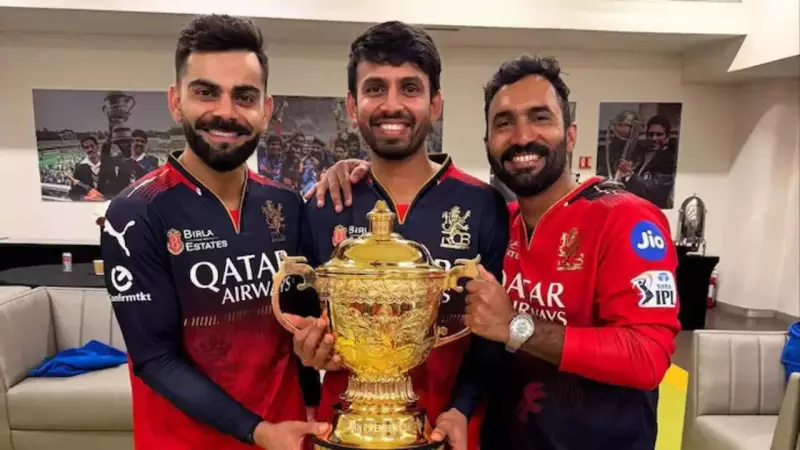
In an exclusive conversation, seasoned Indian wicketkeeper-batter Dinesh Karthik offered a candid comparison between South Africa's SA20 and the UAE's International League T20 (ILT20), while shedding light on the art of power-hitting and his mentoring role within the Indian Premier League (IPL).
SA20 vs ILT20: A Tale of Two Leagues
Having recently participated in the SA20, Karthik is now set to feature for the Sharjah Warriors in the upcoming ILT20 season. He highlighted a fundamental contrast between the two tournaments. The SA20, he noted, benefits from the backing of IPL franchise owners and a robust domestic cricket structure inherent to a Test-playing nation like South Africa. This foundation, according to him, translates to stronger local player pools and significant crowd support.
"The dynamics of this tournament (ILT20) are very different," Karthik explained. He pointed out that as the ILT20 is hosted by an associate nation (the UAE), it naturally lacks the same depth of local talent. This is reflected in the team composition rules: while SA20 mandates seven local players, ILT20 features a majority of overseas stars, with only three spots reserved for players from associate nations.
Embracing the Sharjah Warriors and Mentoring Youth
Speaking about his new franchise, Karthik expressed enthusiasm about representing the Sharjah Warriors, owned by Capri Global. He praised the group's commitment to investing in sports like cricket and kabaddi. "They are slowly but steadily rising in the sporting world and I wish them all the success," he stated.
The conversation then turned to his influential role at Royal Challengers Bengaluru (RCB), specifically his work with young wicketkeeper-batter Jitesh Sharma. Karthik humbly addressed Jitesh's acknowledgment of his guidance. "I think it's a very noble thought, and it's great that Jitesh feels that way about me," he said. He clarified that as a fellow player, influence is exerted more through actions than direct coaching, but he enjoys the opportunity to help emerging talents whenever possible.
The Specialist Craft of the Finisher
Karthik, renowned for his own finishing abilities, strongly dismissed the notion that the role is "thankless" or "dirty." He argued that finishers are now highly valued and compensated well for their niche, high-pressure skillset. "You encounter far more failures in the middle order... because you face fewer balls and have to take many more risks," he elaborated, emphasizing the challenge.
When asked to name the best in the business, his answer was unequivocal. "Tim David, according to me, is the best middle-order batsman in the world," Karthik declared. He admired the method and technique behind David's powerful hitting, stating it is far from "blind hitting" and involves significant mental aptitude to adapt to various situations.
On the technical aspects of power-hitting, Karthik broke it down to basics: maintaining a good flow, position, and a wide base. "It's about small things. You have to work one step at a time, understand what you're lacking, and figure out how to get better. That's how you improve," he advised, highlighting the continuous process of refinement required for success in the modern T20 game.