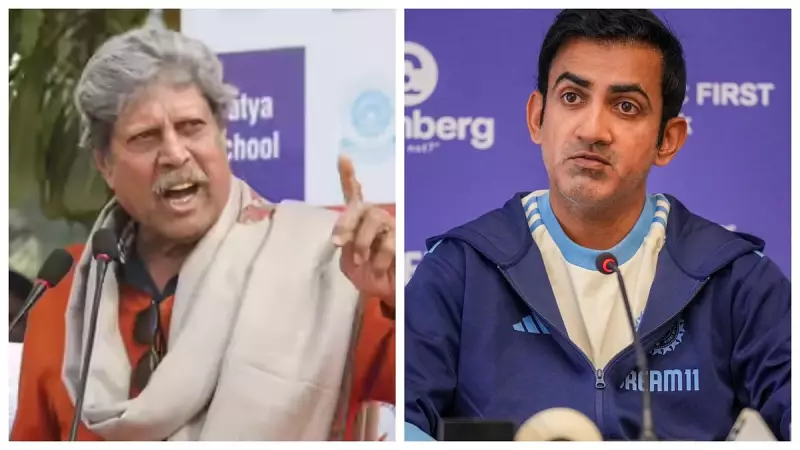
Legendary Indian cricketer Kapil Dev has launched a stinging critique of current head coach Gautam Gambhir, following India's disappointing Test series defeat in South Africa. The iconic former World Cup-winning captain did not mince words, drawing a sharp distinction between Gambhir's perceived role and the traditional duties of a coach.
Kapil Dev's Scathing Assessment
In comments that have sent shockwaves through the cricketing community, Kapil Dev stated that Gautam Gambhir functions more as a "manager" than a conventional "coach." This pointed observation comes directly in the wake of India's 0-2 loss in the Test series against South Africa, a result that has prompted intense scrutiny of the team's leadership and tactics.
The criticism centers on two primary aspects of Gambhir's tenure. Firstly, his strategy of constant player rotation has been called into question, with analysts and former players suggesting it has disrupted team cohesion and consistency. Secondly, an apparent over-reliance on part-time bowling options during crucial phases of the matches has been widely slammed as a tactical misstep.

The Backdrop: A Painful Series Defeat
The context for Kapil Dev's remarks is a painful tour for the Indian Test side. Losing both matches in the series has raised significant questions about the team's preparation and game plans under the new coaching regime. The defeat, confirmed by the latest results, has left fans and pundits alike searching for answers.
Kapil Dev's intervention is particularly significant given his monumental status in Indian cricket. His views carry considerable weight and are often seen as a barometer of sentiment within the fraternity. By highlighting the difference between a manager and a coach, he implicitly questions whether the technical and mentorship aspects of the game are receiving adequate focus.
Implications and the Road Ahead
This public critique from a legend like Kapil Dev places immense pressure on Gautam Gambhir and the team management. The comments, made on December 18, 2025, are likely to fuel further debate about the direction of the Indian Test team.
The immediate consequences are clear: the coaching staff's methods are under the microscope. The team will need to demonstrate a swift and decisive response in their upcoming assignments to quieten the growing chorus of doubt. For Gambhir, a former aggressive and successful opener, the challenge is now to translate his on-field grit into effective off-field leadership that satisfies both results and the expectations of legends like Kapil Dev.
As the dust settles on the South African tour, the focus shifts to how the team bounces back. The discourse initiated by Kapil Dev's frank assessment will undoubtedly influence conversations around coaching philosophy, player management, and strategic clarity in Indian cricket for the foreseeable future.