Joe Rogan Ignites NFL Controversy Over 49ers' Training Facility Conspiracy
Popular podcast host Joe Rogan has reignited a long-standing conspiracy theory surrounding the San Francisco 49ers, directly questioning whether electromagnetic fields from a nearby electrical substation could be responsible for the franchise's unusually high injury rates. The controversy gained significant momentum this week after 49ers general manager John Lynch confirmed the organization plans to investigate these claims, marking a rare instance where an NFL team acknowledges such unconventional theories.
Rogan's Blunt Assessment of "Not Normal" Injury Patterns
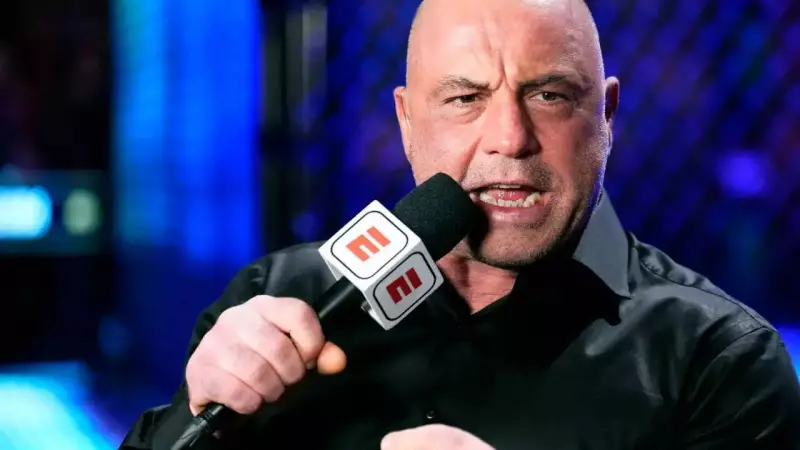
During a recent episode of his influential podcast, Rogan didn't mince words when discussing the San Francisco 49ers' injury crisis with guest Paul Rooslie. He pointed to electromagnetic fields near the team's training facility and Levi's Stadium as potential factors affecting player health, referencing discussions among players that reportedly began as early as 2012.
"The players started talking about all this in 2012, I believe," Rogan stated emphatically. "And people were like, 'All that's nonsense.' Now, the stats are in, and you're looking at the amount of injuries that come from this area, it's like, this is not normal."

Rogan presented detailed observations about the nature of injuries affecting 49ers players, noting: "Way more Achilles tendon blowouts, way more knees blown out, way more catastrophic ligament and tendon ruptures." He argued that both the frequency and severity of injuries tied to the San Francisco franchise stand out disproportionately compared to the rest of the league.
The podcast host clarified that his intention wasn't to prove a definitive conclusion but rather to question whether the statistical pattern warrants serious scientific scrutiny. "Electricity," Rogan pondered. "By the EMF signal. EMF signals we know disrupt human beings, but to what extent?"
49ers Organization Takes Unprecedented Investigative Step
While the San Francisco 49ers have not officially endorsed the electromagnetic field theory, general manager John Lynch made headlines this week by confirming the organization will investigate these claims. This represents a significant development in how professional sports teams approach unconventional health and safety concerns.
"Because it deals with, allegedly, the health and safety of our players, I think you have to look into everything," Lynch told reporters during a press conference. "We've been reaching out to anyone and everyone to see, does a study exist other than a guy sticking an apparatus underneath the fence and coming up with a number that I have no idea what that means?"
The general manager acknowledged the widespread skepticism surrounding the theory while making clear the team's commitment to player welfare. "We've heard that debunked," Lynch admitted. "The health and safety of our players is of the utmost priority. We aren't going to turn a blind eye."
Context of Recent 49ers Injury Woes
The renewed attention to this conspiracy theory comes following an especially injury-plagued 2025 season for the San Francisco franchise. Multiple key players missed significant playing time, including:
- Fred Warner
- Nick Bosa
- George Kittle
- Brock Purdy
Despite these challenges, the 49ers managed to reach the playoffs, where they defeated the Philadelphia Eagles in the wild-card round before suffering a decisive 41-6 loss to the Seattle Seahawks in the divisional round. This postseason performance highlighted both the team's resilience and the potential impact of their injury crisis on competitive outcomes.
Broader Implications for Sports Science and Player Safety
This controversy raises important questions about how professional sports organizations approach player health and investigate potential environmental factors. While medical experts continue to dispute any proven link between electromagnetic fields and athletic injuries, the 49ers' decision to investigate demonstrates a growing willingness to explore unconventional theories when player welfare is concerned.

The situation also illustrates the powerful influence of media personalities like Joe Rogan in shaping public discourse around sports science and health-related conspiracy theories. As teams balance traditional medical expertise with public pressure and player concerns, this case may establish new precedents for how NFL franchises address similar controversies in the future.