From Scapegoat to Superpower: The IPL's Evolution in Indian Cricket
In 2009, after India's early exit from the T20 World Cup in England, then head coach Gary Kirsten pointed fingers at the Indian Premier League. He argued that the grueling tournament, held months earlier in South Africa, had left players "fatigued" and suggested they might need to skip future IPL seasons before major international events. This comment fueled a narrative that blamed the IPL for every Indian loss on the cricket field, leading the BCCI to silence Kirsten after his press conference in Nottingham.
A Dramatic Shift in Perception
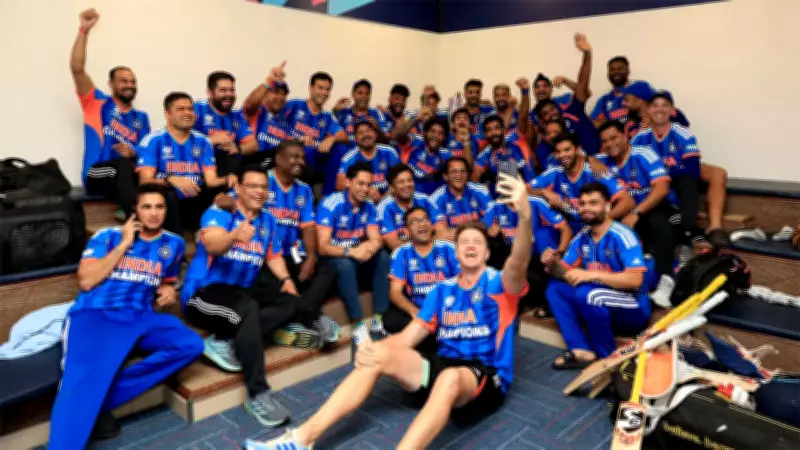
Fast forward nearly two decades, and the perception of the IPL has undergone a radical transformation. Team India's back-to-back triumphs at the 2024 and 2026 T20 World Cups have cemented the league's status as India's ultimate unique selling proposition in white-ball cricket, particularly T20s. The current squad, led by captain Suryakumar Yadav, represents an IPL generation—players who grew up watching and excelling in the league, making India appear a cut above the rest with three 250-plus scores in the tournament, including twice in the knockouts.
Bridging the Gap Between Domestic and International Cricket
Former India leg-spinner Sairaj Bahutule, who has coached for Rajasthan Royals and will join Punjab Kings in IPL-2026, emphasizes that the IPL has bridged a critical gap. "It has bridged the gap between domestic and international cricket, which wasn't the case earlier. Players now understand how to adapt and execute under pressure, something that was lacking before the IPL. They now respond well to pressure and even thrive under it," he told TOI.

Bahutule notes a complete shift in batting mentality: "They don't play safe cricket now. It's about being aggressive and taking on the bowler. They don't worry about who's bowling. They watch the ball and hit it. Each batter has a role in the IPL. Openers know they have to go hard in the powerplay."
Empowering Bowlers and Fostering Fearlessness
The league has also toughened bowlers, encouraging innovation and resilience. Bahutule explains, "Bowling has become tougher because there are often 200-plus scores in the IPL. But it also encourages bowlers to be innovative and fearless. As you saw, Arshdeep Singh had a plan to bowl wide yorkers and stuck to it even though he bowled three or four wides. Eventually, he got a wicket."
He adds that overseas players are now learning from Indian cricketers, citing examples like Abhishek Sharma and Ishan Kishan: "These guys don't fear anything. They just come and attack. If you've played in front of thousands in the IPL, a similar crowd in an international game doesn't intimidate you."
Shaping Temperament and Building Champions
Former India batsman Pravin Amre, an assistant coach at Delhi Capitals from 2015-24, highlights the IPL's role in temperament development. "The IPL gives players a platform where they don't feel like they are playing in a World Cup. It helps create the 'character' of players because the pressure of winning every game is massive," he said.
Amre praises the league further: "The IPL helps build champion players. Apart from that one loss to South Africa by 76 runs, the way we were playing, other teams were nowhere close to us. The IPL has contributed to that kind of dominance."
The IPL as a Talent Funnel and Mindset Game-Changer
Long-time IPL franchise officials underscore the league's impact on talent and mindset. Satish Menon, CEO of Punjab Kings, states, "The IPL has become the funnel of talent. It's probably the biggest cricket talent pool any country could dream of. Youngsters get opportunities to compete against top internationals, which prepares them to wear the national colours without fear."
Arvinder Singh, COO of Gujarat Titans, adds, "The world knows that Indian cricket's success in white-ball cricket comes from the IPL. The ability to absorb pressure and thrive in intense situations comes from it. The IPL has changed the dynamics of T20 cricket."

He reflects on the evolution: "When the IPL started in 2008, 160 was a winning score. Then it moved to around 175. Even that looked difficult to chase then. Anything above eight runs an over seemed out of reach, and 10 an over meant the match was almost lost. Now, even if you're chasing 225, bringing it down to 60 off the last four overs is considered doable. The players, pitches and stadiums are the same—it's the mindset that has changed."
Linking this to World Cup success, Singh concludes, "All these players know they've done it many times in the IPL, which is why the Indian team doesn't buckle under scoreboard pressure. There's so much competition in the IPL—74 matches, 10 teams and top players. Sometimes an IPL team's bowling attack is stronger than an international side's. Because of the IPL, India is ahead of the curve."