India's T20 Dominance and the Looming Leadership Question
Fresh from securing consecutive T20 World Cup championships, the Indian cricket team has firmly established itself as a dominant force in the sport's shortest and most explosive format. This success is built not only on current stars but also on a deep reservoir of emerging talent waiting for their moment on the international stage. As the team looks ahead, the focus shifts to two major upcoming events: the Los Angeles Olympics and the 2028 T20 World Cup.
The Form-Based Selection Philosophy and Ishan Kishan's Resurgence
When it comes to assembling the 15-member squad for these tournaments, the selection strategy appears straightforward: prioritize current form above all else. The most compelling illustration of this principle is the remarkable comeback of Ishan Kishan. After a two-year absence from the national side, the left-handed batsman has returned with explosive performances.
His recall was triggered by a match-winning century in the Syed Mushtaq Ali Trophy final, which propelled Jharkhand to the title. In the 13 matches since his return, the 27-year-old has accumulated an impressive 532 runs, maintaining a staggering strike rate of 207. During the recent T20 World Cup, his contribution of 317 runs was the third-highest in the tournament, trailing only Pakistan's Sahibzada Farhan and his Indian teammate, Sanju Samson.

The Central Dilemma: Identifying India's Next T20 Captain
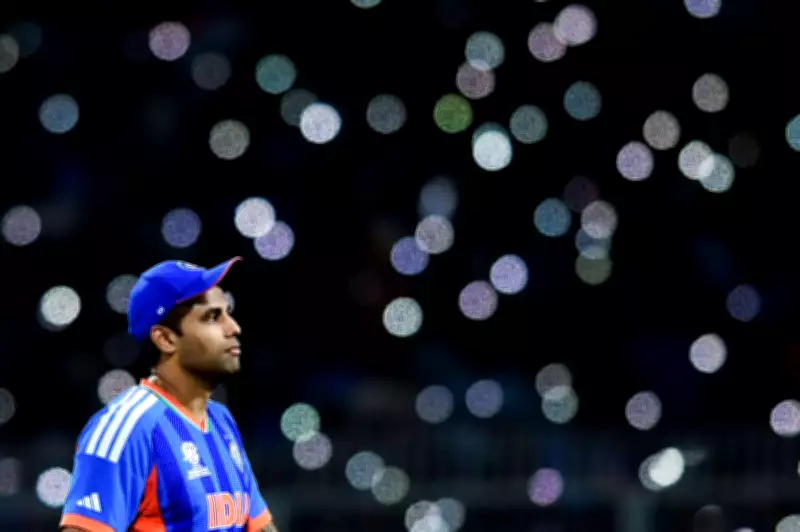
However, a more complex challenge lies beyond simple team selection. The critical question facing Indian cricket is: Who will succeed the aging Suryakumar Yadav as the next captain of the T20 International side? The answer to this leadership puzzle is expected to emerge from the 2026 edition of the Indian Premier League, mirroring the path taken by head coach Gautam Gambhir, whose successful tenure with the Kolkata Knight Riders paved his way to the national role.
The IPL as the Ultimate Testing Ground
The IPL stands as the premier T20 league globally. Unlike the World Cup, it provides a consistently level playing field where all ten franchises are competitively matched. This environment makes it an ideal laboratory for assessing leadership qualities under intense pressure. While selecting a talented T20 squad from India's vast pool of players is relatively straightforward, identifying the right captain is a far more nuanced and difficult task.
Contenders for the Captaincy Throne
The landscape of potential successors is crowded with talented candidates, many of whom currently lead IPL franchises.
Established Leaders and Their Challenges
Axar Patel, at 32, has often been in a supporting role within Indian cricket. He was initially appointed vice-captain after the 2024 T20 World Cup, later replaced by Shubman Gill, and then reinstated as deputy to Suryakumar Yadav ahead of the 2026 World Cup. While a capable option, his captaincy prospects might hinge on delivering a trophy for the Delhi Capitals.
Hardik Pandya, captain of the Mumbai Indians, was once considered the natural successor to Rohit Sharma following the 2024 World Cup win. However, fitness concerns delayed that transition. By IPL 2026, he will be leading the current national T20 skipper, Suryakumar Yadav, at the franchise level, presenting a unique dynamic.
The Young Guns and Their Ascent
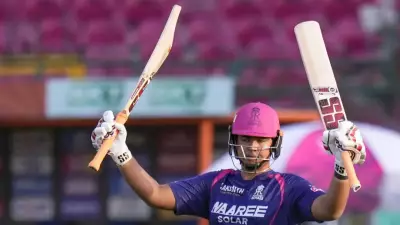
Riyan Parag, 24, stepped up to captain the Rajasthan Royals in the absence of Sanju Samson during IPL 2025. His all-round abilities, including his bowling, could secure him a permanent spot in the national team for the next cycle. However, he must first solidify his place in the side.
Rishabh Pant, 28, is another candidate looking to revitalize his T20 international career, both as a batsman and as the leader of the Lucknow Super Giants. With Sanju Samson and Ishan Kishan in peak form, Pant may need to bide his time and prove his mettle in the IPL.

The Front-Runners: Gill and Iyer
Shubman Gill and Shreyas Iyer represent the most pedigreed leadership options. Gill currently captains India's ODI and Test teams and was once seen as the heir apparent to Suryakumar Yadav. His surprising omission from the T20 World Cup squad, citing team combination, adds intrigue to his candidacy.
Shreyas Iyer boasts a strong leadership record, having led KKR to an IPL title in 2024 and Punjab Kings to the final in 2025. He traveled with the national team as cover during the New Zealand series preceding the T20 World Cup. In an ideal scenario, many experts view Iyer as the right candidate to lead India at both the LA Olympics and the 2028 T20 World Cup.
The Dark Horse: Sanju Samson
Another name the selectors must seriously consider is Sanju Samson. The 2026 T20 World Cup champion has extensive experience leading the Rajasthan Royals in the IPL. His confidence is at an all-time high following a Player of the Tournament performance, making him a compelling option.
Conclusion: The IPL's Decisive Role in Shaping India's Future
The Indian Premier League has consistently served as Indian cricket's most significant proving ground for T20 talent. Just as Gautam Gambhir's IPL success with KKR unlocked the door to the national head coaching position, the 2026 season is poised to quietly but decisively shape India's next T20I captain. In a tournament where leadership, tactical acumen, and the ability to handle pressure are tested nightly, the national selectors will be watching closely. The man who emerges from this crucible could very well be the one to guide India's T20 team into its next triumphant era.