India's Middle Order Under Scrutiny Ahead of ICC T20 World Cup 2026
With the ICC T20 World Cup 2026 on the horizon, the Indian cricket team finds itself grappling with a persistent and troubling issue: the middling performance of its middle-order batsmen. This concern has been highlighted by recent matches and expert analyses, suggesting that without a robust and reliable middle order, India's quest for the coveted trophy could face significant hurdles.
Inconsistent Batting Performances Raise Red Flags
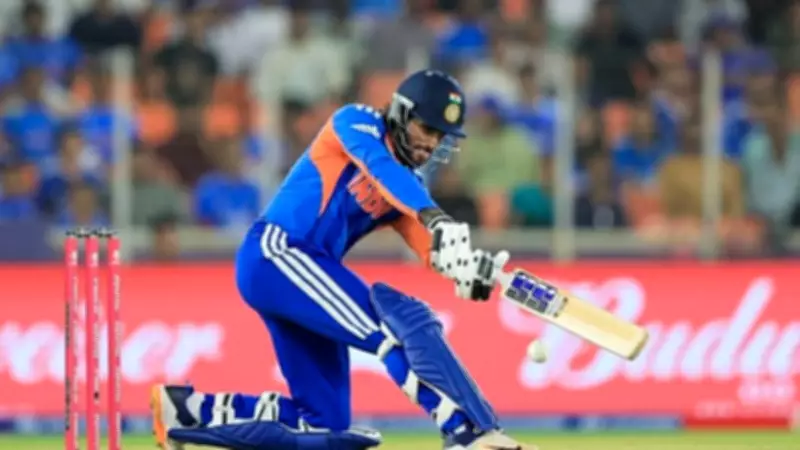
The middle order, typically comprising positions four through seven, has shown a worrying lack of consistency in high-pressure situations. In T20 cricket, where quick scoring and adaptability are paramount, India's batsmen in these slots have often struggled to accelerate the innings or stabilize it after early wickets. This inconsistency has led to collapses in crucial matches, undermining the team's overall strategy and confidence.
Key players in the middle order, such as those who have been rotated in recent series, have failed to deliver match-winning performances consistently. Their inability to handle spin bowling or pace variations has been particularly evident, exposing a gap in skill and temperament that opponents have exploited. This has prompted calls for a reevaluation of the batting lineup and potential changes in personnel or roles.

Strategic Implications for Team Management
Team management and selectors are now faced with the daunting task of addressing this weakness ahead of the 2026 tournament. Options under consideration include grooming younger talents with proven T20 records, experimenting with different batting orders, and enhancing training programs focused on middle-order scenarios. The goal is to build a lineup that can not only withstand pressure but also dominate in the latter stages of an innings.
Analysts emphasize that a strong middle order is critical for T20 success, as it often determines the difference between a competitive total and a winning one. India's historical reliance on top-order batsmen has sometimes left the middle order underprepared for the demands of modern T20 cricket, where every ball counts and flexibility is key.
Comparative Analysis with Other Teams
When compared to other top cricketing nations, India's middle-order woes stand out. Teams like England, Australia, and Pakistan have often showcased deeper batting lineups with players capable of finishing games from challenging positions. This contrast underscores the urgency for India to bolster its middle order to remain competitive on the global stage.
- England's aggressive middle-order hitters have consistently posted high scores.
- Australia's all-rounders provide stability and firepower in the middle overs.
- Pakistan's dynamic batsmen excel in adapting to varying match situations.
Learning from these examples, India may need to invest in specialized coaching and mental conditioning to prepare its middle-order batsmen for the rigors of international T20 cricket.
Looking Ahead to the 2026 Tournament
As the countdown to the ICC T20 World Cup 2026 begins, the focus on India's middle order is likely to intensify. Upcoming bilateral series and domestic tournaments will serve as testing grounds for potential solutions. Fans and pundits alike will be watching closely to see if the team can turn this concern into a strength, paving the way for a successful campaign in 2026.
In conclusion, while India boasts a talented squad with world-class players, addressing the middle-order issue is imperative for achieving glory in the T20 World Cup. With strategic planning and focused efforts, the team has the potential to overcome this challenge and emerge as a formidable contender.