India's T20 World Cup Wins Marred by Concerning Batting Collapses
New Delhi: The Indian cricket team has started their T20 World Cup campaign with two convincing victories, but underlying batting vulnerabilities have emerged as a serious concern. Against the United States, India stumbled from a comfortable 45/1 to a precarious 77/6. Similarly, against Namibia, what appeared to be a commanding position at 205/4 deteriorated dramatically to 209/9 in the final overs.
Wake-Up Call Before High-Stakes Pakistan Encounter
These batting collapses, occurring at different stages of both matches, should serve as a crucial wake-up call for the Indian batters ahead of their highly anticipated clash against Pakistan on February 15 in Colombo. While the results were positive, the manner of these stumbles reveals potential weaknesses that opponents will undoubtedly seek to exploit.
The consistent message from the Indian camp has been one of surprise regarding pitch conditions. Team management expected flatter, more predictable wickets, but encountered unexpected sluggishness in Mumbai and irregular low bounce in Delhi. Colombo's surface is anticipated to present similar challenges, requiring significant adaptation from a batting unit accustomed to dominating on batting-friendly pitches during recent bilateral series.

Opposition Bowlers Provide Blueprint for Containing India
Although the sample size remains limited, bowlers Shadley van Schalkwyk of the USA and Namibia's Gerhard Erasmus have effectively demonstrated how to trouble this formidable Indian lineup. Their success highlights the importance of tactical intelligence: varying approaches and preparing multiple specific plans rather than relying on generic strategies.
This Indian batting order features five to six left-handers in the top eight when Abhishek Sharma plays, but each presents distinct challenges. What succeeds against Ishan Kishan may fail against Abhishek Sharma, and the same approach won't necessarily work against Tilak Varma, Shivam Dube, Rinku Singh, or Axar Patel. Their individual techniques, hitting arcs, and overall approaches differ significantly, making precise, batter-specific planning essential for opposition bowlers.
Detailed Analysis of Bowling Strategies That Troubled India
Schalkwyk effectively mixed his short-pitched deliveries based on insights from his American teammates, while Erasmus demonstrated exceptional cleverness in utilizing varying angles, diverse release points, and strategic use of the crease. The delivery that dismissed Tilak Varma arrived unusually slowly because Erasmus released it from well behind the crease, disrupting the batter's timing and rhythm.
Even when Indian batters attempted to counter by stepping out, they frequently failed to achieve clean connections. Namibia coach Craig Williams praised his captain's execution under pressure, particularly highlighting Erasmus's ability to bowl the most challenging overs of an innings.
"He trains incredibly hard on all these variations," Williams stated during the post-match press conference. "He bowls the toughest overs in leagues worldwide and continuously refines his game to be more effective against batters. Against a world-class team like India, he demonstrated his quality with excellent execution, especially in the pressure-filled 19th over."
Indian Batters' Response and Acknowledgment of Opposition Excellence
Erasmus clearly arrived well-prepared. While his occasional slinging action could potentially disrupt concentration, Ishan Kishan suggested that top-level batters should adjust within a few deliveries and maintain focus on their own strengths.
"It might play in your head for a couple of balls," Kishan explained, "but at this level, you need to trust your own abilities. Even if a bowler tries something unusual, we can still target boundaries. The key is our mindset when facing variation. If we believe in our strengths and keep things simple, that helps batters more. Some will succeed, some won't—that's cricket, and we learn game by game."

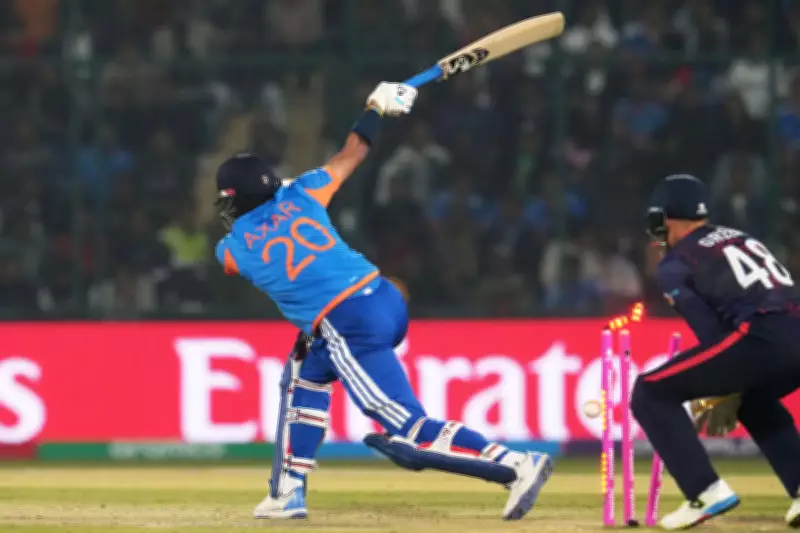
India appeared headed for another substantial total against Namibia before completely losing momentum in the final two overs. They lost five wickets while adding just four runs from ten deliveries, with the established pair of Hardik Pandya and Shivam Dube falling off consecutive balls, and Axar Patel failing to score. This disappointing finish starkly contrasted the explosive start provided by Kishan and Sanju Samson.
Kishan echoed the team's assessment of challenging pitch conditions but credited Namibia's bowlers for their exceptional execution under pressure.
"I think they bowled extremely well," Kishan acknowledged. "Both wickets played differently than expected. During the death overs, when we struggled to hit big sixes consistently, we must give credit to Namibia's bowlers for delivering perfect yorkers and well-disguised slower balls. This game provided valuable learning—perhaps against other teams doing similar things, we can use the crease more or try different approaches to disrupt bowlers. It wasn't about our batters being unable to hit; it was more about their excellent death bowling."
Critical Adjustments Needed Ahead of Pakistan Challenge
The United States had India in serious trouble early, Namibia created significant pressure late, and immediate batting corrections are essential against a spin-heavy Pakistan side already familiar with Colombo's conditions. The Suryakumar Yadav-led unit has demolished attacks in pre-tournament matches, but past success guarantees nothing in tournament cricket's unpredictable environment.
The muscle memory of dominating bowlers on flat pitches must be quickly unlearned, as Colombo and subsequent venues may not follow the familiar script. India's remaining opponents have certainly noted the vulnerabilities exposed by both the USA and Namibia, making adaptation and strategic refinement urgent priorities for the tournament favorites.