India and Bangladesh U-19 Captains Avoid Handshake at World Cup Toss
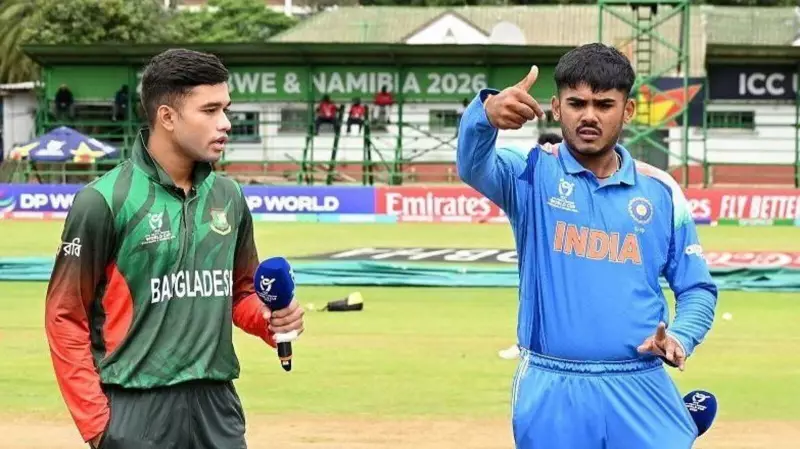
The customary handshake at the coin toss was notably absent during the ICC U-19 World Cup 2026 match between India and Bangladesh. This incident occurred at the Queens Sports Club in Bulawayo on Saturday. It has sparked discussions about the underlying political tensions between the two nations.
What Happened During the Toss?
India captain Ayush Mhatre and Bangladesh vice-captain Zawad Abrar represented their teams for the toss. Both players refrained from shaking hands before or after the coin spin. Neither team has provided an official statement explaining this deviation from tradition. The match proceeded without further incident, but the lack of handshake drew immediate attention from spectators and analysts.
Following a Pattern from Senior Cricket
This action mirrors behavior seen in recent senior-level matches. Last year, Indian captain Suryakumar Yadav declined to shake hands with Pakistan's Salman Agha during the Asia Cup 2025. Yadav's protest was linked to the Pahalgam terror attack and Operation Sindoor. Subsequently, India's women's captain Harmanpreet Kaur adopted a similar stance against Pakistan in the ICC Women's World Cup 2025.

Ayush Mhatre's decision appears to follow this established precedent. It suggests a coordinated approach across different levels of Indian cricket. The Bangladesh team's participation in avoiding the handshake indicates mutual awareness of the diplomatic context.
Political Background Influencing Cricket Relations
Strained relations between India and Bangladesh have been escalating. Tensions reportedly intensified after former Bangladesh Prime Minister Sheikh Hasina's visit to India. These diplomatic issues seem to be spilling over into sporting events. Cricket matches often reflect broader geopolitical dynamics, and this incident highlights how politics can impact even youth tournaments.
The U-19 World Cup is meant to foster young talent and sportsmanship. However, the handshake omission shows that external factors can influence player interactions. Observers note that such gestures, while symbolic, carry significant weight in international sports.
Reactions and Implications
Fans and experts are closely watching how this situation develops. The absence of official comments from both cricket boards leaves room for speculation. Some argue that sports should remain separate from politics, while others see it as a legitimate form of silent protest.
This event underscores the complex relationship between cricket and diplomacy in South Asia. As the U-19 World Cup continues, all eyes will be on future interactions between teams from these nations. The hope is that cricket can eventually bridge divides, but for now, the handshake remains a point of contention.