ICC-UNICEF Partnership Amplifies Children's Rights Through Cricket at T20 World Cup
While the defending champions and co-hosts India grapple with their left-heavy wobbly top order at the ongoing T20 World Cup, a far more significant partnership is demonstrating remarkable strength and impact. The collaboration between the International Cricket Council (ICC) and UNICEF is harnessing cricket's immense global reach to champion children's rights and well-being worldwide through the innovative Cricket4Good initiative.
Ceremonial Trophy Walkouts Spotlight Youth Champions
In a powerful display of this commitment, UNICEF India representative Cynthia McCaffrey recently participated in a ceremonial Trophy Walkout at the start of the Zimbabwe-West Indies match at Mumbai's iconic Wankhede Stadium. She was joined by two young sports champions: 13-year-old Ayush Ram and 12-year-old Riya Tripathy from Mumbai, symbolizing the initiative's focus on youth empowerment and inclusion.
"UNICEF and the International Cricket Council share a deep commitment under the 'Cricket for Good' partnership that aims to inspire positive change for children," McCaffrey stated during the event. "Over the past decade, our partnership has helped reach millions. This year, we focus on one powerful message — 'Cheer for Children' to champion every child's Right to Play."

The Transformative Power of Play
McCaffrey elaborated on the critical importance of play in child development, emphasizing its role in building essential life skills. "This is truly a special moment for children interacting with cricket champions and joining the trophy walk, demonstrating inclusion, equality, hope, and support for all children," she said. "'Cheer for Children' sends a unifying call to millions in India who are passionate about cricket and urges them to support children's right to play, to learn, and to grow up safe."
"Play builds resilience, leadership, collaboration, and confidence — the very skills girls and boys need to succeed in school, in life, and at work," McCaffrey added. "When we invest in play today, we invest in a skilled, empowered generation for tomorrow."
Youth Voices: Confidence and Empowerment Through Sport
The young participants shared their personal experiences, highlighting how sports have positively shaped their lives. "Walking out with the trophy made me feel proud and confident," said Ayush Ram. "Sport has taught me discipline and teamwork, and I want every child to get the same chance."
Riya Tripathy echoed these sentiments, emphasizing gender equality in sports. "Playing sports makes me feel confident and free," she stated. "It teaches me that girls belong on the field just as much as anyone else, and that we should never stop dreaming big."
Sustained Advocacy Beyond the Tournament
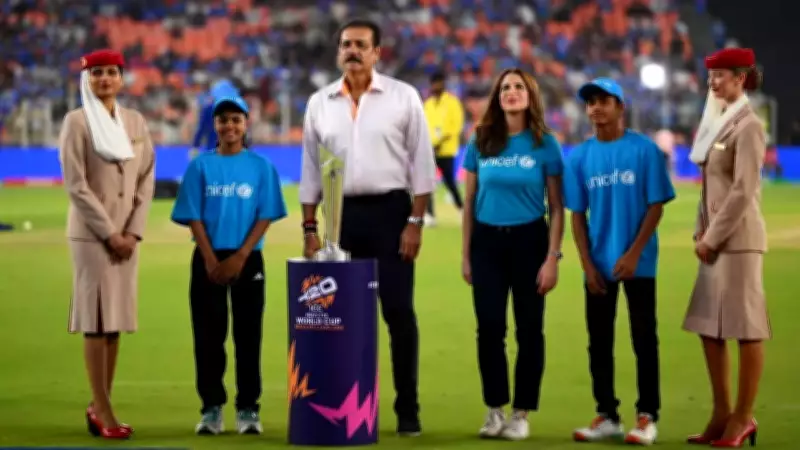
This event follows a similar trophy walkout last week ahead of the India-Netherlands match at Ahmedabad's Narendra Modi Stadium. Soledad Herrero, chief of field services for UNICEF India, walked out with two young athletes from Ahmedabad, accompanied by former Indian cricketer Ravi Shastri.
"Cricket is a powerful unifier for equity and inclusion," Herrero told media before the game. "It reminds us that every child, everywhere, deserves a fair chance. UNICEF is proud to partner with the International Cricket Council during the Men's T20 World Cup 2026 with a key simple objective: enhancing children's rights to play."
Herrero further explained the developmental benefits of play: "Play powers a stronger generation tomorrow. The best way in which children learn, explore, and understand the world is through play. Play is also the entry way through which they develop critical thinking, problem-solving, and interpersonal skills while boosting confidence and emotional regulation."

Cricket as a Universal Language for Change
Zafrin Chowdhury, chief of communication, advocacy, and partnerships at UNICEF India, highlighted cricket's unique position as a cultural connector. "Cricket is more than a sport in many parts of the world; it is a shared language," Chowdhury noted. "It cuts across age, gender, geography, and social backgrounds. Because of its emotional connection and massive following, cricket allows important messages about children's rights to reach families and communities in a powerful and relatable way."
Stressing the long-term nature of their efforts, Chowdhury added: "While the World Cup is a key moment for engagement, the partnership is designed to create awareness and impact beyond the tournament. The focus is on sustained messaging, long-term advocacy, and continued collaboration wherever possible."
The ICC-UNICEF Cricket4Good initiative represents a strategic fusion of sports and social advocacy, leveraging one of the world's most popular games to create meaningful, lasting change for children globally. Through trophy walkouts, public messaging, and sustained partnerships, this collaboration demonstrates how cricket can be a powerful vehicle for promoting inclusion, equality, and the fundamental rights of every child to play, learn, and thrive.