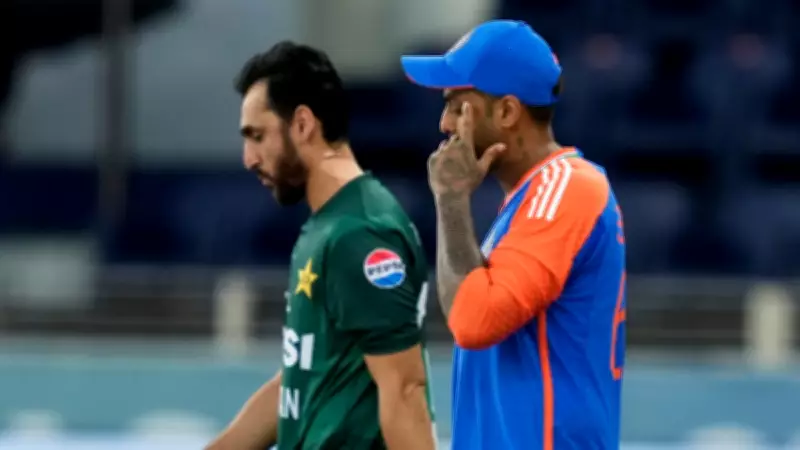
The International Cricket Council (ICC) has finally broken its silence on the escalating cricketing crisis between India and Pakistan, issuing its first official statement after Pakistan's refusal to play India in the upcoming T20 World Cup 2026. This development marks a significant moment in the ongoing saga of cricket diplomacy, which has been strained by broader geopolitical tensions between the two neighboring nations.
ICC Acknowledges the Situation
In a carefully worded communication, the ICC acknowledged the situation without delving into specific details or assigning blame. The global cricketing body emphasized its commitment to the spirit of the game and the importance of maintaining the integrity of international cricket tournaments. The statement highlighted the ICC's role in facilitating dialogue and ensuring that cricket remains a unifying force, even in the face of political challenges.
Background of the Refusal
Pakistan's refusal to play India in the T20 World Cup 2026 stems from long-standing diplomatic tensions that have periodically spilled over into the sporting arena. Over the years, bilateral cricket series between the two countries have been rare, with most encounters limited to multi-nation tournaments like the World Cup and Asia Cup. The latest refusal is seen as a continuation of this trend, exacerbated by recent political developments and security concerns.

The decision has sparked widespread debate among cricket fans, analysts, and former players from both sides. Many argue that cricket should be kept separate from politics, while others support the stance, citing national interests and sovereignty issues. The ICC's statement aims to navigate this complex landscape, balancing the need for competitive fairness with the realities of international relations.
Implications for the T20 World Cup 2026
The refusal poses significant logistical and scheduling challenges for the T20 World Cup 2026, which is set to feature multiple teams across various venues. An India-Pakistan match is traditionally one of the most anticipated fixtures in any cricket tournament, drawing massive global viewership and revenue. Its absence could impact the tournament's appeal and financial outcomes.
The ICC is likely to explore alternative arrangements, such as adjusting the group stages or fixture list to avoid a direct clash, though this might not fully compensate for the loss of such a high-profile encounter. The body's statement suggests a proactive approach to mitigate disruptions and ensure the smooth execution of the event.
Reactions from the Cricket Community
Reactions from the cricket community have been mixed. Some former cricketers have expressed disappointment, urging both boards to resolve their differences for the sake of the sport. Others have backed Pakistan's decision, emphasizing that national pride and security cannot be compromised. The ICC's intervention is seen as a crucial step in mediating the dispute and preventing further escalation.
In India, the Board of Control for Cricket in India (BCCI) has maintained a cautious stance, focusing on domestic and international commitments without directly commenting on the refusal. Similarly, the Pakistan Cricket Board (PCB) has reiterated its position, linking participation to broader diplomatic normalization.
Looking Ahead
The ICC's statement is expected to be followed by behind-the-scenes discussions with both cricket boards to find a middle ground. While a resolution before the 2026 tournament remains uncertain, the global body's involvement underscores the high stakes involved. Cricket enthusiasts worldwide will be watching closely, hoping for a thaw in relations that could revive one of sport's greatest rivalries.
In conclusion, the ICC's first official statement on Pakistan's refusal to play India in the T20 World Cup 2026 highlights the intricate interplay between sports and politics. As the cricketing world grapples with this challenge, the focus remains on preserving the game's spirit while navigating the complexities of international diplomacy.