The Unbreakable Wall: Hanif Mohammad's Marathon Innings That Defined Pakistan Cricket
Every cricket nation develops a distinctive identity through its playing style and legendary players. Australia is synonymous with aggressive, never-say-die cricket played with intensity until the final delivery. India is celebrated for its glorious lineage of batting maestros, from the technical perfection of Sunil Gavaskar to the mastery of Sachin Tendulkar and the modern dominance of Virat Kohli. Pakistan, meanwhile, has earned global recognition as the factory of fearsome fast bowlers, producing icons like Imran Khan, Wasim Akram, Waqar Younis, and Shoaib Akhtar.
Before the Pace Revolution: The Era of Hanif Mohammad
However, before Pakistan became renowned for its pace battery, before the eras of Imran Khan, Javed Miandad, and Inzamam-ul-Haq, there stood a different kind of cricketing hero: Hanif Mohammad. Known as The Little Master, Hanif was neither quick-scoring nor flashy in his approach. His supreme strength lay in extraordinary patience and an almost superhuman ability to occupy the crease for extended periods. On numerous occasions, Hanif Mohammad single-handedly stood between Pakistan and certain defeat.
No innings better exemplifies his crucial role than his monumental performance during Pakistan's inaugural Test match against the West Indies in 1958. This historic display of grit and determination remains one of the most remarkable rescue acts in cricket history.

The Daunting Challenge: West Indies' Dominance in Barbados
The match unfolded from January 17 to 23, 1958, at the Kensington Oval in Bridgetown, Barbados. Pakistan, still newcomers to Test cricket, faced a formidable West Indies side on their home turf. The hosts immediately asserted their dominance, putting Pakistan under immense pressure from the outset. Conrad Hunte announced his arrival with a spectacular debut century, scoring 142 runs and contributing 50 of the first 55 runs of the innings, even while batting alongside the talented Rohan Kanhai.
Everton Weekes added to Pakistan's woes by crafting 197 runs, marking the final century of his illustrious career. The middle order compounded the misery with Collie Smith and Garry Sobers both registering half-centuries, while Clyde Walcott chipped in with a valuable 43. Pakistan handed a debut to 16-year-old Nasim-ul-Ghani, who became the youngest Test cricketer at that time at 16 years and 248 days, but he remained wicketless as the West Indies amassed a massive first-innings total of 579.
In response, Pakistan's batting collapsed dramatically, dismissed for a mere 106 runs. Forced to follow on with a staggering deficit of 473 runs, the prospect of saving the match seemed virtually impossible. Pakistan needed to bat for nearly four full days to avoid defeat in this six-day Test match.
The Marathon Begins: Hanif's Battle Against All Odds
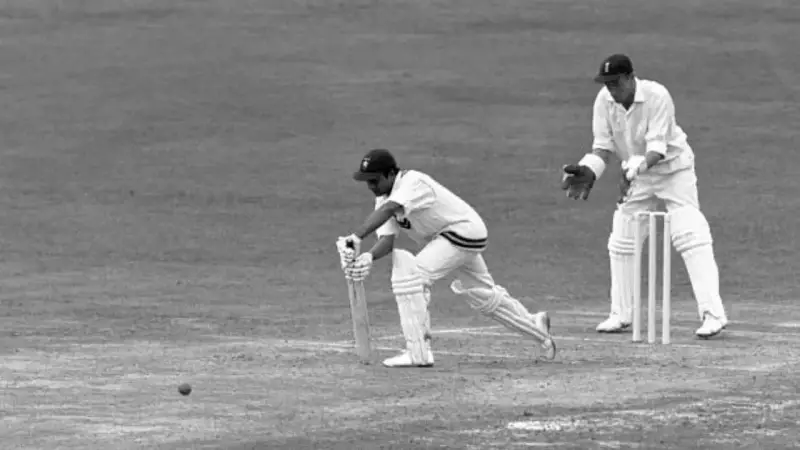
Hanif Mohammad walked out to open the second innings on the third afternoon, facing a seemingly insurmountable task. He relied entirely on his legendary powers of concentration. The pitch was deteriorating, the bowling was hostile, and local umpires officiated the game. The ball frequently rose sharply, posing constant physical danger. Without modern protective gear—no helmets, thin pads, no arm guard, and only a rolled hotel towel as a thigh pad—Hanif maintained impeccable technique, keeping his head still and watching the ball intently.
The West Indies attack featured the swing of Eric Atkinson, the raw pace of Roy Gilchrist, and the spin of Collie Smith and Alf Valentine. Gilchrist, renowned for his menacing run-up and blistering speed, unleashed a barrage of short-pitched deliveries. Remarkably, Hanif ended the rest day after the second day of the Test on just five not out. His captain, Abdul Kardar, left him a brief but powerful note that read: "You are our only hope."

The Crease Occupation: A Masterclass in Patience
By stumps on Day 3, Hanif had progressed to 61, wisely choosing not to hook Gilchrist's bouncers. Over the next three days, he transformed into an immovable object at the crease. On the fourth day, he scored exactly 100 runs while Pakistan lost only one wicket. Despite suffering from bruised thighs and severe sunburn that caused the skin under his eyes to peel, he continued his vigil on the fifth day. During breaks, he sat quietly in the dressing room, refueling with simple meals like a piece of chicken.
At the close of play on Day 5, Hanif had reached 270, and Pakistan had miraculously taken a small lead. On the sixth and final day, he slowed his scoring, adding 67 more runs before finally being dismissed for a monumental 337. Pakistan now led by 153 runs. When Kardar declared at 657 for eight, the lead stood at 184, with only 11 overs remaining in the match. The Test was saved, thanks almost entirely to one man's incredible resilience.
The Legacy of an Epic Innings
Hanif Mohammad's innings included 26 fours, 16 threes, 40 twos, and 105 singles. He batted for an astonishing 970 minutes, though he later believed it was 999 minutes. He shared century partnerships with four different players, including his brother Wazir Mohammad. This innings, concluded on January 23, 1958, remains the longest individual innings in Test cricket history by time spent at the crease. It stands as Hanif Mohammad's defining act of resistance, a testament to his technical prowess, mental fortitude, and unwavering dedication to his team.
This historic performance not only saved a Test match but also cemented Hanif Mohammad's legacy as Pakistan's first great Test batter. It showcased a style of cricket built on patience and perseverance, qualities that would inspire future generations of Pakistani cricketers. In an era increasingly dominated by aggressive stroke-play and fast bowling, Hanif's marathon effort reminds us of the timeless value of resilience and the art of survival in the longest format of the game.