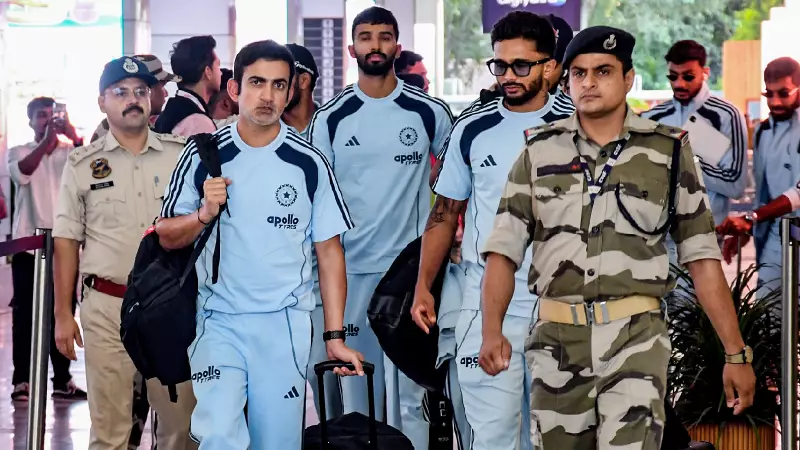
Indian cricket team faces an unprecedented challenge as Test cricket makes its historic debut in Northeast India. The second Test against South Africa at Guwahati's ACA Stadium, starting Saturday, brings unique conditions that could neutralize India's home advantage following their shocking 30-run defeat in Kolkata.
Dawn Start and Reversed Breaks
The first ball will be delivered at 9:01 AM, marking a significant departure from conventional Test timings in India. In an extraordinary scheduling move, tea break will occur at 11 AM followed by lunch at 1:20 PM. This unusual arrangement aims to maximize play during Northeast India's limited winter daylight hours.
Board officials have designed this schedule to accommodate the stipulated 90 overs daily as sunlight fades rapidly in the region. While unprecedented for international cricket in India, early starts are familiar in domestic circuits. Sikkim's Mining Ground in Rangpo has hosted 8:15 AM Ranji Trophy matches for three consecutive winters.

Conditions Favor Pace Bowlers
The early morning conditions in Guwahati promise significant assistance for both teams' pace attacks. Cooler temperatures with surface moisture create ideal conditions for extended swing bowling, presenting challenges for top-order batsmen.
Former Assam head coach RX Murali explains: "With the early sunset and sundown, the start will certainly be under cooler weather conditions, and that will assist a little extra bit of movement. Wickets in Guwahati are generally good for red-ball matches, good flat wickets. There will be a lot of runs to be had."
The movement threat isn't limited to mornings. As light diminishes rapidly around evening, conditions could again favor bowlers during the final session, creating two separate challenging phases for batsmen daily.
Disrupted Routines and Dietary Adjustments
Players must completely overhaul their daily routines for this Test. Breakfast schedules advance to approximately 6 AM, with light nutritional intake during the unusual 11 AM tea break.
Sikkim batter Ankur Malik reveals domestic players' adaptation strategies: "Our daily routines go for a toss during matches. We have to take breakfast quite early, by 6 AM. We only have a heavy break for lunch, and carry on with electrolytes and plenty of water in the morning session and just tea and biscuits for the first break."
His captain Lee Yong Lepcha emphasizes coffee's importance for early starts while recommending light breakfast options like poha to maintain energy without heaviness.
India all-rounder Vijay Shankar, recently transferred from Tamil Nadu to Tripura, highlights the adjustment challenge: "An 8:30 AM start is rather unusual for us. That is the time we do our warm-ups in Chennai. You need to be really fresh for these early starts. The ball swings around a lot more at the start when it is overcast."
The time zone peculiarity adds another layer of complexity. Despite being geographically in a different solar time zone, Northeast India follows Indian Standard Time, causing early sunrises that disrupt cricketers' accustomed schedules.
Pressure on Team India
Following the Eden Gardens debacle, coach Gautam Gambhir faces critical decisions about team composition and pitch strategy. Another defeat could expose vulnerabilities in India's traditionally formidable home Test record.
The condensed playing hours due to early sunset mean India must capitalize on every available opportunity if they need to force a victory to level the series. The Kolkata Test concluded in less than three days with only 75 and 77 overs bowled on the first two full days respectively.
As cricket embraces Northeast India, both teams must adapt to Guwahati's unique dawn-to-dusk challenge, where circadian rhythms and conventional strategies give way to innovative approaches in this historic Test encounter.