Herschelle Gibbs' Four-Year-Old Social Media Critique of Babar Azam Goes Viral
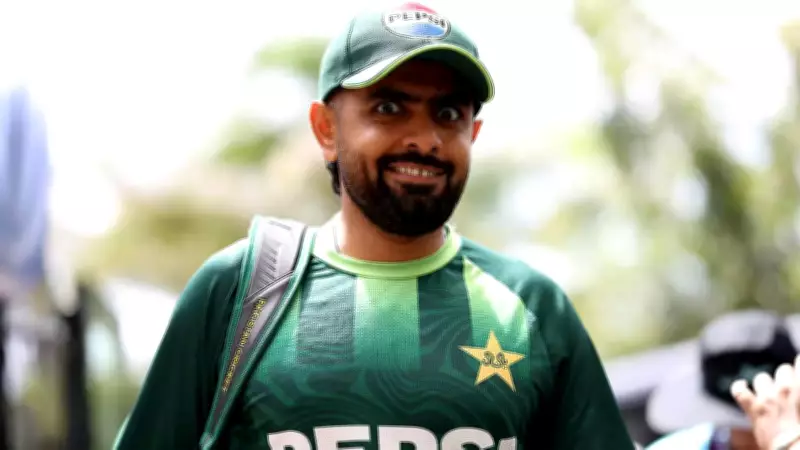
A social media post from four years ago by former South African batting star Herschelle Gibbs has resurfaced and is circulating widely online, casting a spotlight on Pakistan captain Babar Azam's ongoing struggles with his batting approach. The timing is particularly poignant as Pakistan competes in the T20 World Cup in Kandy.
Gibbs' Blunt Assessment of Babar's Batting Mindset
Gibbs, who worked alongside Babar Azam during their time together at Karachi Kings in the Pakistan Super League, had originally urged the Pakistani batsman to incorporate more attacking shots into his repertoire to boost his strike rate. In a revealing reply to a fan, Gibbs didn't mince words about Babar's receptiveness to advice.
"He's very much in his own world with his batting, not open to many suggestions," Gibbs had written, highlighting what he perceived as a closed-off approach from the talented right-hander.

The Lonely Figure in Pakistan's Nets Sessions
Observations from Pakistan's training sessions paint a picture of isolation around their star batsman. During intense net practices in Kandy ahead of their crucial Super Eight clash against England, Babar often appears as a solitary figure. He pads up and bats with minimal interaction, with spinner Abrar Ahmad being one of the few cricketers who regularly seeks his counsel.
Teammate Shadab Khan continues to show respect, addressing him as "skip" before bowling to him in the nets, but the broader dynamics suggest a leader whose aura has diminished following his failure to evolve his game sufficiently for modern T20 demands.
A Statistical Portrait of Unfulfilled Potential
Despite being Pakistan's all-time leading run-scorer in T20 Internationals with 4,571 runs and holding records for most fifties (39) and hundreds (3) in the format's history, Babar's numbers reveal significant shortcomings. His career strike rate of 128.18 is the lowest among all batters with at least 3,500 T20I runs, stripping him of claims to all-time greatness in the shortest format.
More concerning are his powerplay statistics in T20 World Cups: across four tournaments, he has faced 217 balls in the first six overs, scoring just 187 runs at a strike rate of 86.17—the worst among batters who have faced 200+ deliveries in that phase.
The Rocky Road: Dropping, Recall, and Continued Scrutiny
Babar's journey has been turbulent. In 2025, he was dropped from Pakistan's T20I setup, with coach Mike Hesson stating he needed strong Big Bash League performances to earn recall. Following Pakistan's Asia Cup loss to India, he was brought back despite a poor BBL campaign where he managed just 202 runs in 11 innings at a strike rate of 103.06 for Sydney Sixers.
His inclusion in the current T20 World Cup squad sparked intense debate among fans, coaches, and former cricketers who have all trained their criticism on his approach and output.
Evolving Role and Diminishing Assurance
Recent matches have seen Babar's role shrink noticeably. Against Namibia, he didn't even come out to bat at his newly designated number four position—the first time in his T20I career he remained unbeaten without facing a ball. Teammate Shadab Khan defended this decision, emphasizing clarity within the group about situational roles.
Coach Mike Hesson further explained the strategic thinking: "We brought Babar back for a specific role post the Asia Cup. We wanted stability through the middle, and he gives us that. When we reached the 12th over the other day, Babar was not the best option."
The Anchor Role in a Power-Hitting Era
Babar Azam mastered the anchor role in T20 cricket, but this very specialization has become his limitation. Modern T20 demands aggressive intent from the outset, particularly during powerplay overs. Pakistan's persistence with anchors at the top—whether Babar or former opening partner Mohammad Rizwan—has frequently increased pressure on the middle order due to sluggish scoring rates.
During recent net sessions in humid Kandy conditions, Babar was seen working specifically on playing spin better, executing elegant inside-out shots rather than attempting wild slogs—a subtle acknowledgment of the need for adjustment.

From 'King' to Crossroads: A Career at a Turning Point
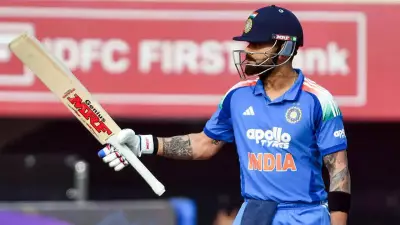
Once hailed as Pakistan's cricketing "King" and compared favorably with Virat Kohli as part of the modern batting elite alongside Steve Smith, Kane Williamson, and Joe Root, Babar now finds himself at a career crossroads at age 31. Former Pakistan captain Rashid Latif believes his second removal as captain has left psychological scars.
"He should not have taken the captaincy again after being removed the first time. That was a mistake. The second sacking dented his confidence," Latif told TimesofIndia.com.
With spin expected to dominate in Kandy conditions, the potential recall of Abrar Ahmad, and the need for left-handed variety with Fakhar Zaman in the top order, Babar's place in the lineup is no longer guaranteed. Even when selected, his role continues to diminish. The crown he once wore comfortably now sits uneasily, and time for reinvention is running short as the demands of T20 cricket evolve faster than his game.