Sunil Gavaskar Foresees Pakistan Reversing Boycott Decision Against India in T20 World Cup
Cricket legend Sunil Gavaskar has expressed strong confidence that Pakistan might perform a dramatic U-turn on its recent decision to boycott the group-stage match against India in the upcoming ICC World T20 World Cup. The highly anticipated clash is scheduled to be held in Colombo, Sri Lanka, on February 15, 2026, but has been thrown into uncertainty following Pakistan's official announcement.
Gavaskar's Prediction Based on Historical Patterns
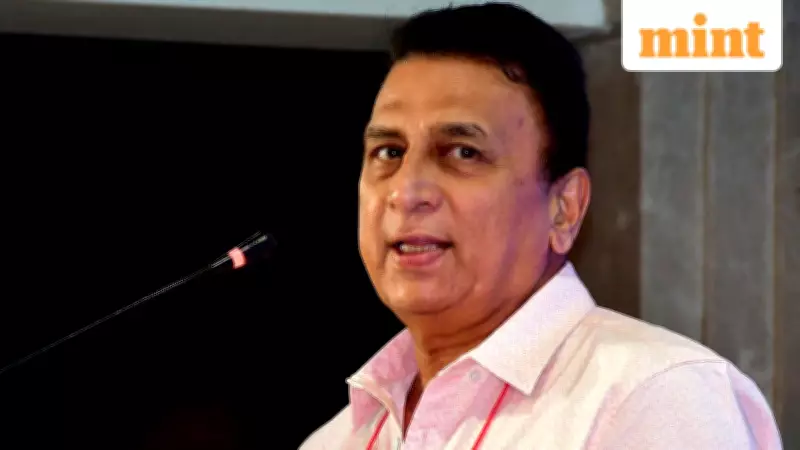
Speaking exclusively to India Today, the former Indian captain pointed to historical precedents set by Pakistani cricketers. "I think in the next four or five days, when reactions start pouring in from across the world and even from their former players, there is a possibility that Pakistan will change their stance," Gavaskar stated. He elaborated further, noting that "Pakistan players have set examples. They keep coming back from retirement. So something like that might happen before the 15th."
Gavaskar's comments highlight a pattern of reversals in Pakistani cricket decisions, suggesting that international pressure and internal reconsideration could lead to a change of heart regarding the boycott.

Call for ICC Intervention Against Last-Minute Withdrawals
Beyond predicting a possible reversal, Gavaskar strongly advocated for the International Cricket Council to take decisive action. He emphasized the distinction between early withdrawals and last-minute decisions. "Definitely, I think if you withdraw at the last moment, that is an issue. If you withdraw earlier on, that's another matter altogether. But if you withdraw at the last moment, on the eve of the tournament, then yes, I think certainly the ICC should come in and take some action," he asserted.
The cricket icon acknowledged the complexity of such decisions within the ICC framework, adding, "I don't know what action they will take, but I think there are so many other boards involved, so it's not just going to be one person's decision. However, it should be something that ensures no other team in the future also considers doing that." This stance underscores the need for a precedent-setting response to maintain the integrity of global tournaments.
Pakistan's Official Stance and ICC's Response
The controversy began when the Government of Pakistan made a formal announcement via social media platform X. In a post on Sunday, they declared, "The Government of the Islamic Republic of Pakistan grants approval to the Pakistan Cricket Team to participate in the ICC World T20 2026; however, the Pakistan Cricket Team shall not take the field in the match scheduled on 15th February 2026 against India." Notably, no specific reason was provided for this selective boycott within the tournament.
In response to Pakistan's decision, the International Cricket Council issued a statement addressing the situation. The ICC emphasized that "selective participation" contradicts the "fundamental premise of a global sporting event." The governing body expressed its expectation that the Pakistan Cricket Board would work towards "a mutually acceptable resolution, which protects the interests of all stakeholders." This indicates ongoing diplomatic efforts behind the scenes to resolve the impasse.
Broader Implications for Cricket Diplomacy
This development raises significant questions about the future of one of sports' most intense rivalries. The India-Pakistan cricket matches have historically transcended sport, carrying substantial diplomatic and emotional weight for millions of fans across both nations. A boycott at this level could potentially:

- Disrupt tournament schedules and broadcasting agreements
- Affect revenue streams for cricket boards and associated businesses
- Diminish the competitive spirit and global appeal of the T20 World Cup
- Set a concerning precedent for political interference in international sports
As the February 15 match date approaches, all eyes will be on whether Pakistan maintains its boycott stance or heeds the predictions of veterans like Sunil Gavaskar. The coming days will likely see intensified negotiations between cricket authorities, with the ICC playing a crucial mediating role to preserve the tournament's integrity and the rich tradition of this iconic sporting rivalry.