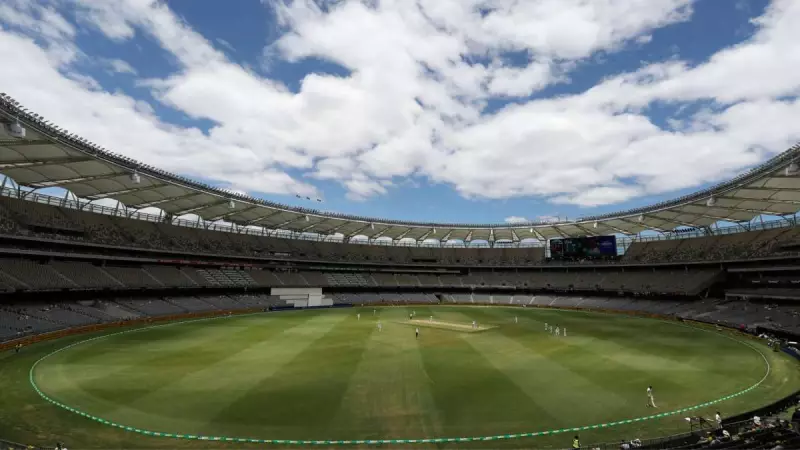
Legendary Indian cricketer Sunil Gavaskar has launched a scathing critique against the International Cricket Council (ICC), accusing the governing body of applying "double standards" in its assessment of pitches. His comments come in the wake of the Perth Stadium pitch receiving a 'below average' rating from match referee Javagal Srinath following the first Test between India and Australia in the 2024-25 Border-Gavaskar Trophy.
The Perth Pitch Controversy: What Sparked Gavaskar's Ire?
The first Test of the highly anticipated series, played from November 22 to 26, 2024, saw India secure a memorable victory. However, the pitch at the Optus Stadium became a central talking point post-match. Match referee and former Indian pacer Javagal Srinath handed the surface a 'below average' rating and one demerit point. In his report, Srinath noted that the pitch lacked consistent bounce and carry, especially on the third and fourth days, making it challenging for batters to play their shots with confidence.
This assessment has left Sunil Gavaskar utterly perplexed. The former India captain pointed out the apparent contradiction in the rating, given the high scores in the match. India scored 326 and 174 in their two innings, while Australia made 360 and 140. With a total of 1000 runs scored and only 40 wickets falling over five days, Gavaskar questioned the logic behind deeming the pitch substandard.
"Who is complaining?" Gavaskar asked pointedly in his column. He emphasized that the match saw centuries from young Indian opener Yashasvi Jaiswal and Australian batter Marnus Labuschagne, proving that batters who applied themselves could succeed. His core argument hinges on the visible double standard in pitch ratings when similar conditions in the Indian subcontinent often attract swift criticism and poor ratings.
Gavaskar's Point on Subcontinental Pitches
Gavaskar drew a direct comparison to how pitches in India are judged. He recalled instances where surfaces offering turn from the first day are quickly labeled "rank turners" and penalized, even if the match produces a result. The implication is clear: the ICC's parameters seem to favor certain conditions while unfairly penalizing others, creating an uneven playing field in the literal sense.
"When there is a bit of help for the spinners from Day One in India, the pitch is immediately called a rank turner and rated poorly," Gavaskar wrote. He finds it baffling that a pitch where fast bowlers get assistance, but over 1000 runs are scored, receives a 'below average' tag. This, for him, is the heart of the hypocrisy.
Broader Implications for Test Cricket
Gavaskar's criticism opens a larger debate about pitch diversity and the future of Test cricket. He argues that for the longest format to thrive globally, it needs variety in playing conditions. Pitches in Perth, Brisbane, or Johannesburg should play to their traditional strengths of pace and bounce, just as pitches in Chennai or Colombo are expected to assist spin. Penalizing a pitch for its natural character, especially when it produces a compelling contest like the Perth Test, could lead to homogenized, bland surfaces worldwide.
The one demerit point awarded to the Perth pitch is a formal black mark. If a venue accumulates six demerit points over a five-year rolling period, it faces the risk of a suspension from hosting international cricket for 12 months. Gavaskar's intervention highlights the subjective nature of this process and calls for more consistency and transparency from the ICC.
This incident is not just about one match or one rating. It touches on the perennial issues of perception and bias in cricket governance. Gavaskar, a respected voice in the sport, has effectively put the ICC on notice, demanding an explanation for what he sees as a clear case of differing standards. His question—"Who is complaining?"—resonates because the match was competitive, engaging, and ended in a result, which is ultimately what Test cricket needs.
As the series moves forward, this controversy will linger in the background. It serves as a reminder that the battle in modern cricket is not only fought between bat and ball on the field but also in the committee rooms where the very nature of the playing surface is judged.