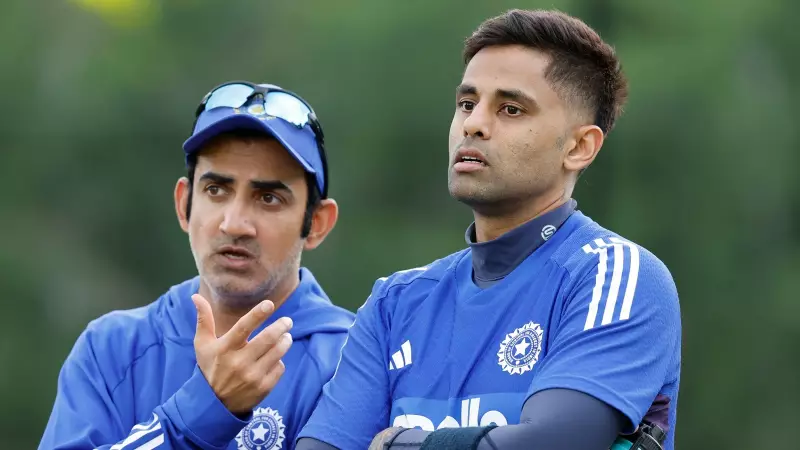
India's new head coach Gautam Gambhir has unveiled a revolutionary approach to T20 cricket that challenges conventional wisdom about batting orders. The former cricketer turned coach believes that rigid batting positions are overrated in the shortest format of the game.
The Impact-Over-Runs Philosophy
Gambhir elaborated on his coaching ideology during a recent video released on the Board of Control for Cricket in India's official website. "Batting orders are very overrated," Gambhir stated emphatically. "The two openers are permanent. The rest, I think, everything shuffles because it's not the amount of runs that matter in T20 cricket - it's the impact that matters."
The newly appointed head coach emphasized that this philosophy has been central to his approach since taking over the role. He made a crucial distinction between mere runs and genuine impact, suggesting that traditional statistics like averages and strike rates don't tell the complete story in T20 cricket.
Maximizing Every Ball Event
Gambhir's methodology focuses on treating each delivery as a significant event that requires maximum impact. "In 120 balls, every ball is an event, there needs to be maximum impact on each," he explained. This perspective has resulted in India adopting a fluid batting order where players except openers regularly rotate positions based on match situations.
India captain Suryakumar Yadav has already expressed similar views following the team's recent series victory in Australia. The alignment between captain and coach suggests a unified vision for the Indian T20 side moving forward.
Proven Track Record and Future Evolution
Gambhir's unconventional approach to batting lineups isn't theoretical - it has yielded remarkable success in his previous role as Kolkata Knight Riders captain. He famously promoted Sunil Narine, primarily known for his bowling, to the top of the batting order. This bold move became a crucial element in KKR's two IPL championship victories under his leadership.
The coach stressed the importance of continuous evolution in T20 cricket. "With time, T20 cricket will evolve and if we as coaches don't evolve, we will be behind the eight ball," Gambhir warned. "We want to be ahead of times and that is exactly how these young boys have adapted."
This forward-thinking approach represents a significant shift in how India approaches T20 cricket, prioritizing situational awareness and impact creation over traditional batting positions and statistics. The method has already shown promising results and could redefine how teams approach the format globally.