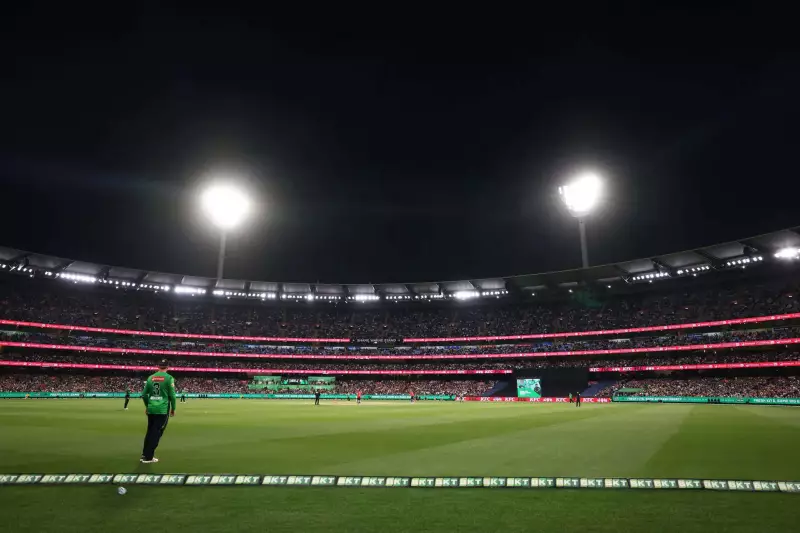
Exactly 55 years ago, on January 5, 1971, the sport of cricket witnessed a revolutionary and entirely unplanned birth. A relentless downpour in Melbourne had completely washed out the third Ashes Test between Australia and England. Faced with disappointed fans and a lost match, the cricket boards of both nations devised a stop-gap solution that would forever alter the landscape of the game. They decided to play a one-off, 40-over-a-side match at the Melbourne Cricket Ground (MCG).
The 'Happy Accident' That Changed Cricket
To the immense surprise of the Australian Cricket Board, a staggering 46,000 spectators turned up to witness this experimental contest. The overwhelming public reception to this faster, result-oriented format was a clear signal. What began as a mere filler to salvage a rain-ruined fixture turned into the first official One-Day International (ODI) in history. It was, as many historians call it, a 'happy accident' that gave the world a thrilling new way to experience cricket.
The format's popularity exploded almost instantly. Merely four years later, in 1975, the first Cricket World Cup was held, cementing ODI's place in the international calendar. This commercial and sporting juggernaut paved the way for the sport's massive financial growth long before the advent of franchise T20 leagues.

A Look Back at the Historic First ODI
Australia won the toss and asked England to bat first in that pioneering match. Opener John Edrich etched his name in history books by scoring the format's first half-century. He anchored the innings with a composed 82 runs off 119 balls, helping England post a total of 190 all out in 39.4 overs. For Australia, Ashley Mallett and Keith Stackpole took three wickets each.
In reply, Australia's chase was steadied by a half-century from Ian Chappell (60 off 103 balls). Useful contributions from Doug Walters (41) and a finishing touch from Greg Chappell (22*) and Rod Marsh (10*) saw the hosts cruise to a five-wicket victory with five overs to spare. Despite ending up on the losing side, John Edrich was named the Player of the Match, becoming the first-ever recipient of the award in limited-overs cricket.
The Lasting Legacy of ODI Cricket
From that single 40-over game has sprung a colossal legacy. To date, there have been 13 ODI World Cups, with the next edition scheduled for 2027. Australia stands as the most successful team with six titles. The format also gave rise to tournaments like the ICC Champions Trophy, where India has been dominant with three wins, including the most recent in 2025.
ODI cricket has also been the stage for some of the game's greatest individual records. Sachin Tendulkar remains the highest run-scorer with 18,426 runs, while modern icon Virat Kohli holds the record for most centuries (53). Among bowlers, Sri Lankan legend Muttiah Muralitharan leads with 534 wickets.
While the game has evolved further with the arrival of Twenty20 Internationals in 2005 and even shorter franchise leagues, the three-format structure—Tests, ODIs, and T20Is—remains intact. It all traces back to a rainy day in Melbourne and a simple decision to give the fans a game. That decision didn't just save a day's play; it accidentally gave birth to a multi-billion dollar, global sporting phenomenon that continues to captivate millions half a century later.