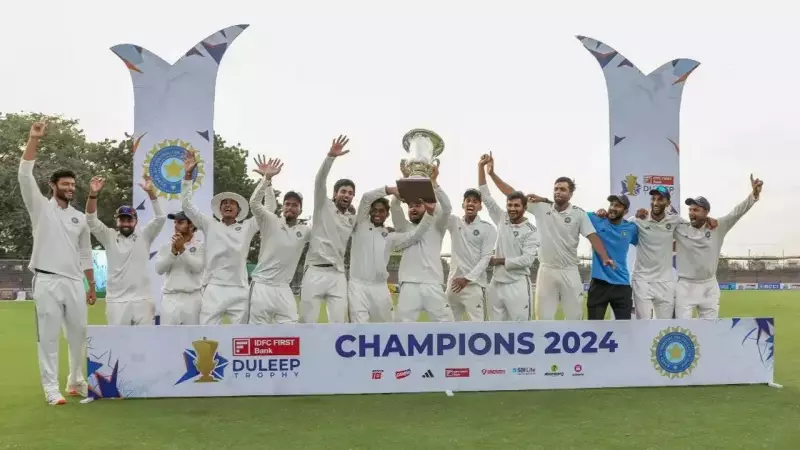
The anticipation among Indian cricket enthusiasts for live action since the international break began on August 4 has been met with significant disappointment. The prestigious Duleep Trophy, a key platform to monitor players who shone during the Anderson-Tendulkar Trophy in England, has been plunged into a media blackout for its opening matches.
Star-Studded Tournament Goes Unseen
The Board of Control for Cricket in India (BCCI) announced that the first two quarterfinals of the premier domestic first-class tournament would not be live-streamed on any platform. This decision left fans frustrated, with many venting their anger on social media platform X.
The Duleep Trophy, which ranks just below the Ranji Trophy and above the Irani Cup in importance, featured several high-profile names. East Zone welcomed back pace spearhead Mohammed Shami from injury, partnering with Mukesh Kumar, while Riyan Parag was among their key batters. North Zone boasted talents like Yash Dhull and Arshdeep Singh. The other quarterfinal saw Central Zone take on North-East Zone, featuring players such as Kuldeep Yadav, Rajat Patidar, and Deepak Chahar.

Format Change and New Rules Debut
This edition marks a return to the traditional zonal format, moving away from last year's experiment with India A, B, C, and D teams. The tournament also serves as the first testing ground for the BCCI's newly introduced 'serious injury replacement substitute' rule, a significant development in domestic cricket protocols.
The absence of established stars like KL Rahul, Washington Sundar, and Ravindra Jadeja has shifted focus onto other players. The spotlight is firmly on Shreyas Iyer and Sarfaraz Khan, who seem to have fallen out of national favour. Iyer's exclusion from the Asia Cup squad raised debates, while Sarfaraz was overlooked during the Border-Gavaskar Trophy and the England tour. The 27-year-old Sarfaraz has responded emphatically, scoring two centuries for Mumbai in the Buchi Babu Invitational in Chennai.
Fan Backlash and Missed Opportunity
The lack of live coverage represents a major missed opportunity for fans and the sport's growth. For a tournament of this stature, featuring international stars and crucial comebacks, the decision not to broadcast has been widely criticized. It denies fans the chance to follow the form and fitness of key players like Shami ahead of the busy season and obscures the performances of contenders pushing for national team berths.
The frustration is palpable online, where the sentiment is clear: in an era where digital access is paramount, the failure to stream a premier domestic competition is a step backward for Indian cricket's engagement with its passionate fanbase.