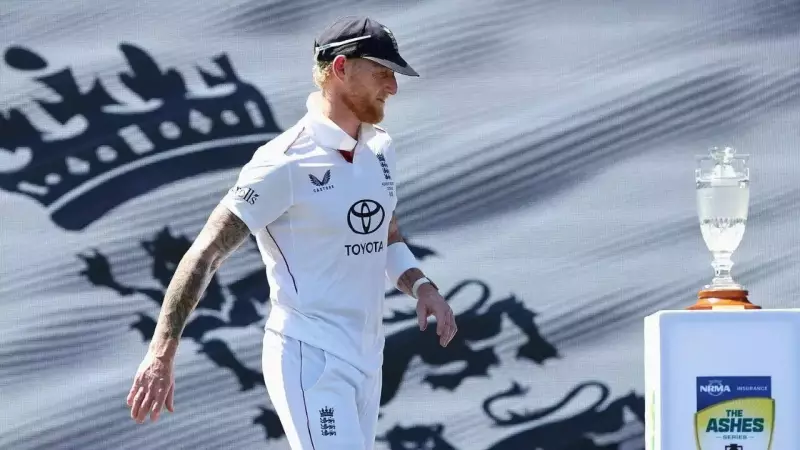
Bazball's Australian Dream Turns to Nightmare
England arrived in Australia with bold promises of fearless cricket and entertainment. They left with their reputation in tatters after a crushing Ashes defeat. The series concluded with a 4-1 loss, achieved in just eleven days of actual play. This outcome followed nearly four years of meticulous planning by the English camp.
Australian Dominance and English Misfires
Australia displayed brilliance throughout the five Tests. Mitchell Starc emerged as a standout performer, capturing 31 wickets and scoring two half-centuries. His all-round effort mirrored legendary displays from past greats. Travis Head also shone brightly, becoming the first Australian opener since Michael Slater in 1994-95 to score over 600 runs in an Ashes series.
The Australian bowling attack, led by Starc and Scott Boland, remained formidable despite significant absences. Josh Hazlewood missed all five Tests, Pat Cummins was unavailable for four matches, and Nathan Lyon sat out three. Their depth proved decisive.

England, in stark contrast, faced persistent fitness issues with their bowlers. Their selection choices failed to address this critical weakness. The team's only victory came in the Boxing Day Test in Melbourne. Their closest earlier opportunity was the series opener in Perth, where they fielded four frontline fast bowlers.
Questionable Selection Decisions
When Mark Wood sustained an injury before the second Test, England made a puzzling move. Instead of calling up fast bowler Josh Tongue, they selected batting all-rounder Will Jacks for The Gabba match. Jacks possesses a first-class bowling average of 43.47, only slightly better than part-timer Joe Root. He functioned primarily as a batter who could bowl occasionally, not a genuine wicket-taking threat.
This selection aimed to lengthen England's batting tail rather than strengthen their bowling attack. England never again deployed four frontline fast bowlers together after the Perth Test. Across four matches, Jacks managed only six wickets from 65.4 overs. Meanwhile, Josh Tongue, in just three Tests, took 18 wickets from 97.2 overs.
Interestingly, spinner Shoaib Bashir, backed by management for 19 previous Tests, did not feature in a single game of this series. By replacing a specialist bowler with a part-time option, coach Brendon McCullum and captain Ben Stokes inadvertently increased the workload on their primary pace attack, led by Jofra Archer.
These defensive selections allowed Australia's lower order to score valuable runs. England also failed to capitalize on Australia's own injury problems.
Echoes of India's Recent Tour
A similar pattern unfolded during India's tour of Australia for the 2024-25 Border-Gavaskar Trophy. India suffered a 3-1 defeat. Their squad included five frontline fast bowlers, yet they never played four together in any Test. Nitish Kumar Reddy often served as the fourth bowling option, delivering just 44 overs for five wickets at an expensive economy rate.
Defensive selections placed excessive strain on Jasprit Bumrah and Mohammed Siraj. This approach ultimately broke Bumrah by the fifth Test and diminished India's winning chances. Historical data supports a more aggressive bowling strategy. Between 2018 and 2022, India played four fast bowlers in 14 Tests outside Asia, winning six and losing seven. With three fast bowlers in 18 Tests, they won only five and lost ten.
The Coaching Conundrum
Both Brendon McCullum and India's Gautam Gambhir project aggressive public images. However, their selection policies on Australian soil revealed a cautious mindset. They prioritized protecting batting line-ups over maximizing wicket-taking potential. Choosing an extra batter over a frontline bowler represents negative thinking.
An additional bowler strengthens a bowling attack more significantly than an extra batter bolsters a batting unit. A weakened bowling attack concedes more runs, placing greater pressure on batters. England's selections focused on providing batting insurance against collapses rather than increasing their odds of taking 20 wickets.

Selecting a fourth specialist fast bowler would not have guaranteed series victory. England also needed better catching, having dropped 17 chances, and more disciplined batting. However, it would have substantially improved their ability to dismiss Australia twice and compete for Test wins.
Lessons from Down Under
Winning Test matches in SENA countries remains a formidable challenge for touring teams. It becomes nearly impossible when teams weaken their bowling due to batting insecurities. India learned this painful lesson last year. England have now relearned it the hard way. Unless both sides abandon this conservatism, as seen during India's 2025 tour of England, such approaches will continue to fail.