The undisputed brilliance of Magnus Carlsen on the chessboard is facing a new kind of scrutiny, one centered not on his moves but on his conduct. The world number one's repeated emotional outbursts during high-stakes tournaments are now sparking a serious debate within the global chess community about the image they project, especially to the next generation of players.
The Doha Flashpoint: A Series of Controversial Moments
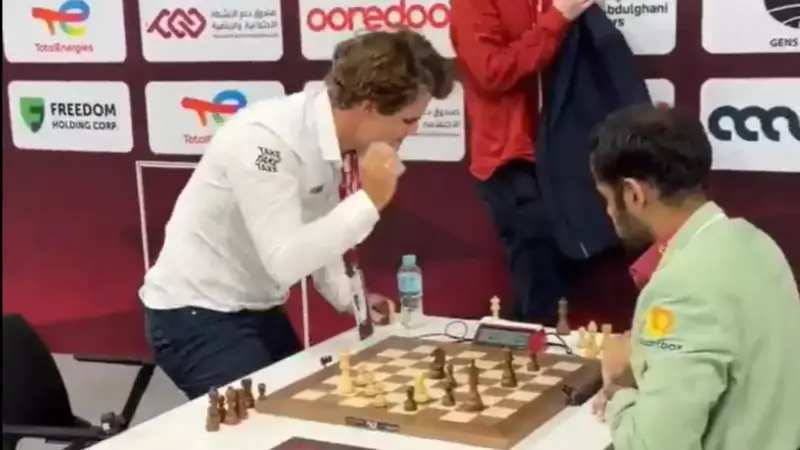
The latest controversy erupted at the World Rapid and Blitz Championships in Doha. While Carlsen ultimately clinched his 20th world title and a record ninth Blitz crown, his path to victory was marred by several incidents of visible frustration. The most notable was after a defeat to India's Arjun Erigaisi, when Carlsen slammed the board in anger.
This was not an isolated event. During the same tournament, Carlsen was involved in four separate controversial moments. In one instance, while in severe time trouble, he scattered pieces on the board, which led to an illegal move and a subsequent concession following an argument with the arbiter. These scenes were reminiscent of his reaction at Norway Chess last year, where he thumped the table after a shocking loss to Indian prodigy D Gukesh.

A Divided Chess World: Emotion vs. Example
The chess world is split on how to interpret these actions. Grandmaster Srinath Narayanan, former coach of Gukesh, acknowledged that emotion is a part of the sport. He stated that a certain level of expression helps spectators understand the immense mental pressure players face. However, he issued a stark warning about Carlsen's influence.
"The danger is that people perceive it to be something cool. And Magnus is very influential… kids look up to him," Srinath told The Indian Express. He argued that leaving such behavior unaddressed sends the wrong message, suggesting that financial penalties or official reprimands could establish clearer boundaries.
This concern was strongly echoed by star player Levon Aronian. Criticising the normalisation of such conduct, Aronian wrote on X that loud tantrums can disrupt other players and would likely draw penalties in many other sports.
FIDE's Stance and the Core of the Debate
Despite the growing criticism, the game's global governing body, FIDE, has shown little interest in formally censuring its biggest star. FIDE has defended such moments as part of an "open and engaged" sporting environment, emphasizing that the commercial growth and visibility of chess remain its top priority.
For critics, this stance is the heart of the problem. The debate now centers on accountability and the standards of sportsmanship expected at the elite level. While Carlsen's unparalleled success continues to draw fans, the question remains: at what cost to the game's culture? The discussion forces a reckoning on whether raw emotion, when expressed disruptively, should be excused as passion or penalised as poor sportsmanship, particularly when young, impressionable players are watching.