The Unseen Struggles of India's Blind Cricket Champions
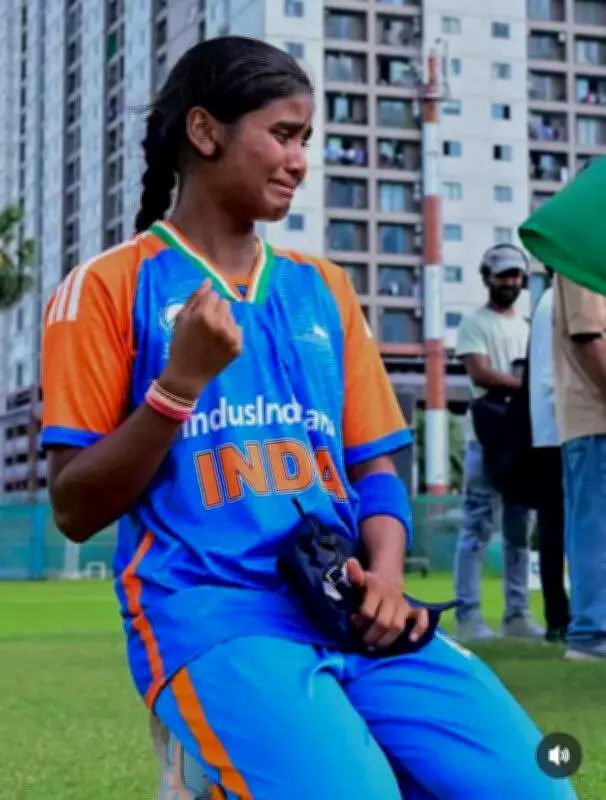
Three months after the Indian women's blind cricket team clinched the inaugural T20 Women's World Cup, the celebrations have subsided, but the players' lives remain largely unchanged. For many blind cricketers, often from economically disadvantaged backgrounds, victories bring only fleeting relief through government rewards. They continue to grapple with inadequate training infrastructure and a sporting ecosystem devoid of long-term support. This reality underscores Indian blind cricket: while success has garnered recognition, structural transformation, financial stability, and institutional backing remain elusive.
Financial Insecurity Plagues Players
The same challenges afflict men's blind cricket. Former India captain Ajay Kumar Reddy, who led the team to three World Cup titles and is the only skipper in blind cricket to achieve a hat-trick of global trophies across formats, received the Arjuna Award in 2023. Yet, his accomplishments remain largely unknown outside blind cricket circles. Hailing from Macherla in Andhra Pradesh, Ajay played over 100 matches, scored 15 centuries and 35 half-centuries, and took more than 200 wickets in a career spanning over a decade. A B2 all-rounder, he debuted in 2010 on India's tour of England and became captain in 2016, guiding India to victories in the 2017 Blind T20 World Cup, the 2018 Blind Cricket World Cup in ODI format, and the 2022 Blind T20 World Cup. Despite retiring in February 2023, Ajay notes that players' lives have not improved proportionally to their achievements. "During my playing days, financial stability was one of the biggest concerns. Every time I returned home after winning a tournament, I would have trophies in my bag, but not a single rupee in my pocket," he reveals.
This disconnect between glory and security permeates both men's and women's blind cricket. For international matches, blind cricketers receive Rs 3,000 per head, while domestic matches or tournaments yield Rs 1,000. There is no pension system for retired players, a stark contrast to the earnings of mainstream cricketers under the Board of Control for Cricket in India (BCCI). Although the BCCI has introduced equal match fees for its men's and women's players, blind cricket, operating outside its direct structure, lacks similar backing and long-term security.

Lack of Long-Term Support and Financial Stability
Blind cricket players and former captains report that many are forced to rebuild their lives after years of representing India. Ajay, now a deputy manager with the State Bank of India in Vijayawada and coach of the Andhra Pradesh men's and women's blind teams, emphasizes that talent is not the issue. "What players need is proper structure, consistent tournaments and financial support," he asserts.
Current India men's captain T Durga Rao, a B3 player from Visakhapatnam, highlights the uncertainty of livelihood even after national representation. "I completed my degree and currently I'm preparing for competitive exams, but there are few opportunities for blind cricketers," he says.
Former India captain Shekhar Naik, a B2 player who led India to the 2012 Blind T20 World Cup and 2014 Blind Cricket World Cup titles, notes that financial insecurity has long defined the sport. Naik, from Shimoga in Karnataka, received the Padma Shri in 2017 and retired the same year. He recalls that when India won the 2012 Blind T20 World Cup, the total prize money for the 22-member squad was only Rs 2 lakh, leaving each player with roughly Rs 8,000. Many players, he explains, struggle to balance cricket with livelihood, often taking unpaid leave to represent India.
Women World Champions Await Real Change
The women's team, despite becoming world champions, faces similar issues. In November 2025, India defeated Nepal by seven wickets in the final at Colombo, chasing 114 for 5 in 12.1 overs to finish unbeaten. The team triumphed over Sri Lanka, Australia, Nepal, USA, and Pakistan in the league stage before defeating Australia again in the semi-finals. Yet, this victory has not fostered a stable sporting ecosystem.

According to the Cricket Association for the Blind in India (CABI), India has nearly 30,000 registered blind men and women cricketers. Teams include B1 players who are totally blind, B2 players who are partially blind, and B3 players who are partially sighted. Unlike mainstream cricket, blind cricket lacks a structured domestic calendar and regular training facilities.
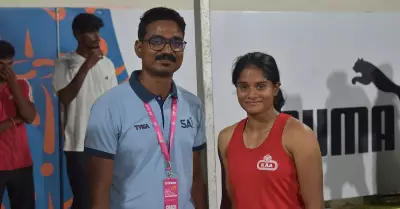
Captain Deepika TC, a B3 player from Tambalahatti in Sri Sathya Sai district of Andhra Pradesh, says the World Cup altered how people viewed her and her family. Before the victory, many were unaware that blind cricketers competed nationally and internationally. The recognition brought financial assistance that helped her family clear her father's debt. "In the past, people mocked my parents, saying ‘your daughter is blind, what can she do?'" shares the 23-year-old. Deepika scored 246 runs in five games during the tournament, including 91 off 58 balls against Australia in the semi-finals. However, she stresses that long-term financial stability remains a primary concern. "Many of my teammates are still facing severe financial hardships."
Her teammate Simranjeet Kaur, a B2 all-rounder from Kota in Rajasthan, reports that she has yet to receive any financial reward from her state government. "Unlike other states, Rajasthan govt has not announced any reward or support. I've written letters to the chief minister but there has been no response," says Kaur, whose father is a farmer.
Inadequate Sporting Infrastructure
Infrastructure remains woefully inadequate. The women's circuit is largely limited to T20 tournaments such as the Nagesh Trophy, with ODI formats yet to be introduced. Deepika notes that training is inconsistent: "We usually get about 15 days of practice before matches. When I am home, I work in the fields and try to maintain my fitness." Travel and accommodation costs further complicate balancing cricket and work.
Deepika secured a job as multi-tasking staff in the Income Tax department in Mumbai in 2024 and hopes for a posting closer to home. For others, training relies on local support. P Karuna Kumari, a B1 player from Vantlamamidi village in Paderu of Alluri Sitharama Raju district in Andhra Pradesh, explains that when there are no tournaments, players often practice at school grounds. "We train at the school where a Physical Education teacher guides us," says Karuna, who scored 42 against Nepal in the final. She is currently appearing for her Class X examinations.
Players advocate for stronger institutional support, suggesting that bringing CABI under the BCCI umbrella could provide regular fees, pensions, and better infrastructure. "Currently I practice on a small ground. While there was an announcement that we would have access to BCCI-affiliated stadiums, the process is not yet complete," Kaur states. Uncertainty also looms over future tournaments. Women's team manager Shikha Shetty notes that national camps are organized for major events, but between competitions, players are largely left to train individually in their hometowns.
In February this year, the BCCI announced a "structured support" framework for CABI, including travel support for overseas tournaments, accommodation for bilateral series, and access to affiliated stadiums. Players describe this as only a preliminary step.
Public Perception and Lack of Institutional Backing
Men's team coach Mohammad Ibrahim identifies perception as a significant barrier. "People often watch blind cricket with sympathy. If they watch it as sport or entertainment, they will be surprised by the quality of shots these players play." He observes that in Australia, England, and Pakistan, blind cricket operates under their respective boards, enabling players to receive structured support and contracts.
CABI chief Mahantesh GK acknowledges that long-term financial security remains a challenge. "We understand that players who have represented the country should have some form of long-term security. We are exploring ways to create a structured support system for former players, but it depends largely on the resources available," he explains. He adds that organizing tournaments and supporting players often depends on independent fundraising. "Even the World Cup was organised through our own efforts." Mahantesh also supports exhibition matches during major tournaments like the IPL or WPL to enhance visibility. While players call for greater integration with the BCCI, CABI officials maintain that the body will continue to function independently, with ongoing support from the board aimed at strengthening infrastructure and logistics.
Seeking Recognition Beyond Sympathy
Players and coaches emphasize that they do not want the sport viewed through pity, but through performance. They point to world titles, unbeaten campaigns, centuries, wickets, and match-winning knocks as evidence that blind cricket has already cultivated a competitive sporting culture. What it lacks is not excellence, but a system that treats that excellence as worthy of sustained investment. From Ajay Kumar Reddy returning home with trophies but no money, to women world champions training on school grounds and awaiting promised support, the message is clear: recognition may have improved, but real change remains distant.