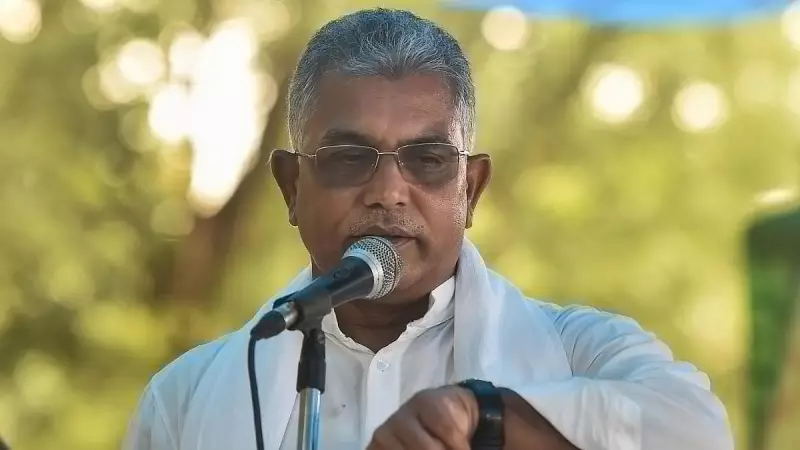
In a statement that has ignited a fresh controversy in the cricketing world, senior Bharatiya Janata Party (BJP) leader from West Bengal, Dilip Ghosh, has demanded that Bangladeshi cricketers should not be allowed to play in the Indian Premier League (IPL), drawing a parallel with the long-standing exclusion of players from Pakistan.
The Controversial Statement and Its Context
The comment comes in the wake of a significant development involving Kolkata Knight Riders (KKR) and Bangladeshi pacer Mustafizur Rahman. The franchise released Rahman after being instructed to do so by the Board of Control for Cricket in India (BCCI). KKR had acquired Rahman's services for a substantial sum of Rs 9.2 crore during an IPL auction, making his sudden exit a notable event.
Ghosh, leveraging this incident, argued that the sentiment against allowing players from Bangladesh should be similar to the policy regarding Pakistani cricketers. He suggested that such decisions align with broader national interests and public sentiment, though he did not elaborate on the specific reasons behind the BCCI's directive to KKR.

Unpacking the KKR and Mustafizur Rahman Episode
The core factual detail of this news is the release of Mustafizur Rahman by the Kolkata Knight Riders. The action was not initiated by the franchise's own strategic planning but was a direct result of a mandate from the Indian cricket board. The BCCI's instruction, dated 04 January 2026, led to the termination of Rahman's high-value contract.
This move has raised questions about the underlying factors influencing the BCCI's decision, which have not been publicly disclosed. The timing and the political commentary it has spurred add layers to what is typically a purely sporting or commercial transaction.
Implications and Reactions
Dilip Ghosh's proposition, if ever considered, would have profound implications for the IPL's composition and its standing as a global sporting league. The IPL has proudly hosted talent from across the world, excluding Pakistan due to geopolitical tensions. Extending a similar ban to Bangladesh would mark a significant shift in policy and potentially affect bilateral cricketing relations.
The statement is likely to polarize opinions. Some may view it through a lens of national pride and security, while others in the sporting community might see it as an unnecessary politicization of sports that could undermine the league's competitive spirit and international appeal.
As of now, the BCCI has not issued any official policy change regarding players from Bangladesh. The incident involving Mustafizur Rahman remains a singular event, but Ghosh's comments have undoubtedly placed it under a sharper political spotlight, setting the stage for further debate on the intersection of sports, politics, and national identity in India.