A high-stakes decision taken at the very top of the Board of Control for Cricket in India (BCCI), which led to the ouster of Bangladesh pacer Mustafizur Rahman from the Kolkata Knight Riders (KKR) IPL squad, has now escalated into a full-blown diplomatic and sporting crisis. The move, executed without consulting the IPL's Governing Council, has prompted Bangladesh to refuse to travel to India for next month's T20 World Cup and impose a ban on IPL telecasts.
A Decision Taken in Isolation
The directive to KKR to release Mustafizur Rahman was not a product of collective deliberation within the BCCI. According to sources, the IPL Governing Council was not consulted on the matter, catching even senior board officials associated with the league by surprise. "We ourselves got to know about this through the media. There was no discussion. No suggestion was taken from our side," revealed a top BCCI official to The Indian Express.
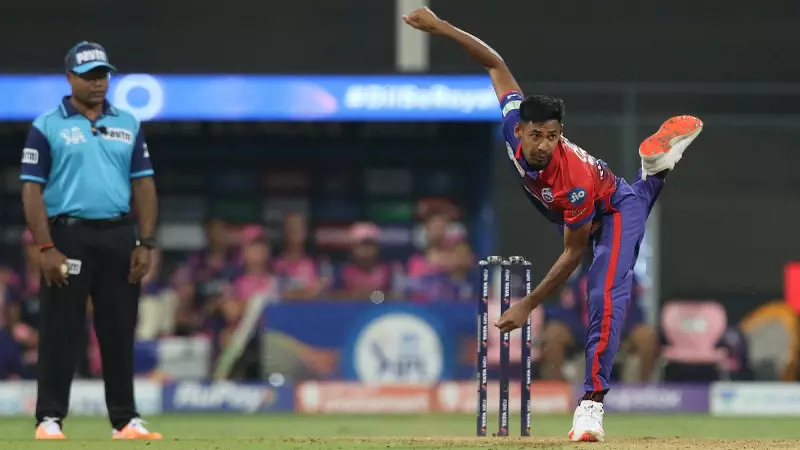
BCCI secretary Devajit Saikia did not respond to queries on whether a formal board meeting was convened or if the IPL council was kept in the loop. However, on Saturday, Saikia explained the board's position, stating, "Due to the recent developments that are going on all across, BCCI has instructed the franchise KKR to release one of their players, Mustafizur Rahman of Bangladesh, from their squad." Mustafizur had previously played for Delhi Capitals in the 2022 and 2023 IPL seasons.

Immediate Fallout and Escalating Tensions
The backlash from Bangladesh was swift and severe. On Monday, the country's Information and Broadcasting Ministry banned the telecast of all IPL matches, stating that the move to release Mustafizur "has hurt and angered the Bangladesh citizens." The ministry's statement directed the stoppage of all IPL broadcasts in the country.
More significantly, Bangladesh has refused to send its team to India for the upcoming T20 World Cup, a direct consequence of the BCCI's action. This sporting standoff is the latest manifestation of simmering bilateral tensions that have spilled onto the cricket field in recent months. The Bangladesh women's tour of India was postponed indefinitely, and the Indian men's tour of Bangladesh scheduled for August is now in doubt.
The political context involves heightened tensions following the lynching and burning to death of a Hindu man in Bangladesh over allegations of blasphemy. India's Ministry of External Affairs condemned the "unremitting hostility against minorities," while Bangladesh's interim leader, Nobel laureate Muhammad Yunus, also condemned the violence.
Political Reactions and Cross-Border Backlash
The controversy had begun brewing even before the BCCI's intervention. KKR's decision to pick Mustafizur for IPL 2026 had led to franchise owner Shah Rukh Khan facing criticism. Spiritual leader Jagadguru Rambhadracharya labeled the actor "anti-national," while Shiv Sena leader Anand Dubey declared Rahman would not be allowed to play "at any cost." West Bengal BJP leader Dilip Ghosh welcomed the pacer's ouster, drawing a parallel with Pakistani cricketers.
The response from Bangladesh was equally forceful. Asif Nazrul, the interim government's advisor for Youth and Sports, posted on Facebook, "We won't stand for any insult to Bangladesh's cricket, cricketers and the country. The days of slavery are over." This sentiment underscores the deep national pride now entangled with the issue.
The situation presents a major challenge for the International Cricket Council (ICC) as it navigates a World Cup hosting crisis fueled by geopolitical friction. The hybrid models discussed for the tournament may now become essential, as the rift between the two cricket boards widens, threatening not just a bilateral series but a global multi-nation event.