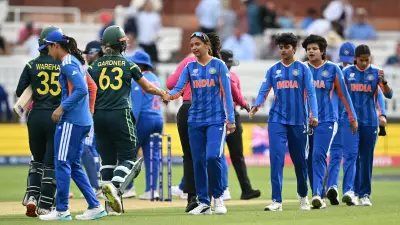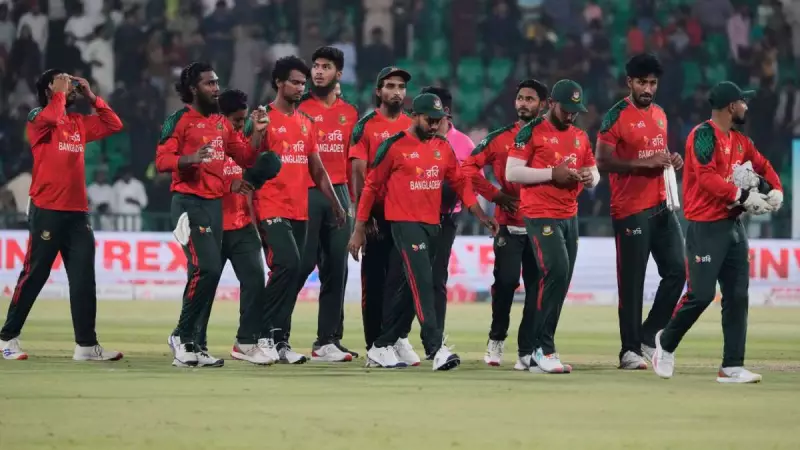
The Bangladesh Cricket Board (BCB) has made a dramatic and unprecedented move, declaring it will not send its national team to India for the T20 World Cup 2026. Citing significant security apprehensions, the board has formally requested the International Cricket Council (ICC) to relocate all of Bangladesh's scheduled matches away from Indian soil.
The Core of the Security Dispute
This bold decision stems from a deep-seated concern for player and official safety. The BCB's apprehension is not based on general conditions but is directly linked to specific intelligence and past incidents that have raised alarm bells within the board's security apparatus. The BCB has explicitly stated it perceives a "real and immediate threat" to its contingent if they travel to India for the global tournament.
In an official communication to the ICC, the Bangladeshi board outlined its fears, urging the global governing body to take their concerns with the utmost seriousness. The request is clear: move Bangladesh's group stage matches, and any potential knockout games, to a neutral venue deemed safer by their security assessments. This stance puts the ICC in a challenging position as it plans for one of the sport's flagship events.

ICC's Stance and the Upcoming Tournament
The T20 World Cup 2026 is slated to be a joint venture, co-hosted by India and Sri Lanka. The tournament's schedule and venue allocations are still in the planning stages, making the BCB's early intervention a significant curveball. The ICC, as per standard protocol, is expected to conduct its own thorough security reviews for all host nations.
Historically, the ICC has maintained that safety is its paramount priority. However, it also heavily relies on the assurances and capabilities of the host nation's government and local security forces. India has previously hosted numerous major ICC events, including the 2011 ODI World Cup and the 2016 T20 World Cup, without major security breaches involving visiting teams. The BCB's current objection, therefore, marks a stark departure from the norm and could set a complex precedent.
Potential Ramifications and Broader Impact
This boycott threat has far-reaching implications that extend beyond bilateral cricket relations. Firstly, it challenges the ICC's authority and its event-hosting model. If the council acquiesces to Bangladesh's demand, it could encourage other nations to make similar requests based on subjective security perceptions, potentially destabilizing future hosting plans.
Secondly, it casts a shadow over the high-profile India-Bangladesh cricket rivalry, which has been intensely competitive in recent years. The political and diplomatic undertones of this sporting decision are unavoidable and may strain relations between the two cricket boards. Furthermore, from a sporting perspective, Bangladesh's absence from matches in India would be a loss for fans and could affect the competitive balance and commercial appeal of the tournament.
The ball is now firmly in the ICC's court. The council must navigate a delicate path, balancing respect for a member board's security concerns with the logistical and contractual realities of a pre-planned global event. Its response will be closely watched by the entire cricketing world, as it will establish a critical benchmark for how such disputes are handled in the future.
As of now, the Bangladesh Cricket Board remains firm in its position, awaiting an official response from the International Cricket Council. The coming months will be crucial in determining whether a compromise can be found or if this boycott will stand, potentially altering the landscape of the T20 World Cup 2026 before a single ball is bowled.