
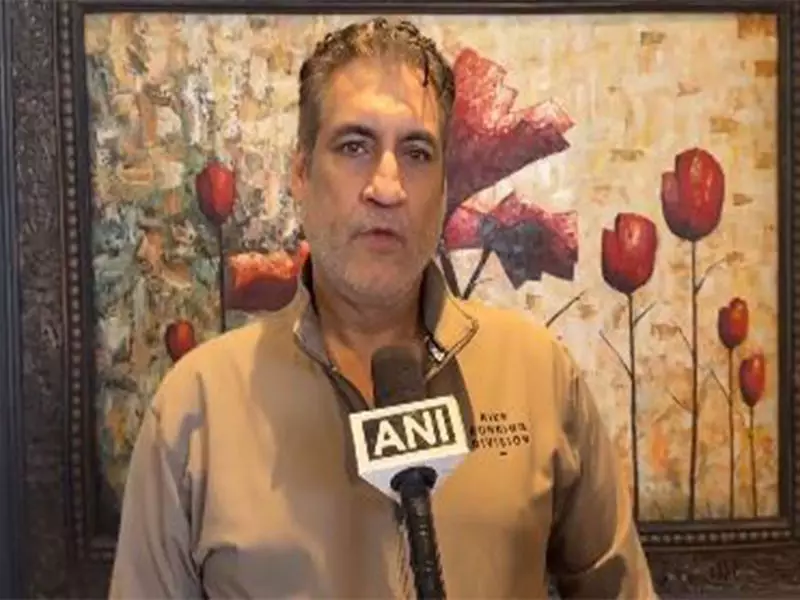
Former Indian fast bowler and commentator Atul Wassan has strongly defended Bollywood superstar and Kolkata Knight Riders (KKR) co-owner Shah Rukh Khan amidst the ongoing controversy surrounding Bangladesh pacer Mustafizur Rahman's potential participation in the IPL 2025 season. Wassan labelled the criticism directed at Khan as "unfair," emphasizing that systemic issues within cricket administration cannot be resolved by simply targeting an individual franchise owner or player.
The Core of the Mustafizur Rahman Controversy
The dispute erupted when the Bangladesh Cricket Board (BCB) indicated it might not grant a No Objection Certificate (NOC) to Mustafizur Rahman for the next Indian Premier League season. The board's stance is reportedly linked to the pacer's workload management, especially with important international fixtures on the horizon. Mustafizur, a left-arm seamer known for his clever variations, has been a valuable asset for various IPL teams, including his current franchise, the Kolkata Knight Riders, co-owned by Shah Rukh Khan.
Following the BCB's announcement, a segment of fans and commentators on social media began questioning the role of franchise owners, with some implying that Shah Rukh Khan or KKR's management might have exerted undue pressure or influence. This narrative suggested that the star power of owners could be a factor in such international selection conflicts.
Atul Wassan's Firm Rebuttal
Atul Wassan, known for his straightforward opinions, swiftly countered this blame game. He argued that making Shah Rukh Khan a scapegoat distracts from the larger, more complex dynamics at play between national boards and the lucrative T20 league ecosystem.
"Blaming Shah Rukh Khan is unfair," Wassan stated unequivocally. He elaborated that the actor, like any other franchise owner, operates within the rules and regulations set by the IPL and the International Cricket Council (ICC). The real issue, according to Wassan, lies in the perennial tug-of-war between national cricket boards and private T20 leagues over player availability and priorities.
"Removing one player won't change anything," he asserted, pointing out that the conflict is not unique to Bangladesh or Mustafizur Rahman. Several cricket-playing nations grapple with scheduling clashes and the desire to protect their key players from burnout. Wassan's comments highlight a structural challenge in modern cricket, where the calendar is packed and leagues compete with international cricket for primacy.
Broader Implications for IPL and International Cricket
This incident is not isolated. It reflects an ongoing tension that has seen players from England, Australia, and the West Indies also face difficult choices between national duty and franchise commitments. The Mustafizur Rahman case brings this conflict into sharp focus within the subcontinental context.
Wassan's intervention serves to shift the conversation from individual blame to systemic solutions. He implies that for harmony to exist, there needs to be better dialogue and formal agreements between the Board of Control for Cricket in India (BCCI), other national boards, and the IPL governing council regarding windows, NOC policies, and player workload management.
The controversy also puts the spotlight on the Kolkata Knight Riders management, who have yet to make an official statement on the matter. As one of the most popular franchises in the IPL, their actions and negotiations are closely watched. The resolution of Mustafizur's availability could set a precedent for how similar situations are handled with players from other cricket boards in the future.
Ultimately, Atul Wassan's defense of Shah Rukh Khan underscores a critical point: in the complex, high-stakes world of international cricket and premier leagues, simplistic narratives focusing on star individuals often miss the mark. The path forward requires collaboration, not confrontation, between all stakeholders involved.