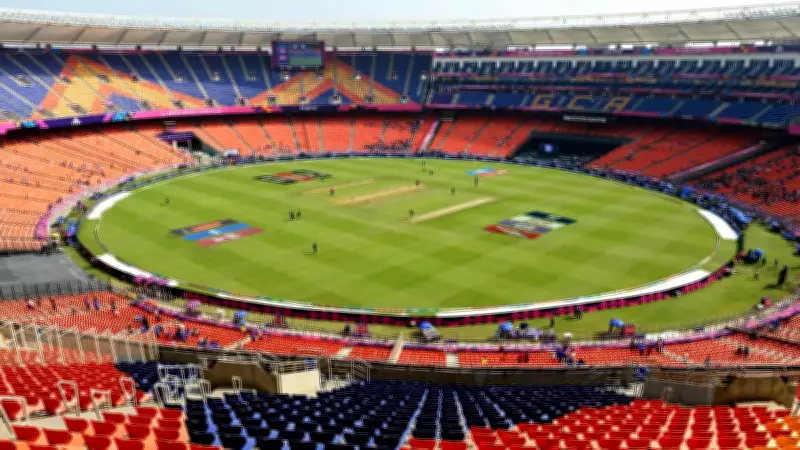
Ahmedabad Pitch Under Microscope for T20 World Cup 2026 Final
The cricketing world's attention is firmly fixed on the pitch at the Narendra Modi Stadium in Ahmedabad, as India and New Zealand gear up for the highly anticipated final of the T20 World Cup 2026. This crucial match, set to be a spectacle of skill and strategy, has placed the playing surface at the center of pre-game discussions, with both teams meticulously analyzing conditions to gain any possible advantage.
Intense Scrutiny on Pitch Conditions
Reports indicate that the pitch in Ahmedabad is undergoing rigorous examination by ground staff, match officials, and team management. Historically, the surface at this venue has favored batsmen, offering consistent bounce and pace, but recent preparations suggest a possible shift towards a more balanced track that could assist spinners as the game progresses. This has sparked debates among experts about whether the pitch will be a high-scoring paradise or a challenging wicket that tests all facets of the game.
Team Strategies Hinge on Pitch Analysis

Both India and New Zealand are closely monitoring the pitch's behavior, with their final team selections and game plans likely to be influenced by its condition. Indian captain Rohit Sharma emphasized the importance of adapting to the surface, stating that a thorough assessment will be key to their strategy. Similarly, New Zealand's Kane Williamson highlighted the need for flexibility, noting that the pitch could dictate their bowling and batting approaches on the day of the final.
Historical Context and Expectations
The Narendra Modi Stadium, with its capacity to host over 100,000 spectators, has been a venue for numerous high-profile matches, including previous World Cup fixtures. In the T20 format, pitches here have often produced thrilling contests, with scores averaging around 160-180 runs. However, for this final, ground curators are under pressure to deliver a pitch that ensures a fair contest between bat and ball, avoiding any undue advantage that could mar the integrity of the game.
Weather conditions in Ahmedabad are also being factored into the equation, with clear skies and moderate temperatures expected, which should minimize external variables and keep the focus squarely on the pitch's performance. This adds to the anticipation, as fans and pundits alike speculate on how the surface will behave under the floodlights during the evening match.
Implications for the Final Outcome
The pitch's nature could significantly impact the match outcome, influencing key decisions such as whether to bat or bowl first, the composition of playing XIs, and the roles of spinners versus pacers. A slow, turning track might favor India's spin-heavy attack, while a hard, bouncy surface could play into New Zealand's strengths with seam bowling. This uncertainty has heightened the drama, making the pitch not just a physical element but a strategic puzzle for both teams to solve.
As the final approaches, all eyes remain on Ahmedabad, with the pitch poised to be a defining factor in what promises to be an epic clash for the T20 World Cup 2026 title. The outcome may well hinge on which team better reads and adapts to the conditions presented by this much-discussed surface.