Abhishek Sharma and Ishan Kishan Poised to Make T20 World Cup History as All-Left-Handed Opening Duo
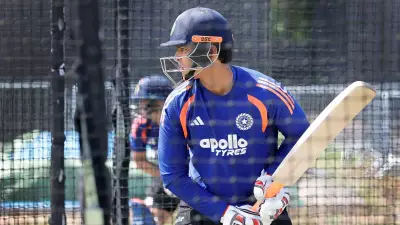
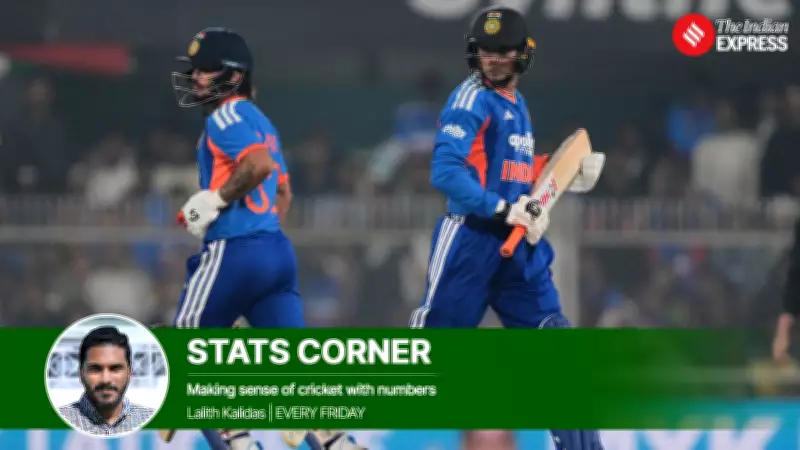
In a bold move that defies conventional cricketing wisdom, India is set to unleash an all-left-handed opening partnership of Abhishek Sharma and Ishan Kishan in the upcoming T20 World Cup match against the USA at Mumbai's Wankhede Stadium. This pairing marks a significant departure from India's historical batting strategies, challenging a long-standing bias in the sport.
A Rare Cricketing Phenomenon
Across India's two-decade journey in T20 International cricket, a southpawed opening pair has been exceptionally rare, with only five out of 264 innings featuring an LHB-LHB association at the top. This scarcity reflects a broader trend in global cricket, where teams have traditionally favored right-handed combinations or the theoretically balanced LHB-RHB order to exploit bowling matchups.
Statistical insights reveal the extent of this rarity:

- Out of 544 different opening pairs used by Full-Member T20I teams over 20 years, only 57 have been all-left associations.
- Bangladesh leads with 17 such pairs, while Afghanistan has never deployed one in 28 combinations.
- England, with 46 opening pairs, has sent a left-handed duo only once in 2006.
Historical Context and Global Comparisons
The most successful left-handed opening pair in T20I history remains the Australian duo of Matthew Hayden and Adam Gilchrist, who aggregated 398 runs in nine innings during the early years of the format. Their dominance peaked in the 2007 inaugural World Cup, where they scored 330 runs, setting a benchmark that has rarely been challenged.
Recent data highlights other notable left-handed pairs:
- Parvez Hossain Emon and Tanzid Hasan of Bangladesh lead with 520 runs but will miss this World Cup.
- Soumya Sarkar and Tamim Iqbal also from Bangladesh follow with 389 runs.
- Chris Gayle and Evin Lewis of the West Indies amassed 277 runs in seven innings.
India's previous left-handed opening pairs—Gautam Gambhir/Irfan Pathan, Shikhar Dhawan/Parthiv Patel, and Kishan/Rishabh Pant—were all formed in isolated contexts, lacking the sustained opportunity that Sharma and Kishan now receive.
Strategic Implications for India's Campaign
This decision underscores India's commitment to backing individual form over rigid conventions, as the team aims for a home title defense. With six of India's top eight batters in a first-choice XI potentially being left-handed, this move could disrupt opposition bowling plans and maximize Powerplay opportunities.
Openers play a crucial role in T20 cricket, accounting for over 35% of all runs and tasked with exploiting the six-over Powerplay, which covers 33% of a batting innings. By opting for Sharma and Kishan, India signals a proactive approach to overcoming historical inhibitions and embracing innovation.
The Road Ahead and Potential Impact
If successful, this pairing could banish the taboo around left-handed opening duos in cricket, inspiring other teams to reconsider their strategies. Fans and analysts alike will watch closely to see if Sharma and Kishan can deliver a modernized encore of Hayden and Gilchrist's dominance, potentially rewriting the record books and solidifying India's status as a ruthless contender in the tournament.
As India continues its course-correction after a brief dip in form, this historic opening combination represents not just a tactical shift, but a symbolic step towards embracing diversity in batting lineups and challenging entrenched norms in the sport.